Biokovo Mountain Photography Guide: Capturing Croatia’s Dramatic Mountain Landscapes
I still remember my first photography visit to Biokovo. It was mid-afternoon in July, and I drove up to the Skywalk excited to capture the famous views. What I found was harsh overhead light creating washed-out images, extreme haze obscuring the islands I’d hoped to photograph, crowds making composition difficult, and intense wind that made tripod use nearly impossible. After six years living in Croatia and returning to Biokovo in various seasons and conditions, I’ve learned that successful mountain photography here requires understanding the unique challenges of elevation, weather, and light.
Biokovo Nature Park rises dramatically from the Makarska Riviera, climbing from sea level to 1,762 meters at Sveti Jure peak in just 12 kilometers. This extreme vertical relief creates one of Croatia’s most spectacular landscape photography locations. The 23-kilometer mountain road winds through 27 hairpin switchbacks, each revealing new perspectives on the dramatic interplay between rugged karst mountains and the turquoise Adriatic stretching to distant islands.
In this comprehensive guide, I’ll share everything I’ve learned about photographing Biokovo’s mountain landscapes. You’ll discover the best locations for photography, optimal camera settings for high-altitude landscape work, techniques for managing wind and challenging conditions, composition strategies for mountain and coastal integration, seasonal considerations, and practical logistics for accessing this spectacular but challenging photography location.
Table of Contents
- Understanding Biokovo’s Unique Geography
- Best Photography Locations
- Camera Settings for Mountain Landscape Photography
- Best Times and Seasons
- Composition Techniques
- Dealing with Altitude Challenges
- The Biokovo Road as Subject
- Wildlife Photography
- Practical Logistics
- FAQ
Understanding Biokovo’s Unique Geography
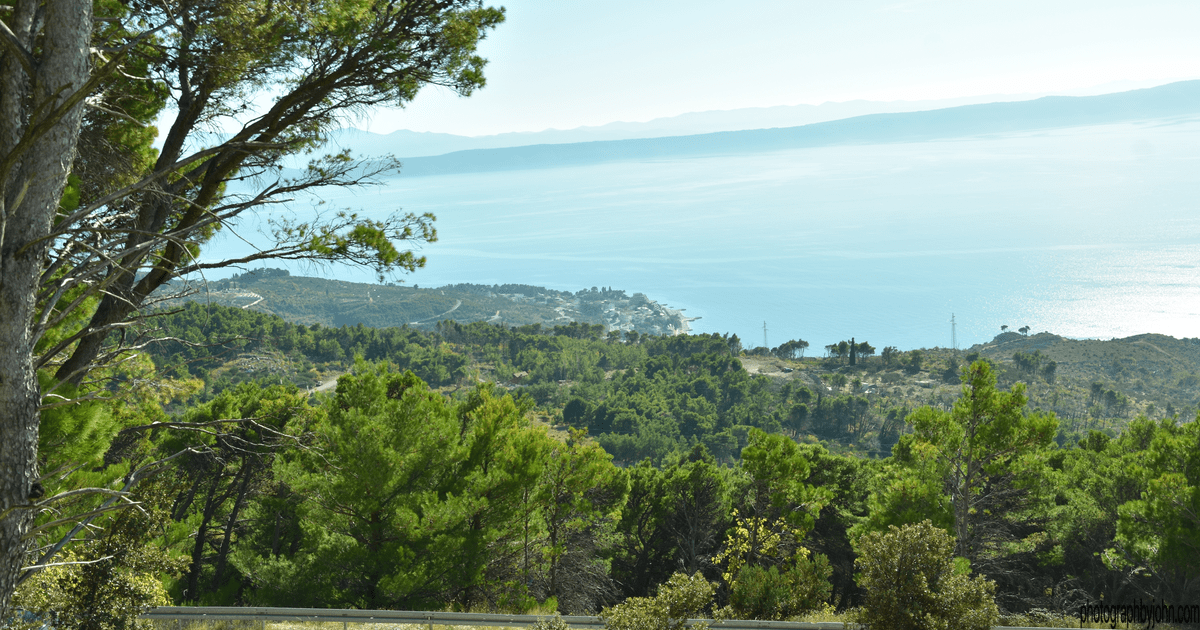
Biokovo is Croatia’s second-highest mountain range, part of the Dinaric Alps that run parallel to the Adriatic coast. What makes Biokovo exceptional for photography is its dramatic proximity to the sea.
The Mountain-Sea Interface
Most mountain ranges transition gradually from coastal lowlands through foothills to high peaks. Biokovo rises almost vertically from the Adriatic, creating an abrupt 1,700+ meter elevation gain in minimal horizontal distance. This creates unique photography opportunities – you can compose images with alpine mountain peaks in the foreground and Mediterranean coastline in the background.
The view from Sveti Jure or the Skywalk encompasses this dramatic transition in a single frame. Rugged white limestone peaks, ancient karst terrain, free-roaming livestock grazing alpine meadows, and just 12 kilometers away, palm trees, beaches, and turquoise Adriatic water. This juxtaposition is rare globally and creates distinctive photographic subjects.
Karst Landscape
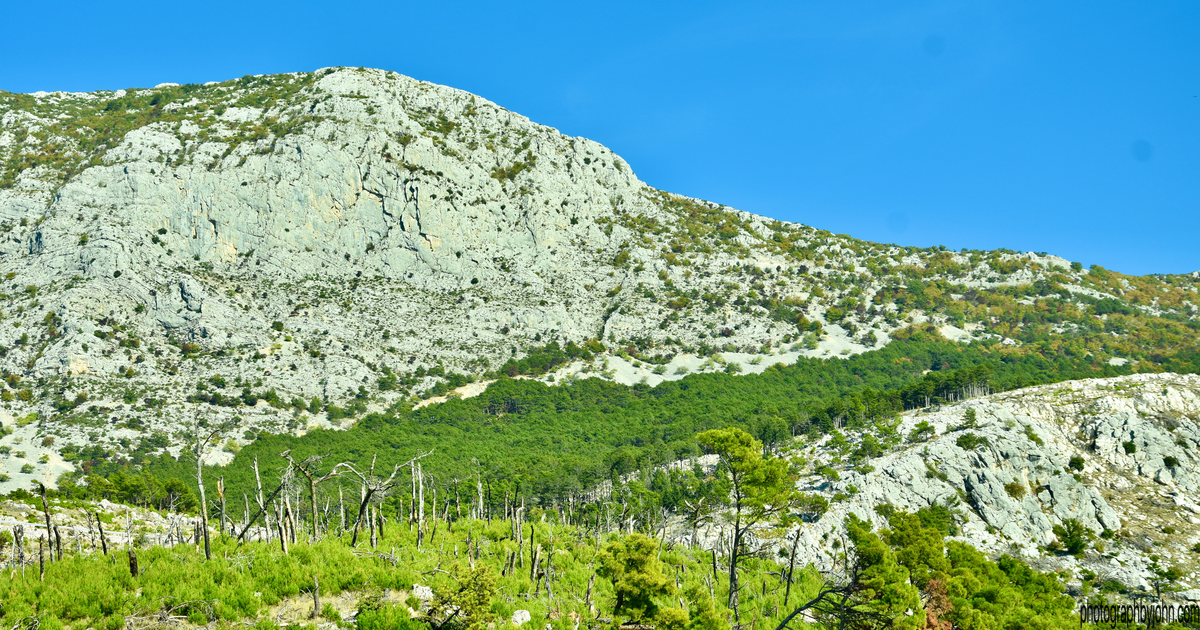
Biokovo is classic Dinaric karst – white and gray limestone shaped by millennia of erosion into dramatic forms. At higher elevations, the landscape becomes lunar, with exposed bedrock, sinkholes, caves, and almost no soil. This creates textural variety perfect for foreground elements in landscape photography.
The white and light-gray limestone presents exposure challenges. It’s extremely bright, often fooling camera meters into underexposure. But it also creates beautiful tonal contrasts with blue sky and the Adriatic below.
Botanical Transitions
The elevation gain creates dramatic botanical transitions visible in photography. At the base (Makarska at sea level), Mediterranean vegetation predominates – olives, palms, citrus. By 500 meters, you’re in oak and pine forests. At 1,000 meters, vegetation becomes sparse with hardy shrubs and grasses. Above 1,500 meters, alpine conditions prevail with only the toughest plants surviving.
This vertical botanical journey happens so rapidly that you can photograph all these zones in a single visit, creating varied landscape images from one location.
Weather Systems
Biokovo’s elevation creates its own weather. The mountain acts as a barrier between Mediterranean coastal climate and continental inland climate. Clouds form rapidly as moist Adriatic air rises and cools. Within minutes, clear skies can transform into fog banks that obscure all visibility.
This creates dramatic photography opportunities but also challenges. I’ve experienced all four seasons in a single day at Biokovo – warm Mediterranean sunshine at the base, thunderstorms at mid-elevation, and near-freezing wind at the summit.
Best Photography Locations
Biokovo Skywalk: The Signature Location
The Biokovo Skywalk, completed in 2020, has become Croatia’s most photographed mountain viewpoint. This horseshoe-shaped glass platform extends 8.5 meters from the cliff edge at 1,228 meters altitude, with a glass floor allowing views straight down to the Makarska Riviera 1,200 meters below.
Photography Opportunities:
The Platform as Subject: The modern metal-and-glass structure contrasts beautifully with ancient limestone mountains, creating compositions that blend contemporary architecture with timeless landscape. I use wide-angle lenses (16-24mm) to emphasize the platform’s dramatic extension over the void.
Vertiginous Perspectives: The glass floor creates unique compositional possibilities. Looking straight down through the glass reveals the Makarska coast far below, creating dizzying vertical compositions. Include people standing on the glass to emphasize the dramatic height.
Coastal Views: The platform provides unobstructed views over the Makarska Riviera, Brač Island, Hvar Island, and on clear days, Korčula and even Italy. Use telephoto lenses (70-200mm) to compress these distant elements and create layered compositions.
Reflections: The glass floor and safety barriers create reflections that can enhance or complicate compositions. Use a polarizing filter to control reflections, or embrace them as creative elements showing sky reflected in glass.
Best Times: Morning (8:00-10:00 AM) provides the clearest views before atmospheric haze builds. The platform faces west, so sunset photography works well for sky colors, though coastal details become backlit and less visible.
Camera Settings: f/11-f/16 for depth of field including platform and distant views, ISO 100-200, shutter speed 1/125s or faster to manage wind-induced camera shake. Use exposure compensation of -0.3 to -0.7 EV to prevent blown highlights from bright limestone and glass reflections.
Challenges: Crowds are significant from 10:00 AM to 4:00 PM during summer. Arrive at opening (8:00 AM) or late afternoon for fewer people. The glass surface requires careful cleaning of fingerprints when photographing the floor. Wind can be extreme, making tripod use difficult.
Sveti Jure Peak: The Ultimate Viewpoint
Sveti Jure (1,762 meters) is Biokovo’s highest peak and Croatia’s third-highest summit. The panoramic 360-degree views are unmatched anywhere in Croatia.
Photography Opportunities:
Summit Panoramas: From Sveti Jure, you can see the entire Dalmatian coast from Dubrovnik to Split, all major islands (Brač, Hvar, Korčula, Vis, Lastovo), inland Bosnia mountains, and on exceptionally clear days, Italy across the Adriatic (200+ kilometers). Use panoramic stitching techniques to capture the full scope.
Architectural Elements: The summit features a telecommunications antenna (Croatia’s tallest structure) and small stone church that provide compositional elements and scale. The contrast between modern technology and ancient religious structure creates interesting juxtapositions.
Lunar Landscape: The summit terrain is completely barren white limestone – genuinely lunar in appearance. This provides dramatic minimalist foregrounds for wider compositions. The rocks are sculpted into interesting forms by erosion and wind.
Cloud Seas: At 1,762 meters, you’re often above coastal cloud layers, especially in spring and fall. Photographing from above the clouds with peaks emerging from white seas creates ethereal images.
Sunset and Sunrise: The 360-degree views mean both sunrise and sunset are spectacular. Sunrise shows the sun emerging from inland Bosnia mountains while illuminating the Adriatic coast. Sunset reverses this, with sun setting over the Adriatic while eastern peaks catch alpenglow.
Best Times: Sunrise and sunset provide the most dramatic light, though both require significant planning (sunrise requires pre-dawn arrival or camping; sunset requires night descent). Mid-morning (8:00-10:00 AM) offers the clearest air before afternoon haze builds.
Camera Settings: Similar to Skywalk – f/11-f/16, ISO 100-200, fast shutter speeds for wind management. For panoramic sequences, use manual mode to lock exposure across the series.
Access: The summit is accessible by car via the paved road (last 5 kilometers are particularly steep) or hiking from various trailheads. The road from Skywalk to Sveti Jure is an additional 10 kilometers with significant elevation gain.
Mid-Elevation Viewpoints: Balanced Compositions
The mountain road between 600-1,000 meters offers numerous viewpoints providing balanced compositions that include both mountain and coastal elements.
Photography Opportunities:
Mountain-Coast Integration: At mid-elevations, you can compose images with foreground mountain elements (rocks, vegetation, road curves) leading to coastal backgrounds. This creates depth and context better than extreme high-angle views from the summit.
Vegetation Variety: Mid-elevations have richer vegetation than the barren summit, providing green foreground interest, flowering plants in spring, and autumn colors in fall.
Switchback Patterns: From certain mid-elevation viewpoints, you can photograph both the road above and below your position, showing the dramatic switchback patterns carved into the mountainside.
Makarska Riviera Perspective: The perspective on the Makarska coast is more natural from mid-elevation than the extreme bird’s-eye view from the summit. Towns, beaches, and harbors are more identifiable and relatable.
Best Times: Morning for coastal visibility, late afternoon for warm side lighting on the mountain face.
Camera Settings: Standard landscape settings, f/11-f/16, ISO 100-200. Use graduated ND filters to balance bright coastal backgrounds with shadowed mountain foregrounds.
Lower Slopes: Forest and Transitional Zones
The lower slopes (200-600 meters) offer different photographic subjects – forests, traditional mountain cottages, and transitional landscapes.
Photography Opportunities:
Forest Photography: Oak and pine forests with dappled light, especially beautiful in spring with wildflowers and fall with changing colors.
Traditional Architecture: Stone cottages and mountain huts provide cultural elements and human scale.
Transitional Landscapes: Compositions showing the meeting of coastal Mediterranean and mountain alpine environments.
Best Times: Soft morning or afternoon light filters beautifully through forest canopy. Overcast conditions work well for forest interior photography.
Camera Settings for Mountain Landscape Photography
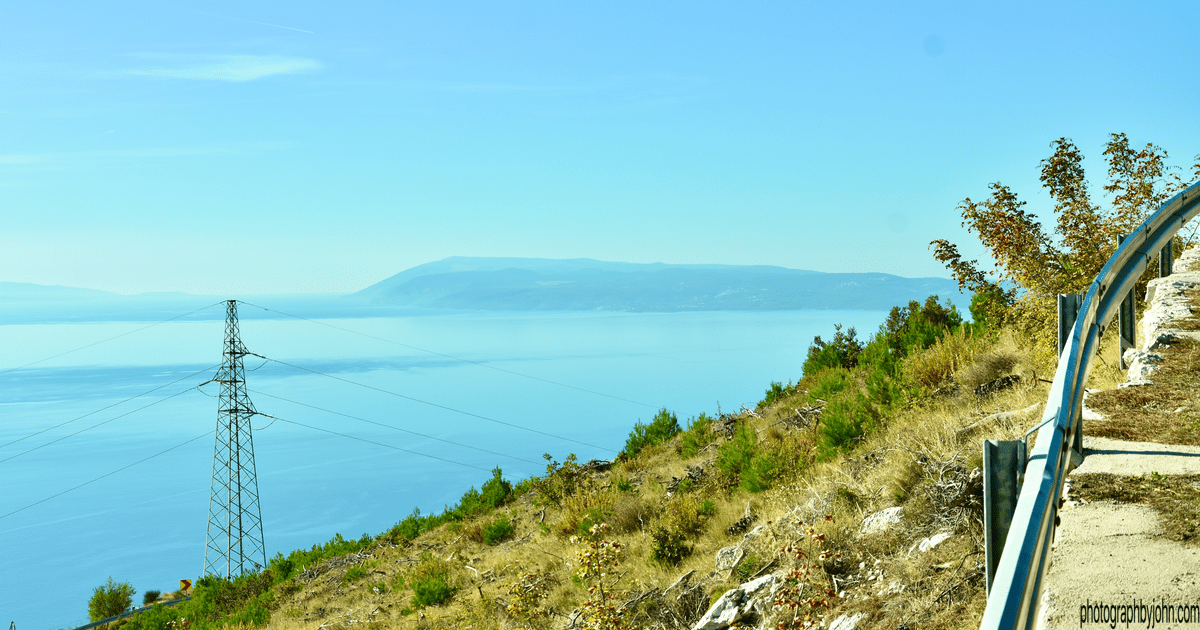
Mountain landscape photography at Biokovo presents unique technical challenges due to altitude, wind, extreme dynamic range, and bright limestone surfaces.
Aperture for Depth of Field
Mountain landscapes typically require extensive depth of field to maintain sharpness from foreground rocks to distant coastal elements.
f/11-f/16: My standard range for Biokovo photography. f/11 provides excellent sharpness without diffraction issues, while f/16 gives maximum depth of field when extreme foreground elements require extra depth.
f/8: Occasionally used when wind is too strong for slower shutter speeds required by f/11-f/16, or when foreground elements aren’t extremely close.
Hyperfocal Distance: At f/11 with a 24mm lens, hyperfocal distance is approximately 2 meters. Focusing at this distance ensures sharpness from 1 meter to infinity. For Biokovo’s typical compositions with rocky foregrounds and distant coastal backgrounds, hyperfocal focusing is ideal.
Shutter Speed and Wind Management
Wind is the biggest technical challenge at Biokovo. Even moderate wind can create camera shake that ruins sharpness.
Calm Conditions (wind < 20 km/h): Use tripod with normal shutter speeds. 1/15s to 1/60s is fine for static landscape work. Use remote release or 2-second timer to eliminate shutter-press vibration.
Moderate Wind (20-40 km/h): Increase shutter speed to 1/125s or faster even with tripod. Weight the tripod with your camera bag or rocks. Use shorter exposures and slightly higher ISO to maintain proper exposure.
Strong Wind (> 40 km/h): Tripod becomes counterproductive – the weight makes it a sail that catches wind and creates more shake than handheld shooting. Shoot handheld at 1/250s or faster. Use image stabilization if available. Brace yourself against rocks or the Skywalk railing. Accept that wind conditions may prevent optimal photography – sometimes you need to return another day.
Wind Assessment: I always test wind impact by triggering a shot and reviewing at 100% magnification. If there’s any shake blur, I increase shutter speed until I achieve sharp results.
ISO Settings
Keep ISO as low as possible for maximum image quality, dynamic range, and detail.
ISO 100-200: My standard for Biokovo. The abundant light from bright limestone and sky allows low ISO even at f/11-f/16 and reasonably fast shutter speeds.
ISO 400-800: Only when forced by wind conditions requiring very fast shutter speeds, or during sunrise/sunset when light levels drop.
Modern cameras handle ISO 400 very well, so don’t hesitate to increase ISO when wind demands faster shutter speeds. A sharp image at ISO 400 is infinitely better than a blurry image at ISO 100.
Exposure Compensation
Biokovo’s bright white limestone creates consistent exposure challenges.
-0.3 to -0.7 EV: My standard exposure compensation for Biokovo. The bright rocks and often bright sky cause camera meters to underexpose, but the extreme brightness also means we need to protect highlights. I slightly underexpose to preserve highlight detail in rocks and sky, then recover shadow detail in post-processing.
Check your histogram after every shot. Highlights should not clip (the histogram shouldn’t push against the right edge), and you should see a generally rightward-shifted histogram reflecting the bright scene.
White Balance
Daylight (5500K): My standard for mountain photography. Biokovo’s altitude and bright limestone create cool blue tones that daylight white balance renders accurately.
Cloudy/Shade (6500-7500K): For sunrise and sunset to enhance warm golden tones.
Always shoot RAW for complete white balance control in post-processing. The intense blue sky and Adriatic water combined with warm-toned limestone can create complex color balances that benefit from post-processing adjustment.
Recommended Settings Summary
Typical Biokovo Mountain Landscape:
- Mode: Aperture Priority or Manual
- Aperture: f/11-f/16
- Shutter Speed: 1/125s minimum (faster in wind)
- ISO: 100-200 (higher if wind demands faster shutter)
- Exposure Compensation: -0.3 to -0.7 EV
- White Balance: Daylight (5500K) in RAW
- Filters: Polarizer + graduated ND for coastal backgrounds
Best Times and Seasons

Timing is critical for successful Biokovo photography. The mountain’s extreme elevation creates rapidly changing conditions.
Daily Timing
Sunrise (Summer: 5:30-7:00 AM)
Sunrise from Biokovo is spectacular but challenging. You must either camp in the park or make a pre-dawn drive up the dark, narrow mountain road.
Benefits:
- Clearest atmospheric conditions of the day
- Often above coastal cloud layers
- Sun rising over inland Bosnia mountains while illuminating Adriatic coast
- Empty park before other visitors arrive
- Calm wind (usually)
I’ve done pre-dawn drives to Sveti Jure multiple times. It’s intense – narrow, winding road in darkness with hairpin turns and occasionally livestock on the road – but the sunrise rewards justify the effort.
Morning (7:00 AM-11:00 AM)
The best time for coastal visibility and general mountain photography.
Benefits:
- Excellent visibility before afternoon haze builds
- Good light quality with low sun angle creating dimension
- Fewer crowds early in this window
- Manageable wind conditions
- All details of islands and coast clearly visible
This is my preferred time for Biokovo photography. By arriving at park opening (8:00 AM), I get 3-4 hours of excellent conditions.
Midday (11:00 AM-3:00 PM)
The most challenging time for mountain photography at Biokovo.
Challenges:
- Overhead sun creates flat, directionless light
- Atmospheric haze reduces coastal visibility significantly
- Peak crowds at Skywalk and summit
- Hottest temperatures
- Strongest winds typically build by afternoon
I generally use midday for location scouting, lunch, or exploring rather than serious photography.
Late Afternoon (4:00-6:00 PM)
Improving light quality but continued haze issues.
Benefits:
- Warm afternoon light creates golden tones on limestone
- Fewer crowds than midday
- Cooler temperatures
Challenges:
- Haze continues to obscure distant detail
- Shorter window before sunset
Sunset (7:00-9:00 PM summer)
Spectacular but requires careful planning for the night descent.
Benefits:
- Beautiful warm light on mountain landscapes
- Dramatic sky colors over the Adriatic
- Alpenglow on eastern mountains after sunset
- Often above cloud layers creating dramatic cloudscapes
Challenges:
- Descent in darkness on narrow, winding road with livestock
- Park officially closes at sunset (enforcement varies)
- Coastal details become backlit and less visible
I typically photograph sunset from mid-elevation viewpoints (800-1,200 meters) rather than the summit, allowing safer descent in fading light.
Seasonal Considerations
Spring (April-May): Best Photography Season
Spring offers the best combination of clear air, dramatic weather, green vegetation, and wildflowers.
Benefits:
- Crystal-clear air, especially after weather fronts
- Dramatic clouds and weather systems
- Green vegetation at all elevations
- Wildflowers abundant on lower slopes
- Snow possible at summit creating variety
- Fewer visitors than summer
- Comfortable temperatures
Challenges:
- Weather can be unpredictable
- Park may open late (after April 1st) if snow persists
- Occasional closures due to weather
Spring is when I do my most productive Biokovo photography. The dramatic spring weather creates ever-changing conditions, and the visibility can be exceptional.
Summer (June-August): Peak Season
Summer provides reliable weather but haze and crowds.
Benefits:
- Consistently good weather
- Full park access and facilities
- Long daylight hours
- Warm temperatures at altitude
Challenges:
- Extreme crowds, especially at Skywalk
- Significant atmospheric haze by afternoon reducing coastal visibility
- Less dramatic weather and clouds
- Very crowded narrow road
Summer photography requires early morning arrival to beat crowds and haze.
Fall (September-October): Second Best Season
Fall combines summer warmth with improving visibility and fewer crowds.
Benefits:
- September still warm but fewer visitors
- October brings clearer air as summer haze diminishes
- Autumn colors on lower slopes
- Dramatic weather returns
- Excellent visibility
Challenges:
- Shorter days than summer
- Park closes for season October 31st
- October weather can be unpredictable
Early September is ideal for combining good weather with reduced crowds. Late October offers dramatic weather but requires flexibility for changing conditions.
Winter (November-March): Closed to Visitors
The park closes to general visitors from November through March, though accommodation owners maintain access.
From below, I’ve photographed Biokovo in winter and seen incredible snow-covered peaks, dramatic storms, and atmospheric conditions that would create spectacular mountain photography – but they’re inaccessible to visitors. This seasonal closure is frustrating for photographers as some of the most dramatic conditions occur during the closed period.
Composition Techniques
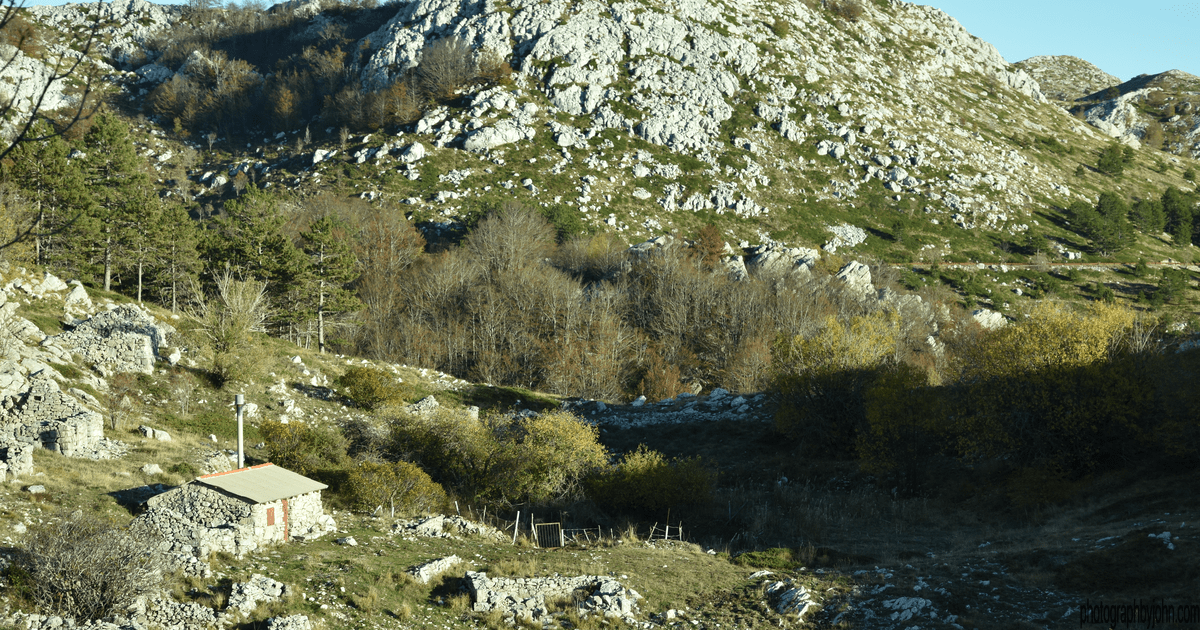
Biokovo presents unique compositional challenges and opportunities combining mountain and coastal elements.
Foreground-Background Integration
The key to compelling Biokovo photography is integrating mountain foreground with coastal background.
Foreground Elements:
- White limestone rocks and formations
- Alpine vegetation (hardy shrubs, grasses)
- Mountain road elements (guard rails, stone walls, refuges)
- Architectural elements (Skywalk platform, summit church, antenna)
Background Elements:
- Makarska Riviera coastal strip
- Turquoise Adriatic water
- Islands (Brač, Hvar, Korčula, Vis)
- Distant mountains (Pelješac Peninsula, Bosnia ranges)
Use wide-angle lenses (16-24mm) with strong foreground elements 1-2 meters from the camera, focused at hyperfocal distance, at f/11-f/16 to maintain sharpness throughout. This creates depth and emphasizes the dramatic elevation.
Leading Lines
The mountain landscape creates natural leading lines.
Road Curves: The 27 hairpin switchbacks create S-curves and zigzag patterns that lead the eye through compositions.
Mountain Ridges: The ridge lines create strong diagonals leading from foreground peaks to distant coastal elements.
Guard Rails and Stone Walls: Linear human-made elements guide the eye along the road and cliff edges.
Position yourself where multiple leading lines converge toward your focal point – typically the coastal strip or islands.
Layering
Biokovo’s elevation creates natural opportunities for layered compositions.
Multiple Layers:
- Foreground: Rocky mountain terrain
- Mid-ground: Lower mountain slopes with vegetation
- Background: Coastal strip with towns
- Far background: Adriatic Sea
- Distant background: Islands and distant mountains
Use telephoto lenses (70-200mm) from elevated viewpoints to compress these layers, creating stacked compositions showing the full transition from alpine to Mediterranean in one frame.
Scale and Perspective
The extreme elevation makes it difficult to convey scale without reference elements.
Providing Scale:
- Include people on the Skywalk or at viewpoints
- Photograph vehicles on the mountain road
- Include buildings or structures
- Show livestock (horses, cows) grazing alpine meadows
Small human or architectural elements emphasize the vast scale of the mountain and the dramatic drop to the coast below.
Symmetry and Balance
Some viewpoints offer natural symmetry between mountain elements and coastal elements.
Balanced Compositions:
- Divide the frame between mountain (left or top) and coast (right or bottom)
- Use the horizon line to create balance between land and sea
- Create symmetry between multiple mountain peaks
This creates harmonious compositions that feel balanced despite the dramatic elevation differences.
Minimalism
Biokovo’s lunar landscape at higher elevations provides opportunities for minimalist photography.
Minimal Elements:
- Simple compositions of white limestone against blue sky
- Single rocks or formations as focal points
- Clean negative space created by barren terrain
- Emphasis on form, texture, and tone rather than detail
Use the high-altitude barren landscape to create simple, powerful images focusing on essential elements.
Dealing with Altitude Challenges

Photographing at 1,700+ meters altitude presents challenges beyond typical landscape photography.
Wind Management
Wind is the primary challenge at Biokovo.
Techniques:
- Use fast shutter speeds (1/250s+) in moderate to strong wind
- Weight tripod with camera bag or rocks
- Shoot in bursts and select the sharpest frame
- Shoot handheld when tripod becomes counterproductive
- Time shots between wind gusts
- Use lower, wider tripod stance for stability
- Disable image stabilization when on tripod (can cause shake)
I always test sharpness by reviewing at 100% magnification. If there’s any shake blur, I adjust technique until achieving sharp results.
Temperature Changes
Even in summer, summit temperatures can be 10-15°C cooler than coastal Makarska.
Preparation:
- Bring layered clothing even for summer photography
- Protect hands (cold hands make camera operation difficult)
- Be aware of condensation when bringing cold camera into warm car
- Allow camera to warm gradually to avoid internal condensation
In spring and fall, conditions can approach freezing at the summit even when it’s warm at sea level.
Atmospheric Haze
Afternoon haze is inevitable and significantly degrades distant detail.
Management:
- Photograph in morning for best coastal visibility
- Visit after weather fronts pass for clearest air
- Accept that some days will have poor visibility
- Use haze creatively for atmospheric effect
- Consider focus on closer mountain elements rather than distant coast on hazy days
The haze builds throughout the day. Morning visibility is always better than afternoon.
Changing Weather
Weather can change dramatically and rapidly at altitude.
Preparation:
- Monitor weather forecasts and webcams before visiting
- Be prepared for conditions to change during your visit
- Have rain protection for gear
- Know when to abandon photography for safety
- Watch for approaching storms (common in spring and fall)
I’ve been caught in thunderstorms at Biokovo. The exposed peaks are dangerous in lightning conditions – descend immediately if storms approach.
Physical Demands
The altitude and terrain create physical challenges.
Considerations:
- Altitude can cause breathlessness even in fit individuals
- Steep hiking trails to certain viewpoints are demanding
- Carry sufficient water (no facilities on upper mountain)
- Bring snacks for energy
- Allow time for rest and acclimatization
While you can drive to the summit, many of the best photography locations require short hikes over rocky terrain.
The Biokovo Road as Subject
The 23-kilometer Biokovo mountain road is a photographic subject in its own right.
Photographing the Switchbacks
The 27 hairpin turns create dramatic patterns when photographed from elevated viewpoints.
Techniques:
- Use telephoto lenses (70-200mm) to compress perspective and show multiple switchbacks in one frame
- Photograph from higher elevations looking down at switchbacks below
- Create abstract patterns of the zigzagging road
- Include vehicles for scale and to show the road in use
Morning light from the east illuminates the eastern mountain face and road beautifully while creating shadows that define the road’s three-dimensional form.
Road as Leading Line
Individual road curves create strong leading lines.
Techniques:
- Use wide-angle lenses (16-24mm) to exaggerate road perspective
- Position yourself where the road curves through the frame
- Include guard rails and stone walls to strengthen the leading line
- Show the road disappearing into distance toward coastal backgrounds
Human Element
Including vehicles and cyclists adds life and scale.
Techniques:
- Time photography with a companion driving past
- Capture cyclists climbing the steep grades
- Show vehicles navigating hairpin turns
- Include motorcyclists (common on the scenic road)
The human element conveys the impressive nature of the engineering and the challenge of the route.
Architectural Details
The road infrastructure provides interesting details.
Subjects:
- Stone refuges (passing places every 300 meters)
- Guard rails and stone walls
- Kilometer markers
- Direction signs
- Park entrance gate
These human elements tell the story of adaptation to difficult terrain.
Wildlife Photography
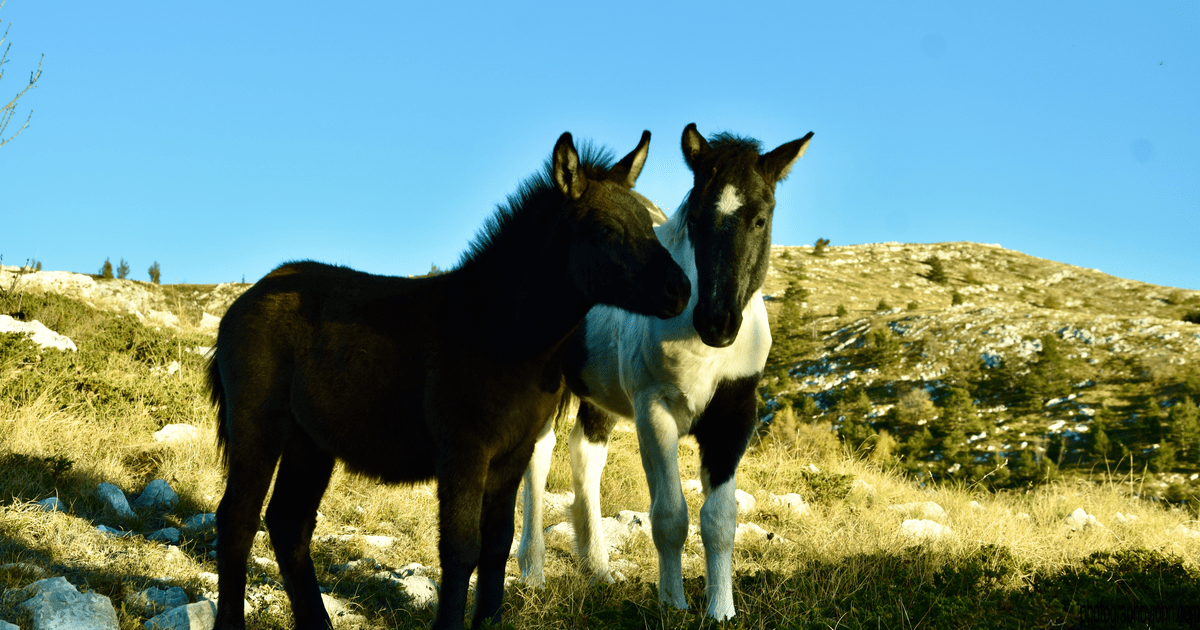
Biokovo is home to free-roaming livestock and wild animals.
Domestic Animals
Horses, cows, and mules roam freely throughout the park, creating photographic opportunities.
Best Times: Late afternoon (4:00-6:00 PM) when animals move to watering places. Early morning also sees animal activity.
Techniques:
- Use telephoto lenses (70-200mm or longer) for animal portraits
- Wide-angle lenses for environmental portraits showing animals in landscape
- Be cautious around foals and calves – mothers can be protective
- Don’t feed or disturb animals
- Allow animals to cross roads without honking or rushing
I’ve captured wonderful images of horses silhouetted against sunset coastal views, conveying the wild character of Biokovo’s high pastures.
Wild Animals
Biokovo hosts chamois, wild boar, wolves, and numerous bird species, though these are difficult to photograph due to wariness and terrain.
Techniques:
- Early morning and late evening offer the best chances
- Use long telephotos (300mm+) for distant wildlife
- Move slowly and quietly in potential wildlife areas
- Focus on raptors and other birds more tolerant of human presence
Wildlife photography at Biokovo requires patience and luck, but the possibility adds another dimension to mountain photography visits.
Practical Logistics
Park Access and Regulations
Opening Dates: April 1st through October 31st (dates can vary based on weather)
Opening Hours: Typically 7:00 AM to sunset, but verify current hours
Entrance Fee: Yes, varies by vehicle type. Purchase tickets online in advance (recommended) or at the entrance
Ticket Limits: The park limits vehicle entry (15-20 cars per hour) to manage traffic on the narrow road. Online tickets guarantee entry; arriving without tickets may mean waiting or being turned away during peak times.
Park Rules:
- Stay on designated roads and trails
- No off-road driving
- No camping except designated areas
- No fires
- Pack out all trash
- Don’t disturb wildlife
- Respect parking restrictions at viewpoints
The Drive
Road Condition: Paved but narrow, steep, and winding. The entire 23-kilometer route requires careful driving with constant attention.
Refuges: Passing places every 300 meters allow oncoming traffic to pass on the single-lane sections.
Parking: Limited parking at Skywalk and summit. Arrive early for parking spots. Some viewpoints have no formal parking.
Fuel: Fill up in Makarska before ascending. No fuel available on the mountain.
Time Required: Makarska to Skywalk is approximately 45 minutes of driving. Skywalk to Sveti Jure is an additional 30-40 minutes.
Facilities
Skywalk Area: Small souvenir shop, no food service, limited toilets (sometimes closed)
Sveti Jure Summit: No facilities
Lower Elevations: Picnic areas with tables
Restaurant: There’s a restaurant in the park (verify current status and hours)
Bring food and drink for the day. Facilities are limited, and what exists may be closed.
Safety Considerations
Road Safety: The narrow mountain road requires full attention. Don’t photograph while driving. Pull completely off the road when stopping.
Weather: Conditions can change rapidly. Be prepared for rain, wind, temperature drops.
Lightning: The exposed peaks are dangerous in thunderstorms. Descend immediately if storms approach.
Cliffs: Many viewpoints are at cliff edges. Watch your step, especially when focused on photography composition.
Animals: Watch for livestock on the road, especially evening and early morning.
Communication: Mobile phone coverage is generally good at higher elevations but can be spotty in valleys.
Best Photography Itinerary
For a comprehensive photography visit to Biokovo:
Pre-Dawn Departure: Leave Makarska at 5:00 AM for sunrise at Sveti Jure Sunrise: Photograph from summit (5:45-7:00 AM) Morning: Descend slowly, photographing viewpoints and road switchbacks (7:00-10:00 AM) Mid-Morning: Skywalk photography while crowds are still manageable (9:00-11:00 AM) Midday: Lunch, location scouting, exploring (11:00 AM-3:00 PM) Afternoon: Return to selected viewpoints for afternoon light (3:00-6:00 PM) Sunset: Photograph from mid-elevation viewpoint (6:30-8:00 PM) Evening: Careful descent in fading light
This full-day itinerary captures the mountain in various lighting conditions.
Key Takeaways
Biokovo Nature Park offers some of Croatia’s most dramatic mountain landscape photography. The unique proximity between alpine peaks and Mediterranean coast creates compositional opportunities unavailable anywhere else in Croatia.
Successful Biokovo photography requires managing significant challenges – wind, haze, crowds, narrow roads, and rapidly changing conditions. Early morning arrival provides the best combination of clear air, good light, and manageable crowds.
The Skywalk and Sveti Jure summit are the signature locations, but the entire mountain road offers countless photography opportunities. Take time to explore mid-elevation viewpoints and don’t rush to the summit.
Technical mastery is essential – use appropriate apertures for depth of field, manage wind through shutter speed selection, protect highlights in the bright limestone, and be prepared to adapt to changing conditions.
Most importantly, visit multiple times in different seasons and conditions. Biokovo changes dramatically with weather, season, and time of day. Each visit reveals new perspectives on this spectacular mountain landscape.
FAQ
Q: What is the best time to photograph Biokovo?
A: As a photographer who’s visited Biokovo in all seasons and conditions, I recommend early morning (6:00-8:00 AM) for the clearest atmospheric conditions and best light. Mountain air is typically cleanest after sunrise, providing the sharpest views of the coast and islands. The low-angle morning sun creates beautiful side lighting that reveals the texture of the rocky terrain and creates depth in the landscape. For the Skywalk specifically, morning light illuminates the Makarska coast below without the harsh overhead sun that creates problems later in the day. Sunset (7:00-8:30 PM in summer) is equally spectacular but afternoon haze can reduce coastal visibility. I’ve found that visiting immediately after weather fronts pass provides the clearest air – I once photographed from Sveti Jure with visibility extending to Italy, over 200 kilometers across the Adriatic. The park is closed to visitors from November through March, but this restriction is actually when some of the most dramatic photography opportunities exist – winter landscapes with snow-covered peaks and storm photography.
Q: What camera settings work best for mountain landscape photography at Biokovo?
A: For Biokovo’s mountain landscapes, I use these settings as my starting point: Aperture f/11 to f/16 for maximum depth of field, keeping both foreground rocks and distant coastal views sharp. The dramatic elevation means you’re often working with strong foreground elements (rocks, vegetation) and distant backgrounds (coast, islands) that require extensive depth of field. Shutter speed varies – 1/125s or faster for general handheld landscape work, though I typically use a tripod and shoot at 1/60s or slower for maximum image quality. ISO 100-200 to minimize noise and maximize dynamic range. The biggest challenge at altitude is wind – even moderate wind can create camera shake, so I use faster shutter speeds (1/250s) on windy days or weight my tripod. For sunrise/sunset photography from the peaks, I bracket exposures (-1, 0, +1 EV) to capture the extreme dynamic range between bright sky and shadowed mountains. A polarizing filter is essential for saturating the blue Adriatic water visible from above and managing sky tones. Biokovo’s lunar-like white limestone can fool your camera’s meter – use exposure compensation of -0.3 to -0.7 EV to prevent blown highlights in the bright rocks.
Q: Do I need special equipment for photographing Biokovo?
A: While you can photograph Biokovo with basic gear, certain equipment significantly improves results. Essential: a wide-angle lens (16-35mm) to capture the expansive mountain vistas and the dramatic drop from Skywalk to the coast 1,200 meters below. A sturdy tripod is crucial – wind at altitude can be strong, and the best light (sunrise/sunset) requires slower shutter speeds. A polarizing filter is mandatory for enhancing the Adriatic’s blue color visible from above and managing sky tones. Recommended: a telephoto lens (70-200mm) for compressing the perspective of mountain ridges and isolating distant islands. ND filters for long exposures if you want to smooth clouds during windy conditions. A remote shutter release eliminates camera shake. Weather-appropriate clothing is critical – even in summer, temperatures at 1,700+ meters can be 10-15°C cooler than at sea level, and wind can be intense. I always carry a light jacket even for summer sunrise shoots. In spring and fall, conditions can change rapidly, with fog rolling in quickly. A headlamp is essential for pre-dawn hikes to viewpoints. The mountain road is narrow and winding with limited parking at viewpoints, so a backpack-style camera bag allows easier mobility than a rolling case.
Q: Is the Biokovo Skywalk worth photographing?
A: The Biokovo Skywalk is absolutely worth photographing, though it presents unique challenges. The horseshoe-shaped glass platform extending over a 1,200-meter drop creates dramatic compositional opportunities that don’t exist elsewhere in Croatia. You can photograph straight down through the glass floor to the Makarska coast far below, creating vertiginous perspectives. Wide-angle lenses (16-24mm) exaggerate the height and drama. However, the Skywalk is extremely popular, making crowd-free photography difficult – I recommend arriving at park opening (8:00 AM) or just before closing for fewer people. The glass surface creates reflections that can be challenging or creative depending on your approach – use a polarizer to eliminate reflections, or embrace them as artistic elements. The Skywalk’s modern metal-and-glass structure contrasts beautifully with the ancient limestone landscape. For the most dramatic images, include people on the platform to provide scale and convey the dramatic height. Morning light works best as afternoon sun creates harsh shadows and glare off the glass. I’ve created some of my favorite Croatian landscape images from the Skywalk, combining the modern viewing platform with ancient mountains and distant Adriatic – it’s a unique photographic subject that represents the intersection of human engineering and natural grandeur.
Q: What are the biggest challenges for photography at Biokovo?
A: After multiple photography sessions at Biokovo, I’ve encountered several consistent challenges. First, wind at altitude can be extreme – I’ve experienced 50+ km/h winds at Sveti Jure that made tripod use nearly impossible and required shutter speeds of 1/500s or faster to avoid camera shake. Weight your tripod with your camera bag or use a stone bag. Second, afternoon haze significantly reduces visibility of the coast and islands – morning photography is essential for distant detail. By 2:00-3:00 PM, the clear morning views become hazy, especially in summer. Third, the narrow mountain road limits photography mobility – there are designated parking areas, but many attractive viewpoints lack safe pull-offs. Scout locations during the drive up and note GPS coordinates for return visits. Fourth, visitor numbers at popular spots (Skywalk, Sveti Jure) make crowd-free photography challenging during peak season – arrive early or visit in shoulder seasons. Fifth, the park’s seasonal closure (November-March) prevents access during potentially spectacular winter conditions. I’ve viewed Biokovo from below during winter storms and seen incredible snow-covered peaks that would create stunning photography but are inaccessible. Finally, the bright white limestone creates high-contrast scenes with extreme dynamic range between bright rocks and darker sky or shadowed valleys – bracketing and careful exposure are essential.
Q: Can I photograph sunrise and sunset from Biokovo?
A: Yes, and both are spectacular, though they require planning. For sunrise photography, you must either camp in the park (there are designated areas) or arrive very early as the drive from Makarska to Sveti Jure takes 45-60 minutes on the narrow, winding road. I’ve done pre-dawn drives multiple times – it’s challenging in darkness on the steep, narrow road with hairpin turns and free-roaming livestock, but the sunrise rewards are worth it. Sunrise from Sveti Jure offers 360-degree light shows – the sun rising over the inland mountains while illuminating the Adriatic coast and islands creates incredible photography opportunities. The elevated perspective means you’re often shooting above coastal cloud layers, creating dramatic cloud seas with mountain peaks emerging. Sunset is more accessible as you’re already in the park during normal visiting hours. The Skywalk and western viewpoints offer spectacular sunset photography with the sun setting over the Adriatic. The challenge is the return drive in darkness on the narrow mountain road – bring a powerful flashlight or headlamp and drive very carefully. The park technically closes at sunset, so confirm current regulations before planning sunset photography. I typically photograph sunset from mid-elevation viewpoints (800-1,200 meters) where I can capture both mountain and coastal elements while allowing a safer descent in fading light.
Q: What’s unique about Biokovo for landscape photography compared to other Croatian mountains?
A: Biokovo is unique in Croatia for combining dramatic mountain landscape with immediate proximity to the Adriatic coast. The mountain rises directly from sea level to 1,762 meters in just 12 kilometers horizontal distance, creating an almost vertical wall that provides exceptional elevated perspectives over the coast. This proximity means you can photograph compositions that include rugged mountain peaks in the foreground with turquoise Adriatic and islands in the background – a combination not available in inland mountain ranges. The lunar-like white limestone landscape is distinctive – Biokovo’s karst terrain creates otherworldly rocky deserts at altitude that contrast dramatically with the lush coastal vegetation below. The Skywalk viewing platform is unique in Croatia, offering modern architectural photography integrated with natural landscape. Biokovo also experiences dramatic weather changes – Mediterranean coastal weather transitions to alpine conditions within minutes of elevation gain, creating opportunities for dramatic cloud photography, storm systems, and atmospheric conditions. The botanical diversity is exceptional, with Mediterranean species at lower elevations transitioning to alpine flora higher up. This creates varied photographic subjects within a small area. Finally, the views span enormous distances – from Sveti Jure on clear days, visibility extends over 200 kilometers, encompassing the entire Dalmatian coast from Dubrovnik to Split, numerous islands, and across to Italy.
Q: How do I photograph the mountain road itself?
A: The Biokovo mountain road is a photographic subject in its own right, offering countless compositional opportunities. The 23-kilometer route features 27 hairpin switchbacks that create natural leading lines and patterns when photographed from elevated viewpoints. I use telephoto lenses (70-200mm) from higher elevations to compress perspective and show multiple switchbacks in a single frame, creating abstract patterns of the zigzagging road against the mountainside. Wide-angle lenses work better for individual curve photography, emphasizing the dramatic drop-offs and narrow road. The road is bordered by low stone walls and guard rails that lead the eye through compositions. For the best road photography, position yourself at viewpoints where you can see the road both above and below your position, creating context and scale. Morning light from the east illuminates the road beautifully while the Adriatic provides blue background contrast. Include vehicles on the road (you can time this if photographing with a companion) to provide scale and convey the dramatic nature of the drive. The refuges (passing places) every 300 meters create interesting architectural elements – small stone structures that show human adaptation to the challenging terrain. Don’t photograph while driving – the road demands full attention. Instead, stop at designated parking areas and walk to nearby viewpoints. Some of my favorite Biokovo images show the serpentine road climbing the mountain face with the Adriatic far below.
Final Thoughts
Biokovo Nature Park stands as one of Croatia’s most spectacular landscape photography locations. The dramatic mountain rising directly from the Adriatic creates unique opportunities to capture the meeting of alpine and Mediterranean environments in single compositions.
The challenges are significant – extreme wind, afternoon haze, narrow roads, crowds, and rapidly changing conditions – but the rewards justify the effort. The views from Sveti Jure and the Skywalk are among the finest in Europe, combining rugged mountain peaks with coastal vistas extending over 200 kilometers.
Success at Biokovo requires technical skill, physical preparation, careful timing, and flexibility. Visit early for the best conditions, be prepared for wind and weather changes, and allow time to explore beyond just the summit and Skywalk.
Most importantly, return multiple times. Biokovo transforms dramatically with seasons, weather, and light. Each visit reveals new perspectives on this magnificent mountain landscape where limestone peaks meet the turquoise Adriatic.
I hope this guide helps you capture the dramatic beauty of Biokovo. Whether you’re photographing from the glass-floored Skywalk, the lunar landscape of Sveti Jure, or the serpentine mountain road, you’ll discover that Biokovo offers some of the most rewarding and challenging landscape photography in Croatia.
The mountain is waiting. Get out there and shoot.
💙 Support My Photography Work
Enjoy these guides? Support me on Patreon to help create more in-depth photography content! 🙏