Croatia Beach Photography Guide: Mastering Adriatic Coast & Island Beach Photography
Explore More: Discover Croatia’s Hidden Gems & Budget AdventuresI still remember my first attempt at photographing Zlatni Rat. It was mid-July, and I arrived at noon – the absolute worst time for beach photography. The harsh overhead sun created washed-out images with no depth, the crowds made composition impossible, and the extreme contrast between bright sand and sky defeated my camera’s sensor. After living in Croatia for six years and photographing hundreds of beaches from Istria to Dubrovnik, I’ve learned that successful beach photography requires understanding light, timing, and the unique characteristics of Croatia’s diverse coastline.
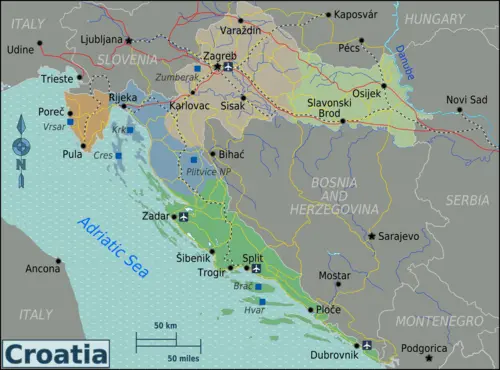
Croatia’s 1,777 kilometers of Adriatic coastline and over 1,200 islands create endless photography opportunities. Unlike typical Mediterranean destinations, Croatian beaches range from dramatic cliff-enclosed coves to pristine white sand beaches, rocky wild peninsulas to gentle pebble beaches with crystal-clear water. Each beach type presents unique photographic challenges and opportunities.
In this comprehensive guide, I’ll share everything I’ve learned about photographing Croatia’s spectacular beaches. You’ll discover the best beaches for photography, optimal camera settings for bright coastal conditions, techniques for managing challenging light, how to protect your gear from sand and saltwater, composition strategies for various beach types, and seasonal considerations that transform the same beach into completely different photographic subjects.
Table of Contents
- Understanding Croatia’s Diverse Beach Types
- Essential Camera Settings for Beach Photography
- The Best Times to Photograph Croatian Beaches
- Croatia’s Most Photogenic Beaches
- Composition Techniques for Beach Photography
- Protecting Your Gear in Beach Environments
- Seasonal Beach Photography
- Advanced Techniques
- Practical Tips
- FAQ
Understanding Croatia’s Diverse Beach Types
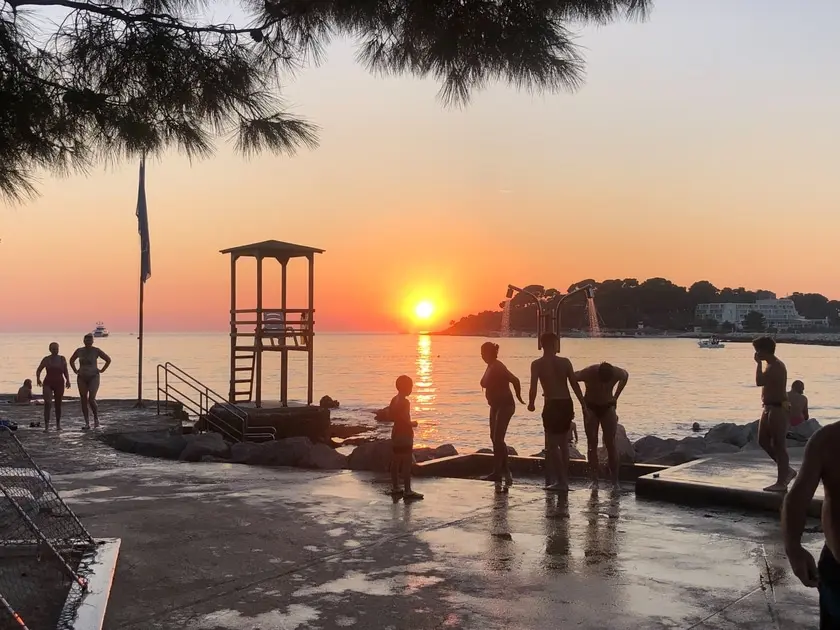
Croatia’s beaches differ significantly from region to region, each offering distinct photographic opportunities.
Pebble Beaches: The Croatian Standard
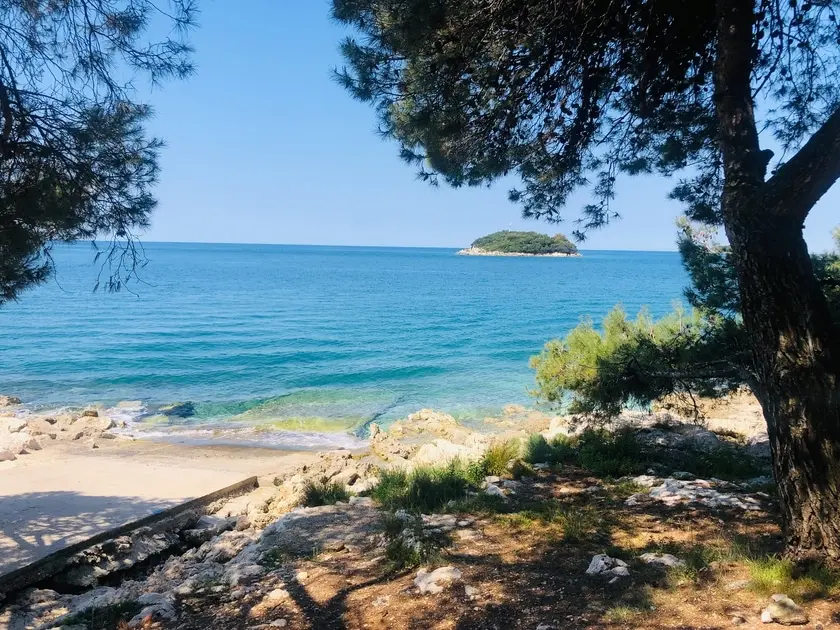
Most Croatian beaches are pebble beaches, and initially, I was disappointed – I expected Caribbean-style sand. But I’ve grown to love pebble beaches photographically. The larger stones create exceptionally clear water since they don’t cloud the sea like sand. This clarity allows you to photograph through the water surface, revealing underwater details, colorful stones, small fish, and depth.
Pebble beaches also provide wonderful textural variety. The stones range from small smooth pebbles to large rounded rocks, creating patterns and details perfect for foreground elements. At locations like Punta Rata in Brela or beaches around Hvar, the white pebbles contrast beautifully with turquoise water.
Photographically, I treat pebble beaches as opportunities for detail and clarity. I use polarizing filters to eliminate surface reflections, revealing the intricate underwater world. The varied textures of pebbles make excellent foreground interest when shooting with wide-angle lenses at f/11-f/16 for front-to-back sharpness.
Sand Beaches: Croatia’s Hidden Treasures
True sand beaches are rare in Croatia, making them special when you find them. Sakarun Beach on Dugi Otok is Croatia’s finest – an 800-meter crescent of white sand with shallow turquoise water that rivals any Caribbean beach. Lovrečina Bay on Brač, Rajska Plaža (Paradise Beach) on Rab, and Šunj Beach on Lopud are other excellent sand beaches.
Sand beaches offer cleaner, more minimalist compositions. The smooth foreground provides simplicity that draws attention to sky, water, and distant elements. The color contrast is often spectacular – white sand, turquoise shallow water, deep blue sea, and green vegetation.
I photograph sand beaches differently than pebble beaches. Early morning is essential to capture pristine sand before footprints accumulate. I use the smooth sand as negative space in compositions, often including just a small corner of beach to anchor wider seascape images. Long exposures work beautifully on sand beaches, creating minimal, zen-like compositions with smooth water and clean sand.
Rocky Coasts and Cliff Beaches
Croatia’s wildest and most dramatic beaches are cliff-enclosed coves and rocky coastline beaches. Stiniva Beach on Vis, with its towering limestone cliffs creating a narrow entrance to a small cove, exemplifies this type. The Kamenjak Peninsula near Pula offers 30 kilometers of rugged rocky coastline with countless hidden coves.
These dramatic locations provide the most impressive compositions but present technical challenges. The high cliffs create extreme contrast – bright sky and water versus dark shadowed cliffs. I use graduated ND filters or bracket exposures to manage this range.
Rocky coasts also offer unique foreground opportunities. Interesting rock formations, tide pools, and dramatic cliffside perspectives create strong compositional elements. At Kamenjak, I’ve spent entire days exploring the coastline, discovering new photographic angles around every bend.
Urban and City Beaches
Cities like Split, Zadar, and Opatija have beaches integrated into urban environments. Bačvice Beach in Split, right in the city center, combines beach culture with urban architecture. These locations offer different subjects – beach culture, local life, the contrast between urban and natural environments.
I approach urban beaches as documentary subjects, capturing how Croatians use and enjoy their coastal cities. Early morning provides traditional landscape photography opportunities, while daytime brings vibrant beach culture worth documenting.
Essential Camera Settings for Beach Photography
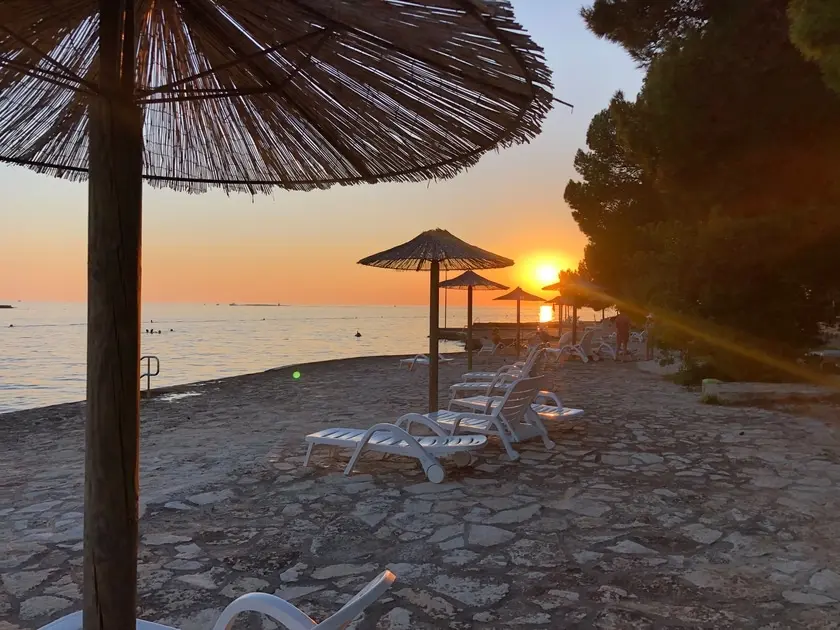
Beach photography presents unique exposure challenges. Bright sand or white pebbles, reflective water, and often bright sky can fool your camera’s meter into underexposure, creating dark, muddy images. Here’s how I handle these challenges.
Aperture Settings
For beach landscapes, I typically shoot at f/8 to f/16. This range provides excellent sharpness throughout the frame while maintaining depth of field from foreground pebbles or sand through to distant horizon.
- f/8-f/11: My standard range for most beach photography. Provides excellent overall sharpness without pushing into diffraction territory.
- f/16: When I want maximum depth of field with strong foreground elements like rocks or pebbles close to the lens.
- f/5.6 or wider: Rarely used for landscapes, but occasionally for isolating specific subjects like beach details, boats, or selective focus effects.
For beach portraits or detail shots, wider apertures like f/2.8-f/4 can create beautiful subject isolation with soft, out-of-focus backgrounds of water and sky.
Shutter Speed
Shutter speed determines how water motion appears in your beach photographs, giving you significant creative control.
Fast Shutter Speeds (1/250s - 1/1000s): Freeze wave action and water motion, creating crisp detail in splashing waves and water texture. I use these speeds when I want to capture the dynamic energy of waves crashing against rocks or when handholding long lenses for distant beach scenes.
Medium Shutter Speeds (1/60s - 1/125s): My standard for general beach photography. Fast enough for sharp handheld images while showing slight motion in water that adds life to the image without being completely frozen.
Long Exposures (0.5s - 4s): Create that smooth, silky water effect that’s popular in seascape photography. With a strong ND filter (6-10 stops), even during daytime, I can achieve 1-4 second exposures that turn waves into soft mist and smooth water into glass. This technique works beautifully for minimalist compositions at beaches like Sakarun where you want to emphasize color and form over detail and texture.
Very Long Exposures (30s - 120s): For dramatic blue hour scenes or eliminating people from busy beaches. A 30-60 second exposure with a 10-stop ND filter turns moving tourists into ghosts or makes them disappear entirely while creating ethereal water and cloud motion.
For Croatia’s bright beach conditions, achieving long exposures requires strong ND filters. I regularly use 6-stop and 10-stop ND filters, often stacked with a polarizer for maximum light reduction and glare control.
ISO Settings
Keep ISO as low as possible in bright beach conditions. I shoot at ISO 100-200 for beach photography. Croatia’s intense summer sun provides abundant light, allowing low ISO for maximum image quality, minimal noise, and best dynamic range.
The only time I increase ISO at the beach is during blue hour or when shooting in shadowed coves where light levels drop significantly. Even then, I rarely exceed ISO 800, as the bright water and sky usually provide enough ambient light.
Exposure Compensation
This is critical for beach photography. Your camera’s meter sees the bright beach scene and often undercomposes, trying to render the bright tones as middle gray. This creates dark, underexposed images.
I typically use -0.3 to -1.0 EV exposure compensation when shooting beaches. This seems counterintuitive (negative compensation makes images darker), but here’s why it works: I want to preserve highlight detail in bright sand, white pebbles, and sky. By slightly underexposing, I prevent blown highlights. Modern RAW files have excellent shadow recovery, so I can easily lift darker areas in post-processing without losing detail.
The exact compensation depends on conditions:
- -0.3 EV: Overcast or soft light conditions
- -0.7 EV: My standard for bright beach conditions
- -1.0 EV: Extremely bright conditions with white sand or when photographing toward the sun
I always check my histogram after each shot, ensuring highlights aren’t clipped while maintaining detail throughout the tonal range.
White Balance
Croatia’s Adriatic water has a distinctive turquoise-blue color that can confuse auto white balance. I shoot in RAW and set white balance to Daylight (5500K) as a starting point, knowing I’ll refine it in post-processing.
For sunrise and sunset beach photography, I use Shade or Cloudy white balance (6500-7500K) to enhance the warm golden and orange tones. The warmer white balance intensifies the already beautiful colors of golden hour.
Never use auto white balance for beach photography if you want consistent color rendition, especially for the distinctive Adriatic blue-green tones. Shoot RAW so you have complete control over white balance in post-processing.
Recommended Gear Settings Summary
Here’s my standard starting point for Croatia beach photography:
- Mode: Aperture Priority (A/Av) or Manual (M)
- Aperture: f/8-f/11
- Shutter Speed: 1/125s or faster (or long exposures with ND filters)
- ISO: 100-200
- Exposure Compensation: -0.7 EV
- White Balance: Daylight (5500K) when shooting RAW
- Filters: Polarizer (essential) + ND filters for long exposures
The Best Times to Photograph Croatian Beaches

Timing is everything in beach photography. The difference between mediocre and spectacular beach images often comes down to when you press the shutter.
Golden Hour: The Magical Time
The hour after sunrise and the hour before sunset provide the most beautiful light for beach photography. During these golden hours, the low-angle sun creates warm, soft light that beautifully illuminates beach features without harsh shadows.
Morning Golden Hour (Summer: 6:00-8:00 AM)
I prefer morning golden hour for beach photography. The air is still, water is calm, beaches are empty, and the light is pristine. The sun rising over the Adriatic (on eastern-facing beaches in Dalmatia and the islands) creates stunning illumination that skims across water surfaces, highlighting every ripple and texture.
Benefits of morning shooting:
- Empty beaches before tourists arrive
- Calm wind and water conditions
- Fresh, clean air with excellent visibility
- Pristine sand without footprints
- Often more dramatic skies with morning clouds
- Cooler temperatures for comfortable shooting
I set my alarm early for important beach photography. Arriving 30-45 minutes before sunrise gives me time to scout compositions, set up equipment, and be ready when the best light arrives.
Evening Golden Hour (Summer: 7:00-9:00 PM)
Evening golden hour offers equally beautiful light, though beach conditions are different. Beaches are busy with people enjoying the evening, wind may have picked up during the day, and sand shows footprints. However, the warm evening light is gorgeous, and you can capture beach culture and social atmosphere.
Western-facing beaches in Istria (Rovinj, Poreč, Umag) provide spectacular sunset photography with the sun setting directly over the Adriatic. I’ve photographed hundreds of Istrian sunsets, and each one is different.
Evening shooting tips:
- Scout locations in advance during the day
- Arrive 45-60 minutes before sunset
- Use people as compositional elements rather than avoiding them
- Stay after sunset for blue hour
- Watch for alpenglow on distant islands and mountains
Blue Hour: Moody Atmospheres
Blue hour – the 20-30 minutes before sunrise and after sunset when the sky takes on deep blue tones – creates moody, dramatic beach photography. The soft, even light during blue hour is perfect for long exposures that smooth water into silky textures.
I love blue hour for minimalist beach compositions. With a 30-60 second exposure using a strong ND filter, I can create serene images with glass-smooth water, simplified compositions, and beautiful blue tones.
Blue hour also works well for photographing beaches with artificial lights – beach bars, promenades, or coastal cities where lights reflect in the water and create interesting color contrasts with the blue sky.
Midday: Challenging but Not Impossible
The midday hours (11:00 AM - 3:00 PM) provide the most challenging light for beach photography. The high overhead sun creates harsh shadows, extreme contrast, and flat, washed-out tones. The light lacks direction and warmth.
However, midday isn’t completely useless for beach photography:
Underwater photography: The overhead sun illuminates underwater scenes better than angled morning or evening light.
Aerial/drone photography: Overhead sun shows water color and clarity better than angled light, revealing underwater features, reefs, and depth variations.
Detail shots: Close-ups of pebbles, shells, water patterns, or beach textures work fine in midday light.
Embrace the harsh contrast: Sometimes the bright, high-contrast midday look conveys the intense summer heat and brightness of Mediterranean beaches.
Generally, though, I avoid serious beach photography during midday. It’s a good time for lunch, location scouting, or swimming.
Overcast Days: Underrated Opportunities
Many photographers pack up when clouds arrive, but I’ve learned that overcast conditions create wonderful opportunities for beach photography.
Overcast light provides several advantages:
- Even, soft light without harsh shadows
- Saturated colors without washed-out highlights
- True water colors without excessive glare
- Extended shooting hours – you can photograph all day
- Moody, atmospheric scenes different from typical sunny beach images
The Adriatic’s turquoise color actually shows better under overcast skies than harsh sun. The diffused light eliminates surface glare and reveals the true water color. Some of my favorite beach images were captured under cloudy skies.
After rain, conditions can be exceptional. The air is crystal clear, colors are saturated, interesting clouds add drama to skies, and beaches are often empty.
Seasonal Light Considerations
Light quality and timing change dramatically with seasons:
Summer (June-August):
- Sunrise: 5:15-5:45 AM
- Sunset: 8:15-8:45 PM
- Very long days with extended golden hours
- Harsh midday light for 6+ hours
- Best for early morning and evening photography
Spring/Fall (April-May, September-October):
- Sunrise: 6:00-7:00 AM
- Sunset: 6:00-7:30 PM
- More reasonable shooting hours
- Softer midday light as sun never gets as high
- Often dramatic weather with interesting skies
- My favorite seasons for beach photography
Winter (November-March):
- Sunrise: 7:00-7:30 AM
- Sunset: 4:30-5:00 PM
- Low-angle sun all day creates beautiful light
- Dramatic weather and storms
- Completely empty beaches
- Moody, wild seascapes different from summer beauty
Croatia’s Most Photogenic Beaches
After six years photographing Croatian beaches, these locations consistently provide the most spectacular images.
Zlatni Rat, Brač: Croatia’s Most Iconic Beach
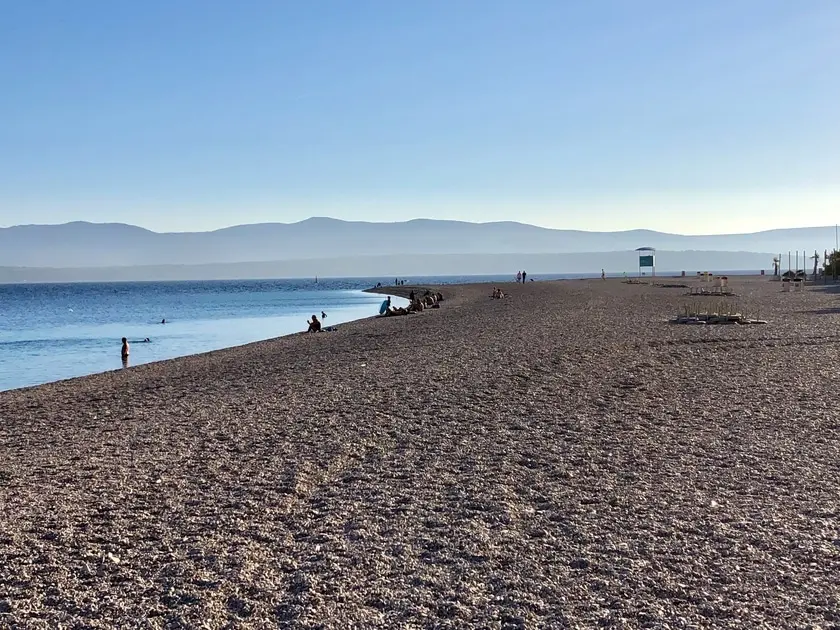
Zlatni Rat (Golden Horn) is Croatia’s most photographed beach, and for good reason. This white pebble beach extends into the Adriatic in a distinctive triangular shape that changes with currents and winds, sometimes pointing one direction, sometimes another.
Photography Opportunities:
- Aerial/elevated perspectives: The viewpoint from Vidova Gora mountain (778m) above provides breathtaking views showing the full beach shape, turquoise water, and pine forest.
- Beach level: Walking to the tip of the beach offers unique perspectives with water on both sides.
- Water photography: Kayaking or SUP boarding allows you to photograph the beach from sea level.
- Seasonal changes: The beach shape changes significantly between seasons, offering different compositions.
Best Times: Early morning (6:00-8:00 AM) before crowds arrive. The beach faces south/southwest, receiving beautiful morning light from the east. Late afternoon light is also excellent.
Camera Settings: From Vidova Gora viewpoint, use f/11-f/16 for front-to-back sharpness, ISO 100, and shutter speed 1/125s or faster (it’s windy up there). A wide-angle lens (16-24mm) captures the full scope, while a telephoto (70-200mm) compresses the perspective beautifully.
Access: The beach is easily accessible from Bol town (20-minute walk). Vidova Gora is reached by car or hiking trail (2-hour steep hike).
Stiniva Beach, Vis: Dramatic Cliff Cove
Stiniva Beach is one of Croatia’s most dramatic beach locations – a small pebble beach enclosed by towering limestone cliffs with a narrow 5-meter entrance from the sea. Named Europe’s Best Beach in 2016, it’s one of my favorite photography locations.
Photography Opportunities:
- Dramatic cliff compositions: The high limestone cliffs create impressive frames for the small beach and turquoise water.
- Scale and perspective: Human figures on the beach provide scale against the massive cliffs.
- Light challenges: The high cliffs shade the beach until late morning, creating interesting light patterns.
- From the water: Approaching by boat or kayak provides unique perspectives through the narrow entrance.
Best Times: Late morning (10:00 AM-12:00 PM) when sun illuminates the entire cove. Earlier or later, portions are in deep shadow creating extreme contrast.
Camera Settings: The extreme contrast between bright sky and shadowed cliffs requires careful exposure management. I bracket exposures (-1 EV, 0 EV, +1 EV) and blend in post-processing, or use a 3-stop graduated ND filter. Use f/11 for depth of field, ISO 100-200, and a wide-angle lens (16-35mm) to capture the full drama of the cliffs.
Access: Accessible by boat from Vis town or a challenging 30-minute hiking trail down steep slopes (not recommended for those with mobility issues).
Photography Tip: Time your visit for late May or early September to avoid peak summer crowds while still having warm weather and good light.
Sakarun Beach, Dugi Otok: Croatia’s Caribbean
Sakarun Beach offers something rare in Croatia – brilliant white sand creating Caribbean-like turquoise water. This 800-meter crescent beach with shallow water and pine forest backdrop is one of Croatia’s most beautiful beaches.
Photography Opportunities:
- Color contrast: Exceptional color gradients from white sand through turquoise shallows to deep blue sea.
- Minimalist compositions: The clean sand and simple curves create opportunities for minimalist beach photography.
- Aerial perspectives: Drone photography reveals the full crescent shape and color variations.
- Pine forest framing: Trees along the beach provide natural framing elements.
Best Times: Morning (7:00-9:00 AM) for pristine sand and calm water, or late afternoon (5:00-7:00 PM) for warm light and sky reflections in the wet sand.
Camera Settings: The white sand requires careful exposure – underexpose by -0.7 to -1.0 EV to protect highlights, then recover shadows in post. Use f/8-f/11, ISO 100, polarizing filter to enhance water colors. Long exposures (2-4 seconds with ND filter) create beautiful smooth water against the white sand.
Access: Located on Dugi Otok’s northwestern coast, accessible by car from Božava (20-minute drive on dirt road) or by boat.
Photography Tip: Early morning after any footprints have been washed away by tide provides the cleanest compositions. The shallow water extends far from shore, creating beautiful color gradients perfect for photography.
Punta Rata, Brela: The Iconic Rock
Punta Rata Beach is famous for one thing: Kamen Brela, the distinctive rock formation rising from crystal-clear water that’s become an iconic symbol of Croatian tourism.
Photography Opportunities:
- Signature rock formation: The rock provides a perfect foreground element for compositions with Biokovo mountain in the background.
- Sunset silhouettes: Backlit rock at sunset creates dramatic silhouette against colorful skies.
- Long exposures: Smooth water around the rock using 1-4 second exposures creates an ethereal effect.
- Multiple perspectives: The beach offers various angles of the rock from different positions.
Best Times: Sunset (7:00-8:30 PM in summer) when the rock is backlit against western sky. Blue hour after sunset also creates moody compositions.
Camera Settings: For sunset silhouettes, expose for the sky (the rock will be dark), using f/8-f/11, ISO 100. For long exposures, use 1-4 seconds with an ND filter to smooth water while keeping the rock sharp. A wide-angle lens (16-24mm) includes both rock and background, while a telephoto (70-200mm) compresses the perspective, making Biokovo mountain appear larger.
Access: Easy access from Brela town center (short walk).
Photography Tip: The beach is extremely popular in summer. Arrive very early or shoot during blue hour when crowds have left to avoid people in your compositions.
Kamenjak Peninsula: Wild Coastline
The Kamenjak Peninsula south of Pula offers something completely different – 30 kilometers of wild, protected coastline with dozens of secluded coves, rocky cliffs, and pristine natural beauty.
Photography Opportunities:
- Rugged landscapes: Dramatic limestone cliffs, wind-shaped vegetation, wild coastal scenery.
- Hidden coves: Countless small beaches and swimming spots, each unique.
- Safari Bar viewpoint: A bar built into the cliffs offers elevated perspectives.
- Exploration opportunities: You can spend days discovering new photographic locations.
Best Times: All day photography is possible due to variety of locations. Morning light from the east illuminates western cliffs beautifully. Sunset on western-facing coves is spectacular.
Camera Settings: Varied settings depending on location. For rugged landscape photography, use f/11-f/16 for depth of field, ISO 100-200. Bring a tripod for long exposures of waves against rocks. Wide-angle lenses (16-35mm) capture the expansive wild landscapes.
Access: Accessible by car, bicycle (popular option), or on foot. Small entrance fee during summer. No facilities beyond Safari Bar.
Photography Tip: Rent a bicycle and spend a full day exploring the peninsula. Dozens of unmarked trails lead to hidden coves perfect for photography. Bring plenty of water and sun protection.
Dubovica Beach, Hvar: Traditional Beauty
Dubovica Beach on Hvar’s southern coast combines natural beauty with cultural elements – traditional stone boat houses, clear water, and views toward Šćedro Island.
Photography Opportunities:
- Cultural elements: The picturesque stone boat houses add human interest.
- Road viewpoint: The access road provides elevated perspectives over the beach.
- Clear water: Exceptionally transparent water for underwater photography.
- Island views: Šćedro Island in the distance provides depth and context.
Best Times: Late afternoon (5:00-7:00 PM) when light illuminates the stone houses and creates warm tones on pebbles and rocks.
Camera Settings: From the road viewpoint, use f/8-f/11, ISO 100, and a mid-range zoom (24-70mm) to frame the beach with stone houses. On the beach, use f/16 with wide-angle lens for foreground pebbles leading to the houses and island.
Access: Accessible via winding road from Hvar town (15-minute drive), followed by short walk down to the beach.
Photography Tip: The stone boat houses are most photogenic when late afternoon light hits them directly. Arrive early afternoon to scout compositions from both viewpoint and beach level.
Composition Techniques for Beach Photography
Strong composition transforms ordinary beach photos into compelling images. Here are the techniques I use consistently.
Rule of Thirds and Horizon Placement
The basic rule of thirds remains valuable for beach photography. Rather than centering the horizon, place it along the upper or lower third line depending on whether sky or foreground is more interesting.
Sky emphasis (horizon on lower third): Use when you have dramatic clouds, colorful sunrise/sunset, or interesting sky features. This composition emphasizes the atmospheric conditions.
Foreground emphasis (horizon on upper third): Use when you have interesting foreground elements – pebble patterns, rocks, beach details, or reflected colors in wet sand. This grounds the composition and creates depth.
I rarely center the horizon unless creating symmetrical compositions or perfect mirror reflections.
Foreground Interest
Empty beach and water can feel flat and uninteresting. Including foreground elements creates depth and draws viewers into the image.
Natural foreground elements:
- Pebbles and rocks: Close foreground pebbles using wide-angle lens at f/16 creates depth from front to back.
- Driftwood: Weathered wood adds texture and organic shapes.
- Tidal pools: Small pools of water in foreground reflect sky colors.
- Sea foam patterns: Waves create temporary foam patterns that add visual interest.
- Beach vegetation: Sea grass, flowers, or shrubs frame beach scenes.
For foreground elements to work effectively, you need depth of field that keeps both foreground and background sharp. Use f/11-f/16 with a wide-angle lens and focus about one-third into the scene for maximum front-to-back sharpness.
Leading Lines
Beaches naturally create leading lines that draw the eye through the composition.
Natural leading lines at beaches:
- Shoreline curves: The line where water meets beach naturally leads the eye through the frame.
- Waves: Wave patterns create parallel lines leading toward the horizon.
- Pebble lines: Sorted pebbles create natural lines and patterns.
- Rock formations: Linear rock formations guide the eye toward the subject.
- Beach tracks: Footprints or boat tracks (though I prefer pristine beaches) create perspective lines.
Use leading lines to direct attention toward your main subject – a distant rock formation, island, sunset, or focal point. Position yourself so the lines lead into rather than out of the frame.
Symmetry and Reflections
Wet sand at the beach edge creates natural mirrors that reflect sky, clouds, and beach features. I use these reflections to create symmetrical compositions.
Reflection photography tips:
- Timing: Reflections work best immediately after waves recede, leaving thin water films on sand.
- Low perspective: Get your camera low (sometimes just inches above the sand) to emphasize reflections.
- Calm water: Reflections work better in calm conditions without wind disturbing the water surface.
- Polarizer management: A polarizer can eliminate reflections, so be careful. Sometimes you want reflections, so adjust the polarizer or remove it.
For perfect symmetry, center the horizon and ensure the reflection mirrors the upper half. This breaks the rule of thirds but creates striking, minimalist compositions.
Negative Space
Beaches offer opportunities for minimalist compositions using negative space – large areas of simple sky or water that emphasize isolation, tranquility, and simplicity.
Using negative space effectively:
- Minimal subjects: A single rock, distant boat, or small beach element surrounded by water or sky.
- Clean backgrounds: Use smooth, featureless water (via long exposure) or clear sky as negative space.
- Subject placement: Place your small subject along thirds intersections, surrounded by negative space.
Long exposures excel at creating negative space by smoothing water and sky into simple, clean areas. A 30-60 second exposure turns textured water into a smooth surface that emphasizes minimal subjects.
Scale and Perspective
Beaches can feel empty and flat without elements that provide scale. Including human figures, boats, or recognizable objects helps viewers understand the size of landscape features.
Providing scale:
- People: A small human figure demonstrates the size of cliffs, boulders, or landscape.
- Boats: Sailboats or kayaks provide scale reference in water scenes.
- Beach infrastructure: Umbrellas, chairs, or piers give size context.
For dramatic perspective, use wide-angle lenses (16-24mm) close to foreground elements, making them appear large while compressing distant features. Or use telephoto lenses (70-200mm) to compress perspective, making distant islands or mountains appear closer and larger.
Protecting Your Gear in Beach Environments
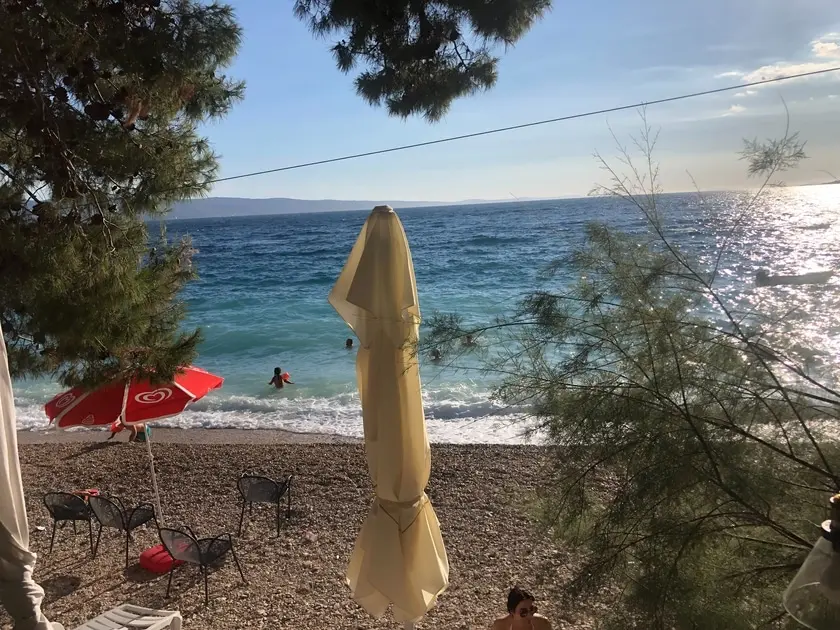
Sand and saltwater are among the most damaging elements your camera gear will encounter. Here’s how I protect my equipment while shooting beaches throughout Croatia.
The Three Threats
Sand: Gets everywhere, scratches glass, clogs mechanisms, and damages sensors during lens changes.
Saltwater: Spray and humidity cause corrosion, damage electronics, and ruin equipment if not cleaned properly.
Heat: Summer beach conditions create extreme heat that can damage batteries and electronics.
Essential Protection Equipment
UV/Clear protective filter: Always keep a filter on your lens. It’s far cheaper and easier to replace a scratched $50 filter than a $1,500 lens front element.
Lens hood: Provides physical protection and reduces lens flare from bright beach light.
Camera rain cover: Simple shower cap or dedicated rain cover protects against spray when photographing near waves.
Sealed camera bag: Keep your gear in a sealed bag when not actively shooting. Never place your bag directly on sand.
Microfiber cloths: Multiple clean cloths for wiping gear throughout the shooting session.
Rocket blower: For removing sand and dust without touching glass surfaces.
Small towel or cloth: Place under your camera bag to keep it off sand.
Shooting Practices
Avoid lens changes: Plan your lens choice before arriving at the beach. If you must change lenses, do it inside a sealed bag or in your car, never in windy conditions or near sand.
Keep equipment covered: When walking between spots, keep your camera in the bag or covered with a cloth.
Minimize low-angle shooting on sandy beaches: Getting low is great for composition, but on sandy beaches it increases sand exposure. On pebble beaches, this is less problematic.
Watch for waves: Always be aware of wave patterns. Rogue waves can unexpectedly reach further up the beach, potentially soaking you and your gear.
Be cautious near spray: When photographing crashing waves or from boats, keep distance or use weather-sealed gear with rain covers.
End-of-Day Cleaning Routine
This routine is essential. I’ve photographed hundreds of beach locations and have never had corrosion or damage because I follow this protocol religiously.
Before leaving the beach: Use rocket blower to remove loose sand from camera and lens exterior. Don’t touch glass surfaces yet – just blow off loose particles.
In your accommodation (within 2-3 hours of beach shooting):
- Use rocket blower again thoroughly on all gear
- Wipe all exterior surfaces with slightly damp (not wet) microfiber cloth to remove salt residue
- Pay special attention to moving parts, buttons, dials, and joints where salt can accumulate
- Clean lens filter with lens cleaning solution and microfiber cloth
- Wipe camera strap, bag exterior, and tripod legs
Inspect for sand: Check lens mount area, memory card door, battery compartment, and all seams for trapped sand.
Air out gear: Leave camera bag open to air out any humidity accumulated during shooting.
The key is removing salt residue before it crystallizes. Salt crystals are corrosive and can damage seals, corrode metal, and cause long-term problems. Never skip the end-of-day wipe-down.
For Water and Underwater Photography
If you’re shooting in or near water:
Underwater housings: For actual underwater photography, use proper underwater housings rated for the depth you’ll be shooting.
Waterproof bags: Simple waterproof pouches work for casual water photography in shallow areas.
Rinse with fresh water: After saltwater exposure, rinse housings and gear with fresh water as soon as possible.
Silica gel packets: Keep these in your camera bag to absorb humidity, especially in summer.
Seasonal Beach Photography
Croatia’s beaches transform dramatically across seasons. Each season offers unique photographic opportunities.
Summer (June-August): Peak Season Challenges
Summer brings perfect weather, warm water, and intense crowds. Photography requires strategy to deal with these conditions.
Advantages:
- Long days with extended golden hours
- Warm water for water photography
- Vibrant beach culture and activities
- Reliable weather and clear skies
- Best conditions for swimming and water access
Challenges:
- Extremely crowded beaches during daytime
- Harsh midday light
- Uniform blue skies without drama
- Heat can be exhausting for long photo sessions
Summer photography strategy:
- Shoot at sunrise (5:30-7:30 AM) before crowds arrive
- Use long exposures to eliminate people
- Embrace beach culture as a subject
- Seek elevated viewpoints where crowds are less visible
- Explore less-famous beaches
- Shoot during blue hour when crowds have left
Spring (April-May): My Favorite Season
Spring offers the best combination of good weather, fewer crowds, and dramatic skies. This is when I do my most productive beach photography.
Advantages:
- Nearly empty beaches
- Dramatic weather with interesting clouds
- Wild flowers and green vegetation
- Comfortable temperatures for hiking to remote beaches
- Lower-angle sun creates beautiful light all day
- Water is clear but too cold for crowds
Challenges:
- Water is cold (15-18°C) for swimming
- Weather can be unpredictable
- Some beach facilities not yet open
- Shorter days than summer
Spring photography strategy:
- Take advantage of empty beaches for pristine compositions
- Dramatic spring skies add interest to compositions
- Longer golden hours with the lower sun angle
- Wild coastal flowers add foreground interest
Fall (September-October): Second Best Season
Early fall, especially September, offers summer warmth with fewer crowds. Late October brings dramatic autumn weather.
Advantages:
- September still warm for swimming
- Significantly fewer tourists than summer
- Dramatic autumn weather and skies
- Beautiful evening light
- Water still warm and clear
- Autumn colors in coastal vegetation
Challenges:
- More unpredictable weather in October
- Shorter days than summer
- Some facilities closing for the season
- Occasional storms
Fall photography strategy:
- September is ideal for combining summer conditions with less crowds
- October storms create dramatic seascape opportunities
- Lower sun angle creates beautiful warm light
- Empty beaches allow for contemplative, serene compositions
Winter (November-March): Dramatic Seascapes
Winter beach photography in Croatia is completely different from summer. Instead of turquoise water and sunny skies, you get dramatic storms, moody atmospheres, and wild seascapes.
Advantages:
- Completely empty beaches
- Dramatic weather and storms
- Moody, atmospheric conditions
- Rough seas and large waves
- Low-angle sun all day creates beautiful light
- Unique winter perspectives on familiar locations
Challenges:
- Cold, windy conditions
- Limited daylight hours
- Unpredictable weather
- Rough seas make some beaches inaccessible
- Most facilities closed
- Requires weather-sealed gear
Winter photography strategy:
- Embrace dramatic weather rather than avoiding it
- Focus on moody seascapes rather than classic beach beauty
- Long exposures smooth rough seas into misty drama
- Storm photography requires weather protection for gear
- Best after storms when air is crystal clear
I’ve shot some of my favorite beach images during winter storms – dramatic waves crashing against rocks, moody gray skies, and wild Adriatic fury completely different from summer serenity.
Advanced Techniques
Long Exposure Seascapes
Long exposure photography transforms beach scenes, smoothing water into silky flows and simplifying compositions.
Equipment needed:
- Strong ND filters: 6-stop or 10-stop ND filters reduce light enough for long exposures even in daylight
- Sturdy tripod: Essential for sharp images during multi-second exposures
- Remote release or timer: Eliminates camera shake from pressing the shutter
Technique:
- Compose your image and focus before attaching the ND filter
- Switch to manual focus (autofocus won’t work through dark ND filters)
- Attach the ND filter
- Calculate the new exposure (many apps do this automatically)
- Use a remote release or 2-second timer
- Cover the viewfinder to prevent light leaks during exposure
Exposure times for different effects:
- 0.5-1 second: Slight smoothing of water while retaining some texture
- 2-4 seconds: Smooth, silky water with soft wave traces
- 10-30 seconds: Very smooth water, cotton-candy clouds if they’re moving
- 60+ seconds: Glass-smooth water, streaky clouds, ghostly removal of moving elements
At beaches with incoming waves, timing matters. Trigger the exposure as a wave recedes to capture the smooth flow of water retreating over pebbles or sand.
Bracketing and HDR
Beach scenes often have extreme dynamic range – bright sky and water versus dark cliffs or shadowed foreground. Bracketing exposures allows you to capture the full range.
Technique:
- Use your camera’s auto-bracketing feature (AEB)
- Bracket 3-5 exposures at 1 EV intervals
- Merge in post-processing using Lightroom, Photoshop, or dedicated HDR software
I typically bracket (-2 EV, -1 EV, 0 EV, +1 EV, +2 EV) for extreme contrast scenes, then manually blend in Photoshop rather than using automatic HDR which can look unnatural.
Alternatively, use graduated ND filters to balance bright sky with darker foreground in a single exposure.
Panoramic Photography
Croatia’s expansive beach and island vistas are perfect for panoramic photography.
Technique:
- Use a tripod and level your camera carefully
- Shoot in manual mode with fixed exposure, white balance, and focus (so exposure doesn’t change between frames)
- Overlap each frame by 30-40%
- Shoot enough frames to cover your desired field of view
- Include extra on top and bottom (cropping happens during stitching)
- Stitch in Lightroom or dedicated software
Panoramas allow you to capture ultra-wide vistas that convey the expansive feel of Croatia’s coastline.
Drone Photography
Aerial perspectives reveal aspects of beaches invisible from ground level – the full shape of coves, color variations in water depth, patterns in coastline, and the relationship between land and sea.
Croatian drone regulations:
- Register with Croatian Civil Aviation Agency
- Follow EU drone regulations
- Stay below 120m altitude
- Maintain visual line of sight
- Respect no-fly zones (airports, military areas)
- Check for protected area restrictions
Beach drone photography tips:
- Overhead perspectives show water clarity and color best
- Side-lit angles (sun to the side) create dimension and depth
- Include context – show how beach relates to surrounding landscape
- Patterns and geometry become visible from above
- Early morning calm water shows clearest reflections and underwater features
Many of Croatia’s most famous beach images are aerial shots showing perspectives impossible from ground level.
Practical Tips
Getting to Remote Beaches
Many of Croatia’s most photogenic beaches require effort to reach.
Access methods:
- Hiking trails: Beaches like Stiniva, Nugal, and many Kamenjak coves require hiking
- Boat rental: Provides access to island beaches and hidden coves
- Kayak: Allows beach-hopping along coastline
- Car and walking: Many beaches have nearby parking with short walks
The most beautiful beaches are rarely the easiest to access. Remote locations reward effort with empty beaches and pristine conditions.
Best Regions for Beach Photography
Istria: Rocky coastline, Kamenjak wild peninsula, fewer sandy beaches but dramatic rocky coasts. Best for rugged coastal photography.
Kvarner: Mix of beaches, Rab island has some sandy beaches, generally pebbly. Good variety.
Dalmatia: Most diverse region with famous beaches like Zlatni Rat, Punta Rata, and countless island beaches. Best overall region for beach photography.
Dubrovnik area: Beautiful beaches but very crowded in summer. Best in shoulder seasons.
Recommended Gear
Essential:
- Wide-angle lens (16-35mm) for beach landscapes
- Polarizing filter for controlling water reflections and saturating colors
- ND filters (6-stop and 10-stop) for long exposures
- Sturdy tripod
- Lens cleaning supplies
- UV protective filter
Optional but valuable:
- Telephoto lens (70-200mm) for compressed perspectives
- Weather-sealed camera for storm photography
- Drone for aerial perspectives
- Underwater housing for unique perspectives
- Remote shutter release
Photography Etiquette
- Respect privacy when photographing people at beaches
- Don’t disturb natural environments for photos
- Follow local regulations in protected areas
- Leave no trace – pack out all gear and trash
- Respect other photographers’ space at popular locations
- Don’t trespass on private beaches
Key Takeaways
Croatia’s 1,777 kilometers of Adriatic coastline offers limitless beach photography opportunities. From the iconic Zlatni Rat to hidden coves on Vis, dramatic cliffs at Stiniva to pristine sand at Sakarun, every beach tells a different story.
Successful beach photography requires mastering technical challenges – managing bright conditions, protecting gear from sand and salt, understanding how light interacts with water, and timing your shooting for optimal conditions.
The best beach photography happens during golden hour, especially early morning when beaches are empty and light is pristine. Midday light is challenging but not impossible. Overcast conditions create opportunities for saturated colors and moody atmospheres. Each season transforms the same beaches into different subjects – summer vibrancy, spring drama, fall warmth, winter wildness.
Most importantly, successful beach photography requires getting out there. Scout locations, experiment with different times and conditions, return to favorite spots in various seasons and weather, and develop your own vision of how you see and interpret Croatia’s spectacular coastline.
Discover Local Dining SpotsFAQ
Q: What is the best time to photograph Croatian beaches?
A: From my experience as a photographer living in Croatia, the best time is early morning (6:00-9:00 AM) for beach photography. The golden hour after sunrise provides warm, soft light that beautifully illuminates the water and coastal features without harsh shadows. Late afternoon (5:00-8:00 PM in summer) offers equally stunning light. Midday should be avoided due to harsh overhead sun that creates flat, washed-out images and intense glare off the water. For dramatic seascapes, blue hour (30 minutes before sunrise or after sunset) creates moody atmospheres with smooth water when using long exposures. I’ve also found that overcast days can be excellent for beach photography, providing even lighting that brings out the true colors of the Adriatic’s turquoise water without harsh contrast.
Q: What camera settings should I use for beach photography in Croatia?
A: For Croatia’s bright beaches, I typically start with these settings and adjust based on conditions: Aperture f/8 to f/16 for landscapes to maximize depth of field and sharpness throughout the frame; Shutter speed 1/125s or faster for handheld shots, though I often use 1/250s to freeze wave motion and create crisp detail in the water. For creative long exposures of waves (that silky smooth water effect), I use 1-4 seconds with an ND filter. ISO should be kept at 100-200 in bright beach conditions to minimize noise and maximize dynamic range. The biggest challenge is properly exposing for both bright sand and sky – I use exposure compensation of -0.3 to -1.0 EV to prevent blown highlights, then recover shadow detail in post-processing. A polarizing filter is essential for cutting glare off the water and saturating the blue tones of the Adriatic. For sunrise/sunset beach shots, I bracket exposures to capture the full dynamic range.
Q: How do I protect my camera gear from sand and saltwater at the beach?
A: Beach photography in Croatia requires careful gear protection. From my experience shooting coastal locations year-round, here’s my essential protection routine: Always use a UV or clear protective filter on your lens – it’s easier to clean or replace than your front element. Keep your camera in a sealed bag when not actively shooting, and never change lenses in windy beach conditions or near crashing waves. I use a LensCoat RainCoat or simple shower cap to protect the camera during spray conditions. For sandy beaches like Sakarun, I place my bag on a small towel or cloth, never directly on sand. After each beach session, I carefully blow off any sand with a rocket blower (never compressed air which can drive particles deeper), then gently wipe all surfaces with a microfiber cloth. Most importantly, at the end of each shooting day, I wipe down all exterior surfaces with a slightly damp cloth to remove salt residue – salt crystals can corrode metal and damage seals over time. I’ve shot in hundreds of beach locations and never had corrosion issues by following this cleaning routine religiously.
Q: Which beaches in Croatia are best for photography?
A: After photographing beaches throughout Croatia, my top recommendations for photographers are: Zlatni Rat on Brač for its iconic shape and aerial perspectives from Vidova Gora; Stiniva on Vis for dramatic cliff compositions and unique geology; Sakarun on Dugi Otok for Caribbean-like colors and pristine sand; Punta Rata in Brela for the famous Kamen Brela rock formation; and Kamenjak Peninsula for wild, rugged coastal landscapes. Each offers unique photographic opportunities. Zlatni Rat changes shape with seasons and currents, providing different compositions on each visit. Stiniva’s high cliffs create dramatic framing but require timing for proper light. Sakarun’s white sand and turquoise water provide incredible color contrast. For intimate cove photography, I love Dubovica on Hvar with its traditional stone boat houses. For sunset photography, beaches on the western Istrian coast like those near Rovinj offer spectacular sky colors. The key is matching the beach characteristics to your photographic vision – dramatic cliffs, pristine sand, cultural elements, or wild natural landscapes.
Q: Do I need a drone for Croatian beach photography?
A: While not essential, a drone dramatically expands your creative possibilities for beach photography in Croatia. I use my drone for about 30% of my beach photography work. Aerial perspectives reveal the full beauty of locations like Zlatni Rat, where the unique triangular shape is only fully visible from above. Drones also excel at capturing the contrast between turquoise shallow water and deep blue sea, patterns in the coastline, and the relationship between beaches and surrounding landscape. However, you must follow Croatian drone regulations: register your drone with the Croatian Civil Aviation Agency, maintain visual line of sight, stay below 120 meters altitude, and respect no-fly zones around airports and military installations. Many beaches are within protected nature parks that may have additional restrictions – always check before flying. I’ve found that even without a drone, you can capture excellent beach photography from elevated viewpoints – many Croatian beaches have roads or hiking trails on surrounding hills that provide elevated perspectives. Vidova Gora above Zlatni Rat, the road above Dubovica, and various viewpoints around Stiniva all offer dramatic elevated angles without needing aerial equipment.
Q: What’s the best approach for photographing pebble beaches versus sand beaches?
A: Croatia’s beaches are predominantly pebble, which requires different techniques than sand beaches. For pebble beaches, I focus on the incredible water clarity – the larger stones allow you to see deep into crystal-clear water, creating opportunities for shooting underwater rocks, fish, and depth. Use a polarizing filter to eliminate surface reflections and reveal these underwater details. The varied colors and textures of pebbles also make excellent foreground elements – I often include detailed pebble patterns in the foreground using f/16 for front-to-back sharpness. For composition, the shoreline where waves wash over pebbles creates beautiful patterns and textures, especially in long exposures that smooth the water while keeping pebbles sharp. Croatia’s rare sand beaches like Sakarun or Lovrečina offer different opportunities: smooth, clean foregrounds, footprint-free compositions early morning, and beautiful color gradients from white sand to turquoise shallows to deep blue water. With sand, I’m more conscious of avoiding footprints and disturbances in my compositions. For both types, the water color in Croatia is exceptional – that distinctive Adriatic turquoise photographs beautifully against either pebbles or sand. The key difference is that pebble beaches offer more textural variety and detail, while sand beaches provide cleaner, more minimalist compositions.
Q: How do I photograph beaches during Croatia’s busy summer season?
A: Summer beach photography in Croatia requires strategy to deal with crowds, especially at famous locations like Zlatni Rat, Bačvice, or Punta Rata. My approach after years of summer shooting: First, arrive at sunrise – most tourists don’t arrive until 9:00 AM or later, giving you 2-3 hours of pristine beach conditions with the best light. I’ve photographed even the most popular beaches completely empty at 6:30 AM in July. Second, use long exposures to blur moving people into ghostly transparent figures or eliminate them entirely – a 30-second exposure with strong ND filters can make crowds disappear while creating smooth, dreamy water. Third, embrace the human element – sometimes beach umbrellas, swimmers, and beach life add context and scale to your images. I’ve created compelling photographs of summer beach culture showing the vibrant, social nature of Croatian beaches. Fourth, seek elevated viewpoints where distance minimizes the visual impact of crowds. Finally, consider focusing on details rather than wide scenes – close-ups of pebbles, water patterns, boats, or architectural elements don’t require empty beaches. Alternatively, visit less-famous beaches: Croatia has hundreds of beautiful beaches, and many remain relatively uncrowded even in peak season. Locations on islands like Vis, Lastovo, or the Pelješac Peninsula offer stunning photography opportunities with fewer people.
Q: Should I shoot RAW or JPEG for beach photography in Croatia?
A: I always shoot RAW for beach photography, and I strongly recommend you do too. Beach scenes present significant dynamic range challenges – extremely bright highlights in sand and sky combined with darker shadows in cliffs, boats, or beach structures. RAW files provide 3-4 stops more latitude for recovering blown highlights and lifting shadows compared to JPEGs. In my Croatia beach photography, this flexibility is essential: I often deliberately underexpose by 0.7-1.0 EV to protect bright sky and sand highlights, then recover shadow detail in post-processing. RAW also allows superior white balance adjustment – the Adriatic’s turquoise color can confuse your camera’s auto white balance, and RAW gives you complete control to perfect those distinctive blue-green water tones in post. File size is not a concern with modern memory cards. The only time I use JPEG is when shooting timelapse sequences where I need fast write speeds and smaller files. For normal beach photography, RAW’s flexibility for exposure, white balance, and color grading is indispensable. I process my beach RAW files in Lightroom, where I typically increase vibrance to enhance the Adriatic’s natural colors, use graduated filters for sky control, and carefully balance highlights and shadows to reveal detail throughout the frame while maintaining the bright, airy feel of beach scenes.
Final Thoughts
Croatia’s beaches are among Europe’s most beautiful and diverse, offering endless opportunities for creative photography. From the wild rocky coasts of Kamenjak to the pristine white sand of Sakarun, from the iconic Zlatni Rat to hidden coves accessible only by boat, each beach presents unique challenges and rewards.
The key to exceptional beach photography is technical mastery combined with artistic vision. Master the camera settings that handle bright beach conditions, protect your gear from harsh environments, understand how light transforms beaches throughout the day and across seasons, and develop your compositional eye to see beyond the obvious snapshot.
Most importantly, respect and appreciate these spectacular natural environments. Practice leave-no-trace principles, follow local regulations, and help preserve Croatia’s beaches for future generations of photographers and visitors.
I hope this guide inspires you to explore Croatia’s magnificent Adriatic coastline with your camera. Whether you’re photographing the dramatic cliffs of Vis, the turquoise waters of Brač, or the wild beauty of Istria’s rocky shores, you’ll discover that Croatia offers some of the most rewarding beach photography locations in Europe.
Now get out there and start shooting. The Adriatic is waiting.
💙 Support My Photography Work
Enjoy these guides? Support me on Patreon to help create more in-depth photography content! 🙏