Dalmatia Photography Guide: Adriatic Coast and Island Beauty
The first time I stood atop Vidova Gora mountain on Brač island, looking down at Zlatni Rat beach extending into impossible shades of turquoise Adriatic, I understood why Dalmatia captivates photographers. Below me, the famous beach shaped like an arrowhead pointed toward Hvar island, its form constantly shifting with currents and winds. Behind me rose alpine peaks. Before me stretched an archipelago of sun-bleached islands scattered across sapphire sea. This is Dalmatia - where Dinaric Alps plunge dramatically into Mediterranean waters, where medieval towns cling to coastal cliffs, where every ferry journey reveals new photographic treasures.
As a photographer who’s lived in Croatia since 2020, I’ve island-hopped extensively across Dalmatia, from Trogir’s UNESCO old town to Vis’s remote military caves, from Makarska’s palm-lined Riviera to the ethereal blue glow of Biševo’s sea cave. What makes Dalmatia photographically exceptional is its diversity compressed into a relatively accessible region - you can photograph Romanesque architecture at breakfast, alpine peaks at lunch, and sunset over island-dotted horizons by evening.
This comprehensive guide shares everything I’ve learned about photographing Dalmatia, from camera settings that capture the Adriatic’s legendary blue to ferry photography techniques perfected over dozens of island crossings. Whether you’re planning a dedicated photography trip or want to return home with images that do justice to this stunning coastline, you’ll discover practical insights from extensive time exploring Dalmatia’s photographic riches.
You’ll learn:
- How to photograph Dalmatia’s most iconic locations (Zlatni Rat, Trogir, Blue Cave, Biokovo)
- Island-hopping photography techniques and logistics
- Camera settings optimized for Adriatic coastal photography
- Best viewpoints, timing, and seasonal considerations for each major location
- Ferry photography tips for capturing islands from the water
- Practical information for planning a photography-focused Dalmatian itinerary
Table of Contents
- Understanding Dalmatia’s Photographic Landscape
- Brač Island and Zlatni Rat Beach
- Trogir: UNESCO Medieval Photography
- Makarska Riviera and Biokovo Mountains
- Hvar Island Photography
- Vis Island and Blue Cave
- Omiš and Cetina River Canyon
- Ferry and Island-Hopping Photography
- Seasonal Photography in Dalmatia
- Practical Information for Photographers
Understanding Dalmatia’s Photographic Landscape
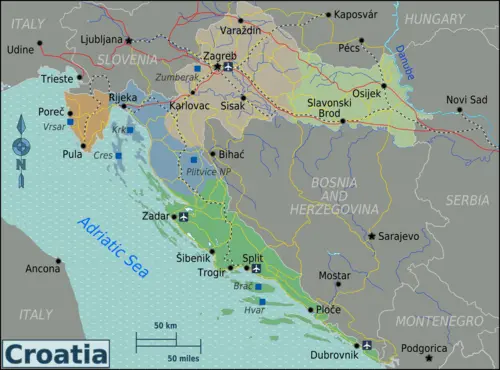
Dalmatia is Croatia’s central and largest coastal region, stretching roughly 400km along the Adriatic from Zadar to Dubrovnik. For photographers, it offers unparalleled diversity.
Geographic Diversity
Coastal: Dramatic limestone cliffs, pebble beaches, medieval harbor towns, palm-lined promenades
Islands: Over 1,000 islands and islets (79 inhabited), each with unique character - from lush Hvar to barren Vis
Mountains: Biokovo, Mosor, Dinara ranges create stunning backdrops, alpine-Mediterranean contrast
Rivers: Cetina, Krka, and Zrmanja rivers carve dramatic canyons to the sea
The Adriatic Blue
The color photographers associate with Croatia comes from Dalmatia’s Adriatic. The blue results from:
- Crystal-clear water (visibility 30-50 meters)
- White limestone seabed reflecting light
- Mediterranean sun angle
- Minimal pollution
Photographically, this requires:
- Polarizing filter: Essential to control reflections, maximize blue saturation
- Midday light: Counterintuitively, 11 AM-2 PM produces the most vivid blue (overhead sun penetrates water)
- Elevation: Shooting from heights (Vidova Gora, Biokovo Skywalk) shows color gradients
Historical Architecture
Dalmatia’s strategic position created layers of architecture:
- Greek and Roman: Foundations, ruins, Split’s Diocletian Palace
- Byzantine and Early Christian: Mosaics, basilicas
- Romanesque: Trogir’s cathedral portal, stone carvings
- Venetian Gothic: 400+ years of Venetian rule left palaces, fortresses, bell towers
- Military: Fortresses from various periods, Vis’s Cold War tunnels
This creates rich architectural photography opportunities in compact historic centers.
Brač Island and Zlatni Rat Beach
Brač is Dalmatia’s largest island and home to its most photographed beach.
Zlatni Rat (Golden Horn) Beach
This V-shaped pebble beach extending 500+ meters into turquoise water is Croatia’s most iconic image.
Best Photography Viewpoint: Vidova Gora
The mountain peak (778m) directly above the beach provides the classic aerial perspective.
Access: From Bol town, hike 2-3 hours up marked trail, or drive (4x4 recommended, narrow road). Elevation gain: 600m. Bring water - it’s exposed and hot in summer.
Camera Settings:
- Aperture: f/11-f/16 for maximum sharpness across scene
- ISO: 100-200
- Polarizing filter: Essential - rotate to 90° from sun for maximum effect
- Focal length: 70-200mm telephoto compresses the scene beautifully, emphasizing the beach’s dramatic shape
Best Time:
- Midday (11 AM-2 PM): Overhead sun creates most vivid turquoise water color (counterintuitive but true)
- Late afternoon (4-6 PM): Warm light, less heat for hiking, beautiful but less blue water
- Early morning: Soft light, empty trail, but blue water less vivid
Composition:
- Classic shot: Beach center-frame pointing toward Hvar island, mountains in background
- Include pine forest edge as foreground
- Show the beach’s changing shape (it shifts with currents - visit multiple times)
- People on beach provide scale (tiny from this height)
Beach Level Photography: From the beach itself, use wide-angle (16-35mm) to show:
- Pine forest backdrop (photogenic Mediterranean pines)
- Looking along the beach’s length toward the tip
- Crystal-clear water with pebbles visible beneath
- Water sports (windsurfing very popular) for action
Timing: Summer weekends are packed. Visit early morning (7-8 AM), late afternoon (after 5 PM), or shoulder seasons for cleaner shots.
Other Brač Photography Locations
Bol Town: Charming stone village, Dominican monastery, harbor with colorful boats
Pučišća: Inland town with white limestone quarry and stone carving school - unique industrial/craft photography
Sutivan and Supetar: Quieter coastal towns with authentic island atmosphere
Trogir: UNESCO Medieval Photography
This compact island town (connected by bridges) is one of Europe’s best-preserved medieval towns.
Best Photography Locations
Kamerlengo Fortress
- Waterfront fortress with sea views
- Best at golden hour (sunset) when warm light hits stone
- Climb walls for elevated town views (small entry fee)
- Camera settings: f/8-f/11, ISO 100-400, wide-angle for fortress architecture
Cathedral of St. Lawrence
- Romanesque portal by Master Radovan (13th century) - masterpiece of stone carving
- Bell tower climb provides panoramic rooftop views
- Interior photography: Dark, requires ISO 1600-6400 or tripod, no flash
- Exterior best photographed morning (eastern light) or evening
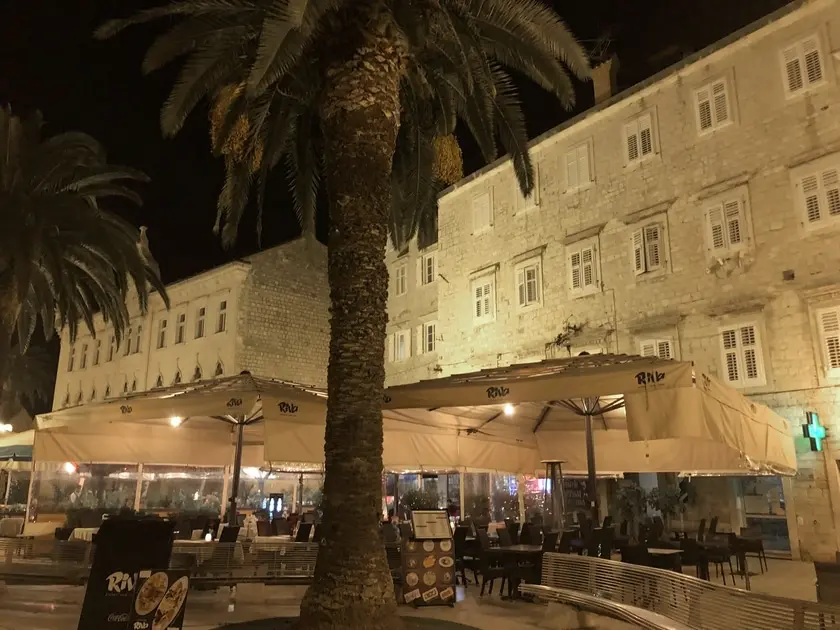
Riva (Waterfront Promenade)
- Palm trees, cafe culture, boats, old town backdrop
- Golden hour and blue hour excellent
- Include Kamerlengo Fortress in background compositions
Narrow Medieval Streets
- Maze of cobblestone alleys radiating from main square
- Wide-angle (16-24mm) essential for tight spaces
- Morning or evening side-lighting reveals stone texture
- Empty streets: 6:30-8:30 AM before cruise ship crowds
Trogir Photography Strategy
Early Morning (6:30-8:30 AM): Shoot empty streets, soft eastern light, peaceful atmosphere
Midday: Climb cathedral bell tower for panoramic views (harsh light outside, but elevated perspective worth it)
Late Afternoon/Evening (5-8 PM): Golden hour light on waterfront, cafes filling up, vibrant atmosphere
Blue Hour (30 min after sunset): Illuminated old town, tripod required, 2-10 second exposures
Camera Settings:
- Architecture: f/8-f/11, ISO 100-400 (daylight), wide-angle (16-35mm)
- Blue hour: f/5.6-f/8, ISO 800-3200, 2-10s shutter with tripod
- Street photography: 35mm or 50mm, f/4-f/5.6, ISO 400-1600
Makarska Riviera and Biokovo Mountains
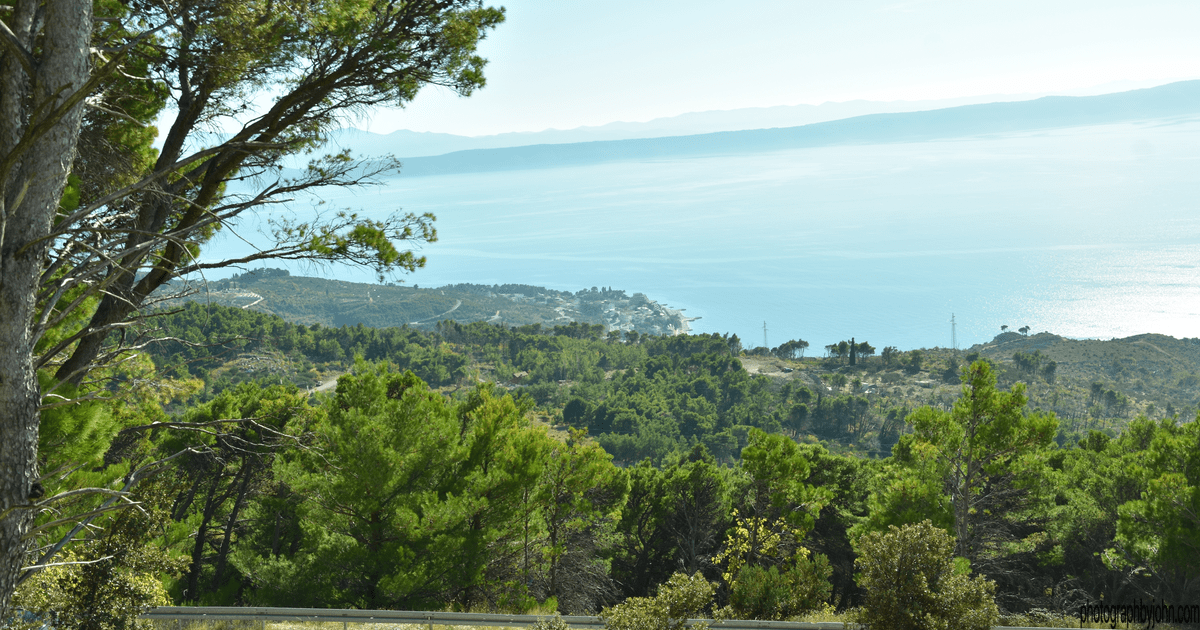
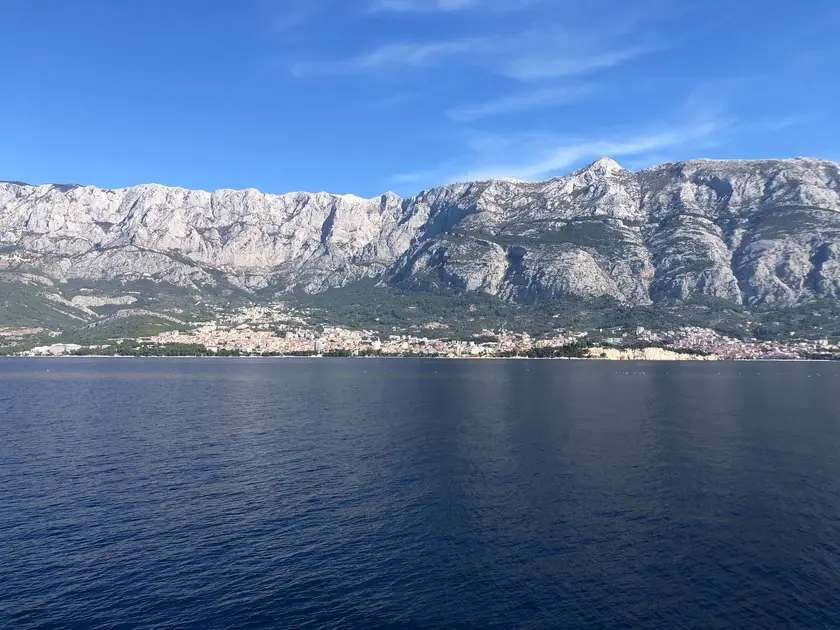
The Makarska Riviera is a 60km stretch of coast where the Biokovo mountain range (up to 1762m) drops vertically to pebble beaches.
Makarska Town Photography
Riva Promenade:
- Palm-lined waterfront, pebble beaches, Biokovo backdrop
- Best shot: Late afternoon (4-6 PM) when western light illuminates the mountains
- Use telephoto (70-200mm) to compress mountain-beach relationship
- Polarizing filter enhances blue water and mountain clarity
St. Mark’s Church:
- Baroque church on waterfront
- Photograph at blue hour when illuminated against mountains
Old Town:
- More modest than Trogir but photogenic stone architecture
- Morning light works well
Biokovo Nature Park
The mountain range offers Croatia’s most dramatic vertical landscape photography.
Biokovo Skywalk
- Glass walkway cantilevered 1228m over cliff
- Panoramic views: Makarska Riviera, islands (Brač, Hvar, Vis on clear days), interior mountains
- Access: Mountain road from Makarska, entry fee for park
- Best time: Sunrise or sunset for dramatic light, clear autumn days for maximum visibility
- Photography: Wide-angle (16-35mm) for dramatic perspective, vertigoviewing down through glass, f/8-f/11 for sharpness, polarizer for haze reduction
- Caution: Strong winds common - secure gear
Sveti Jure Peak (1762m)
- Highest point in Biokovo
- 360° panorama: Adriatic to interior Bosnia
- Requires 4x4 vehicle or strenuous hike
- Clear days (especially autumn) offer 100km+ visibility
- Alpine wildflowers (May-June) spectacular
- Snow photography possible (December-March)
Mountain Road Photography
- Serpentine switchbacks with sea backdrop
- Stop at viewpoints for compositions
- Best light: Morning (eastern exposure) or late afternoon
- Include road curves as leading lines
Camera Settings for Mountain-Coast Photography
Landscape compositions:
- Aperture: f/11-f/16 for front-to-back sharpness
- ISO: 100-200
- Tripod: Recommended for maximum sharpness
- Polarizer: Essential - reduces haze, deepens sky, vivid water
- Graduated ND: Balance bright sky with darker mountains/sea
Skywalk:
- Wide-angle: 16-24mm for drama
- Aperture: f/8-f/11
- Secure gear: Winds can be strong at exposed elevation
Hvar Island Photography
Hvar deserves its own dedicated guide (see our complete Hvar photography guide), but key Dalmatia photography highlights:
Hvar Town Harbor: Pakleni Islands backdrop, lavender if June-July, historic architecture
Spanjola Fortress: Sunset viewpoint overlooking town and archipelago
Lavender Fields: Mid-June to early July, interior villages (Velo Grablje, Brusje)
Stari Grad Plain: UNESCO agricultural landscape, olive groves, stone walls
Vis Island and Blue Cave
Vis is the farthest inhabited Croatian island - remote, authentic, military history.
Blue Cave (Modra špilja), Biševo Island
Near Vis, this sea cave creates an otherworldly blue glow.
How It Works: Sunlight enters through underwater opening, illuminating the cave with ethereal blue light (similar to Capri’s Grotta Azzurra).
Photography Challenges:
- Access: Only by organized boat tour from Vis or Komiža (May-September, weather dependent)
- Timing: 10 AM-12 PM when sun angle is correct
- Conditions: Requires bright sunny day (overcast doesn’t work), calm seas
- Inside: Rocking boat, low light, spray, cramped space, 5-10 minute visit
Camera Settings:
- ISO: 3200-6400 (very low light despite glow)
- Aperture: f/2.8-f/4 (fast lens essential)
- Shutter: 1/500s+ to freeze boat motion
- Waterproof protection: Essential - spray and splashing constant
- White balance: Daylight (preserve the blue color)
- RAW format: Necessary for challenging light
Composition:
- Expose for the glow (dark areas will be very dark)
- Include boat or people for scale
- The glow is the subject - fill frame with blue light
Realistic Expectations: This is extremely challenging photography. Most visitors use phones. Serious photography requires waterproof housing, high-ISO capability, and fast lenses. The experience is worth it even if photos don’t turn out perfectly.
Other Vis Photography
Stiniva Cove:
- Hidden beach surrounded by vertical 100m cliffs
- Accessible by boat or challenging steep trail
- Aerial perspective (drone if permitted) is stunning
- Photograph from cliff edges looking down
Komiža Town:
- Authentic fishing village, west coast sunsets
- Military tunnel museum (Cold War photography)
Vis Town:
- Baroque architecture, Issa archaeological site
- Harbor photography with fishing boats
Omiš and Cetina River Canyon
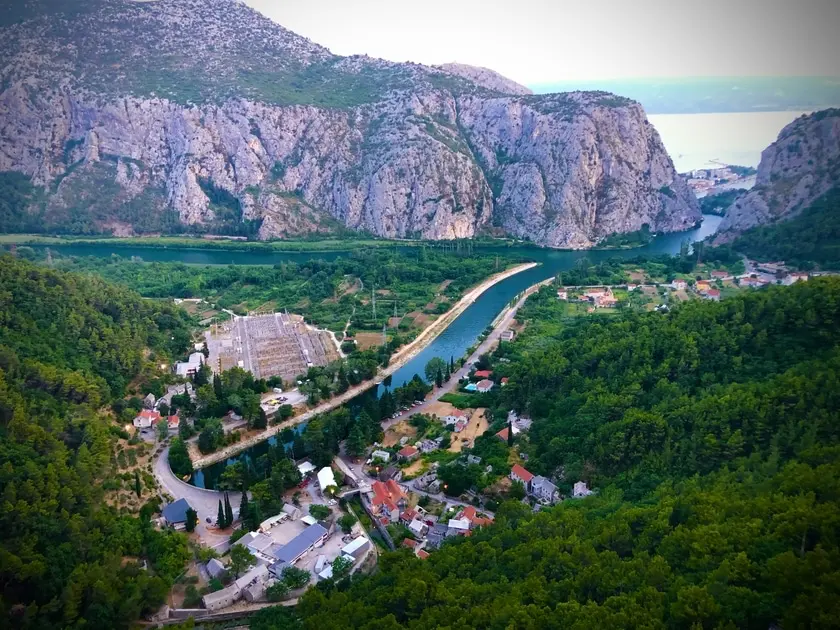
Where the Cetina River canyon meets the Adriatic, Omiš offers dramatic landscape photography.
The Setting:
- River emerges from dramatic limestone canyon
- Medieval pirate town at river mouth
- Vertical cliffs rising 500m+ directly from sea
- Two fortresses perched on cliff tops
Photography Opportunities:
Mirabella Fortress:
- Perched dramatically on cliff
- Hike up for panoramic views (steep, 30-45 min)
- Sunset photography: fortress silhouette against orange sky
- Camera settings: f/8-f/11, ISO 100-400, wide-angle to include vertical cliffs
Cetina River Canyon:
- Dramatic cliffs, green river, rafting activity
- Photograph from road viewpoints or join rafting for unique perspective
- Best light: Morning or late afternoon when sun enters canyon
- Long exposure (ND filter, tripod) smooths water
Omiš Town:
- Small but photogenic old town
- River mouth with boats, mountains backdrop
- Summer festival (pirates festival, klapa singing) offers cultural photography
Ferry and Island-Hopping Photography
Ferry travel is integral to Dalmatian island photography - both as transport and photographic opportunity.
Ferry Photography Techniques
Camera Settings for Moving Vessels:
- Shutter speed: 1/500s minimum (1/1000s+ for sharp details)
- Image stabilization: ON
- Aperture: f/5.6-f/8 (balance between sharpness and fast shutter)
- ISO: Auto ISO 200-1600
- Continuous shooting mode: Capture multiple frames as scenery passes
What to Photograph:
- Approaching islands (bow perspective)
- Coastline sliding past (side decks)
- Wake patterns behind ferry (stern)
- Other boats and ferries
- Passengers with island backdrop
- Sunset/sunrise from deck
Best Ferry Routes for Photography:
Split-Hvar (catamaran, 1 hour):
- Passes close to Brač (Vidova Gora visible)
- Approach to Hvar Town spectacular
- Fast catamaran = upper deck photography
Split-Vis (ferry, 2.5 hours):
- Longer journey = more photographic opportunities
- Passes through island archipelago
- Morning ferry offers best light
Brač-Makarska (ferry, 1 hour):
- Short crossing, Biokovo mountain backdrop
- Approach to Makarska dramatic
Protection from Spray:
- Adriatic spray can damage equipment
- Keep gear in bag until ready to shoot
- Use UV filter for lens protection
- Waterproof camera bag or dry bag recommended
- Avoid spray zones (especially bow in rough seas)
Island-Hopping Logistics
Ferry Operator: Jadrolinija (main operator), Krilo (catamarans)
Booking:
- Car ferries: Book in advance (especially summer)
- Passenger catamarans: Can sell out; book ahead for peace of mind
- Check schedules online (reduce significantly off-season)
Photography Timing:
- Schedule ferries during midday (maximize golden hours on islands)
- OR take early morning/evening ferries for photographic crossings
Seasonal Photography in Dalmatia
Summer (June-August)
Advantages:
- Long days (sunset 8:30-9 PM)
- Vibrant beach scenes, crowded but energetic
- All facilities open, full ferry schedules
- Warmest, clearest water (best swimming, water sports)
- Lavender season (Hvar, mid-June to early July)
Challenges:
- Intense crowds (especially July-August)
- Harsh midday sun (compensated by vivid blue water)
- Very hot (28-38°C, especially in cities)
- Expensive accommodations
- Ferry/accommodation booking essential
Photography Strategy: Shoot early (6-9 AM) and late (6-9 PM). Embrace the midday blue water with polarizer. Accept crowds or seek remote locations.
Spring (April-June)
Advantages:
- Fewer crowds (especially April-May)
- Comfortable temperatures (18-26°C)
- Wildflowers (May-June, especially Biokovo)
- Good visibility for mountain photography
- Lower accommodation costs
Challenges:
- Sea still cool (15-20°C) for water activities
- Some island businesses closed early season
- Ferry schedules increasing but not yet full
- Weather more variable (rain possible)
Best For: Landscape photography, historic towns without crowds, hiking Biokovo, photographing wildflowers
Autumn (September-October)
Advantages:
- Crowds diminish after mid-September
- Warm, beautiful light quality (golden autumn light)
- Comfortable temperatures (20-28°C)
- Sea still warm (20-24°C)
- Clearest air for mountain/island photography
- Grape harvest season (vineyard photography)
Challenges:
- Businesses start closing October
- Ferry schedules reduce
- Weather more variable late October
Best For: All-around best season for Dalmatia photography - my personal favorite
Winter (November-March)
Advantages:
- Empty historic towns
- Moody, dramatic conditions
- Biokovo snow photography
- Authentic local life
- Very low accommodation costs
Challenges:
- Short days (sunset 4:30-5:30 PM)
- Cold, rain common, occasional snow
- Most island businesses closed
- Minimal ferry service (islands isolating)
- Rough seas cancel ferries
- Limited photography time
Best For: Atmospheric photography, empty architectural shots, storm photography, serious photographers only
Practical Information for Photographers
Getting to Dalmatia
By Air: Split Airport (main gateway), Dubrovnik Airport (southern Dalmatia)
By Car: From Zagreb (Split: 4 hours), from Dubrovnik (Split: 3.5 hours)
By Bus: Well-connected to Croatian cities and European capitals
Base Locations for Photography
Split: Best ferry connections to all islands, city photography, Diocletian’s Palace
Makarska: Biokovo access, Riviera photography, central coastal location
Trogir: UNESCO old town, close to Split Airport, quieter than Split
Island Stays: Hvar, Vis, or Brač for multi-day island photography
Transportation
Car: Essential for coastal photography, mountain roads, flexibility. Ferries accommodate cars (book advance).
Scooter: Islands option, cheaper than car, but gear carrying limited
Buses: Coastal routes good; limited on islands
Ferries: Only way to islands; schedules determine photography timing
Photography Gear for Dalmatia
Essential:
- Wide-angle (16-35mm): Coastal landscapes, towns, islands
- Telephoto (70-200mm): Compressing island views, Biokovo-coast, Zlatni Rat from Vidova Gora
- Circular polarizer: Non-negotiable for Adriatic blue
- Waterproof protection: Ferry spray, sudden storms
Highly Recommended:
- Graduated ND filter: Sunset, mountain-sea balance
- Tripod: Blue hour towns, long exposures
- Standard zoom (24-70mm): Versatile travel lens
Protection:
- UV filter: Lens protection from spray
- Lens cloth: Constant salt spray
- Dry bag: Ferry photography, water activities
- Sun protection: Intense Adriatic sun
Dalmatia Photography Etiquette
Historic Towns: Respect residents, avoid photographing into private homes
Beaches: Respect others’ privacy, especially families with children
Islands: Support local businesses you photograph (buy something)
Biokovo: Stay on marked trails, respect nature protection zone
Blue Cave: Follow guide instructions, waterproof your gear
📸 Key Takeaways for Dalmatia Photography
Iconic Locations Require Planning
- Zlatni Rat: Hike Vidova Gora for aerial view, midday for blue water
- Blue Cave: Book tours advance, requires perfect weather, waterproof gear
- Trogir: Early morning (6:30-8:30 AM) for empty medieval streets
- Biokovo Skywalk: Sunrise/sunset for drama, autumn for clearest views
The Adriatic Blue Demands Specific Technique
- Circular polarizing filter is non-negotiable
- Counterintuitively, midday (11 AM-2 PM) produces most vivid blue
- Shoot at 90° angle to sun for maximum polarizer effect
- Elevation (mountains, ferries) shows color gradients best
Ferry Photography is Essential
- Minimum 1/500s shutter speed for sharp island photos
- Protect gear from spray - waterproof bags critical
- Best routes: Split-Hvar, Split-Vis for photographic variety
- Schedule ferries to maximize golden hours on islands
Seasonal Strategy is Critical
- Summer offers vivid colors but intense crowds and harsh light
- Autumn (September-October) provides optimal balance
- Spring good for wildflowers and empty locations
- Winter only for serious photographers (minimal services)
Island-Hopping Requires Logistics
- Book ferries in advance (summer essential)
- Base in Split for best island access
- Rent car for coastal flexibility
- Ferry schedules determine photography timing
Mountain-Coast Contrast is Unique
- Biokovo creates alpine-Mediterranean photography rare in Europe
- Telephoto (70-200mm) compresses dramatic relationships
- Late afternoon light illuminates mountains beautifully
- Clear autumn days offer exceptional visibility
The beauty of Dalmatia photography lies in its extraordinary diversity compressed into an accessible region. When your photos capture the impossible blue of the Adriatic from Vidova Gora, the medieval charm of Trogir’s cobblestones at dawn, the dramatic verticality of Biokovo meeting the sea, the ethereal glow of the Blue Cave, and the timeless rhythm of island life, you’ve succeeded in telling Dalmatia’s story - a coastline where mountains plunge into transparent seas, where centuries of history layer atop Greek and Roman foundations, and where every ferry journey opens new photographic possibilities.
FAQ
Q: What are the best photography locations in Dalmatia?
A: From my experience photographing Dalmatia extensively, the top photography locations are: (1) Zlatni Rat beach, Brač - Croatia’s most iconic beach photograph, shape-shifting sandbar. (2) Trogir old town - UNESCO site with compact medieval architecture perfect for photography. (3) Makarska Riviera with Biokovo backdrop - dramatic mountain-meets-sea compositions. (4) Omiš - Cetina River canyon and dramatic cliffs. (5) Hvar Town harbor - lavender, vineyards, Pakleni Islands (see our Hvar guide). (6) Blue Cave, Biševo - ethereal blue light phenomenon (morning light essential). (7) Vis Town and Komiža - authentic fishing villages, military history. (8) Stiniva Cove, Vis - hidden beach surrounded by vertical cliffs, aerial photography spectacular. Each location offers unique photography opportunities - island-hopping photography requires ferries and careful timing.
Q: What is the best time for photography in Dalmatia?
A: Having photographed Dalmatia across all seasons, timing depends on your subject: For beach and island photography, late spring (May-June) and early autumn (September-October) offer optimal light/crowd balance. Summer (July-August) provides vibrant beach scenes and long days but intense crowds and harsh midday sun. The Adriatic’s blue color is most vivid in bright midday summer light (11 AM-2 PM with polarizing filter). For dramatic landscape photography with Biokovo mountains, autumn (September-November) offers clearer air, less haze, and warmer light. Winter (December-March) provides moody atmospheric conditions and empty historic towns, but short days, cold weather, and many businesses closed. Ferry schedules reduce significantly off-season. For first-timers, I recommend late May-June or September-early October for best overall photography conditions.
Q: How do I photograph from ferries between Dalmatian islands?
A: Ferry photography in Dalmatia requires specific techniques I’ve refined over years: (1) Shutter speed: Minimum 1/500s to counteract ferry motion, faster (1/1000s+) for sharp island/coastline photos. (2) Image stabilization: Turn ON for moving vessels. (3) Aperture: f/5.6 to f/8 balances sharpness with fast shutter speed needs. (4) ISO: Auto ISO 200-1600 to maintain fast shutter. (5) Positioning: Bow or stern provide unobstructed views; side decks show islands passing. (6) Spray protection: Adriatic spray can damage gear - use protective covers, keep gear in bag until ready to shoot. (7) Timing: Morning ferries (7-9 AM) offer soft light; afternoon/evening (4-7 PM) provide warm light. (8) Subjects: Wake patterns, approaching islands, other boats, coastal towns from water. Split-Hvar catamaran (1 hour) offers spectacular photography of Brač, Šolta, and Hvar approach.
Q: What camera settings work best for photographing Zlatni Rat beach?
A: Zlatni Rat is Croatia’s most photographed beach, and I’ve shot it from every angle over multiple seasons. Best approach: (1) Aerial/elevated perspective: Hike up Vidova Gora mountain (778m, 2-3 hours) for the classic aerial view showing the beach’s V-shape extending into turquoise water. Shoot midday (11 AM-2 PM) when overhead sun creates maximum turquoise water color. Use polarizing filter at 90° to sun, f/11-f/16 for sharpness, ISO 100-200. Telephoto (70-200mm) compresses the scene beautifully. (2) Beach level: Wide-angle (16-35mm) from the beach itself shows the pine forest backdrop. Morning (7-9 AM) or late afternoon (5-7 PM) for softer light. (3) From water: Kayak or paddleboard photos looking back at beach with Vidova Gora backdrop. The beach changes shape with currents and winds - visit multiple times for different formations. Summer weekends are packed; weekdays or shoulder seasons offer clearer shots.
Q: How do I photograph Trogir’s old town effectively?
A: Trogir’s compact UNESCO old town is incredibly photogenic but challenging due to narrow streets and crowds. My approach: (1) Early morning (6:30-8:30 AM): Empty cobblestone streets, soft light on limestone buildings, no tourists. (2) Key locations: Kamerlengo Fortress (waterfront fortress with sea views), Cathedral of St. Lawrence (Romanesque portal, bell tower climb for rooftop views), Riva waterfront (palms, boats, cafe culture), narrow medieval streets radiating from main square. (3) Camera settings: Wide-angle (16-35mm) for tight streets, f/8-f/11 for architectural sharpness, ISO 100-400 in daylight. (4) Composition: Shoot through stone archways, use leading lines of cobblestones, include boats in harbor compositions, climb the cathedral bell tower for panoramic terracotta rooftops. (5) Best light: Morning eastern light illuminates the waterfront beautifully; late afternoon western light warms the stone. Avoid harsh midday. (6) Blue hour (30 min after sunset): Illuminated old town glows against deep blue sky, requires tripod and 2-10 second exposures.
Q: What photography opportunities does the Biokovo mountain range offer?
A: The Biokovo mountain range creates Dalmatia’s most dramatic photography - alpine peaks dropping vertically to Adriatic Sea. Photography opportunities: (1) Makarska Riviera beach shots with Biokovo backdrop - shoot late afternoon when warm light hits the mountains. Use f/8-f/11, polarizer, telephoto (70-200mm) to compress beach-mountain relationship. (2) Biokovo Skywalk - glass walkway cantilevered over cliff at 1228m elevation, panoramic coastal views, vertigo-inducing photography. Best at sunrise or sunset for dramatic light. Entry fee required. (3) Sveti Jure peak (1762m) - highest point, 360° views from islands to interior mountains. Requires 4x4 vehicle or strenuous hike. Clear autumn days offer 100km+ visibility. (4) Mountain roads - serpentine switchbacks photograph beautifully, especially with sea backdrop. (5) Spring wildflowers (May-June) in alpine meadows. (6) Weather can change rapidly - check forecasts, bring layers. Winter snow photography possible December-March.
Q: Can I photograph the Blue Cave on Biševo Island?
A: The Blue Cave (Modra špilja) near Vis is one of Dalmatia’s most magical photography subjects but requires specific conditions and timing. Photography considerations: (1) Access: Only by organized boat tour from Vis or Komiža. Tours operate May-September depending on sea conditions. Entrance is low, narrow opening - boats must duck inside when waves allow. (2) Best time: 10 AM-12 PM when sunlight enters underwater opening, illuminating the cave with ethereal blue glow. Overcast days don’t work - need bright sun. (3) Inside the cave: Very challenging photography - low light, rocking boat, waterproof protection essential. ISO 3200-6400, f/2.8-f/4, fast shutter (1/500s+) to freeze motion. Waterproof housing or camera bag critical - spray and splashing constant. (4) Camera settings: Shoot RAW, white balance to Daylight (preserve the blue), expose for the glow (accept that darker areas will be very dark). (5) Timing: Tours spend 5-10 minutes inside - scout your shot quickly. Most people use phones - serious photography requires preparation. (6) Exterior: The approach to the cave and island scenery also photograph beautifully.
Q: What essential photography gear should I bring to Dalmatia?
A: Based on extensive Dalmatia photography experience, pack: (1) Wide-angle lens (16-35mm) - essential for coastal landscapes, island vistas, Trogir streets, beach photography. (2) Telephoto zoom (70-200mm) - compressing island views from ferries, Biokovo mountain-coast relationships, Zlatni Rat from Vidova Gora, wildlife on remote islands. (3) Standard zoom (24-70mm) or versatile prime (35mm) - general travel photography, towns, versatility. (4) Circular polarizing filter - absolutely critical for Adriatic photography. Controls water reflections, intensifies the famous blue color, reduces atmospheric haze in coastal shots. Without this, you miss the vivid blue. (5) Graduated ND filter - sunset photography along coast, balancing bright sky with darker sea. (6) Waterproof protection - ferry spray, sea kayaking, Blue Cave, sudden summer storms. Dry bag or waterproof camera bag. (7) Tripod (lightweight) - sunset, blue hour, long exposures. (8) Extra batteries and memory cards - remote islands lack photo stores. (9) Lens cloth - constant salt spray and humidity. (10) Sun protection - Adriatic sun is intense; hat, sunscreen, UV filter for lens protection.
Q: How do I plan an island-hopping photography itinerary in Dalmatia?
A: Planning island-hopping photography in Dalmatia requires understanding ferry schedules and photographic priorities. My recommended approach: (1) Base in Split - best ferry connections to all major islands (Brač, Hvar, Vis, Šolta). (2) Sample 7-day photography itinerary: Day 1-2: Split exploration (see our Split guide). Day 3: Day trip to Brač - morning ferry, hike Vidova Gora for Zlatni Rat photos, return evening. Day 4-5: Ferry to Hvar, stay 2 nights (lavender if June-July, Pakleni Islands, sunset). Day 6: Ferry to Vis, explore Blue Cave (if conditions allow), Stiniva Cove, military tunnels. Day 7: Return to Split via Brač or direct. (3) Ferry booking: Book car ferries in advance (summer essential); fast catamarans sell out quickly. Jadrolinija is main operator. (4) Photography timing: Schedule early morning/evening ferries to maximize golden hours on islands. Midday ferry transitions work well. (5) Weather contingency: Have flexible plans - rough seas cancel ferries. Blue Cave trips especially weather-dependent. (6) Accommodation: Book island stays in advance (summer) or be flexible (shoulder season). (7) Transport: Each island needs car/scooter rental OR stick to main towns accessible by bus.
💙 Support My Photography Work Enjoy these guides? Support me on Patreon to help create more in-depth photography content! 🙏