Krka Waterfalls Photography Guide: Mastering Croatia’s Most Accessible Waterfalls
I still remember my first photography visit to Krka National Park. I arrived at 11:00 AM on a July day, excited to photograph the famous Skradinski Buk waterfalls. What I encountered was wall-to-wall tourists making boardwalk photography nearly impossible, harsh midday sun creating blown-out highlights on the white cascades, and frustration as every composition included dozens of people. After six years living in Croatia and photographing Krka in all seasons and conditions, I’ve learned that successful waterfall photography here requires strategic timing, technical skill with long exposures, and understanding how to work within the constraints of Croatia’s most visited national park.
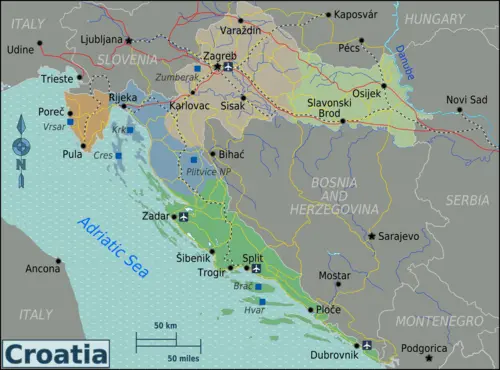
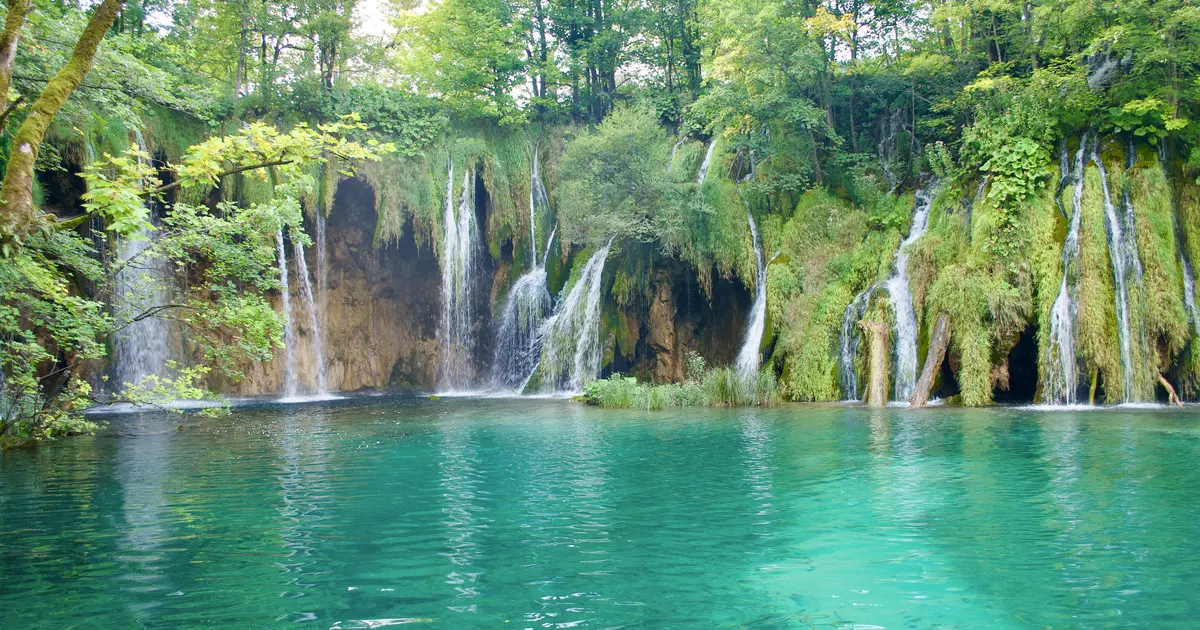
Krka National Park, located in Šibenik-Knin County, features some of Croatia’s most spectacular and accessible waterfalls. The crown jewel, Skradinski Buk, comprises 17 cascades spread over 800 meters with a total drop of 45.7 meters, creating one of Europe’s most photogenic waterfall complexes. Unlike remote wilderness waterfalls requiring difficult hikes, Krka’s extensive boardwalk system places you at water level mere meters from cascading water, providing intimate perspectives rare at major waterfall destinations.
In this comprehensive guide, I’ll share everything I’ve learned about photographing Krka’s waterfalls. You’ll discover the best times and locations for waterfall photography, master camera settings and techniques for long exposure waterfall images, learn to use ND filters effectively, develop composition strategies for waterfall photography, understand how to manage crowds and boardwalk limitations, and explore seasonal variations that transform Krka throughout the year.
Table of Contents
- Understanding Krka’s Waterfall Complex
- Essential Gear for Waterfall Photography
- Camera Settings and Long Exposure Technique
- Best Photography Locations
- Composition Techniques for Waterfalls
- Best Times and Seasons
- Managing Crowds and Boardwalk Challenges
- Post-Processing Waterfall Images
- Practical Information
- FAQ
Understanding Krka’s Waterfall Complex
Krka National Park encompasses 109 square kilometers along the Krka River, but most photography focuses on two primary waterfall areas: Skradinski Buk and Roški Slap.
Skradinski Buk: The Main Attraction
Skradinski Buk is Croatia’s most photographed waterfall and one of Europe’s most beautiful travertine cascade systems. Unlike a single dramatic drop, Skradinski Buk is a waterfall complex – 17 individual cascades creating an 800-meter-long sequence of falls, pools, and channels.
The cascades range from gentle 1-meter curtain falls to powerful 8-meter drops, providing enormous variety within a small area. The travertine (calcium carbonate) formations create natural barriers, pools, and channels that shape the water’s flow into countless photographic subjects.
The circular boardwalk trail (1.9 kilometers) provides 360-degree access to the waterfall complex. As you walk the loop, perspectives constantly change – sometimes you’re at the base of cascades looking up, other times above falls looking down, and frequently at mid-level viewing across multiple cascade tiers. This variety is exceptional for photography.
The travertine formations give Skradinski Buk distinctive character. The golden-brown calcium deposits create sculptural forms that direct water into patterns, the barriers create terraced pools that step down the river, and the porous travertine allows water to seep through in delicate curtains. This creates more visual interest than simple rock waterfalls.
Roški Slap: The Quieter Alternative
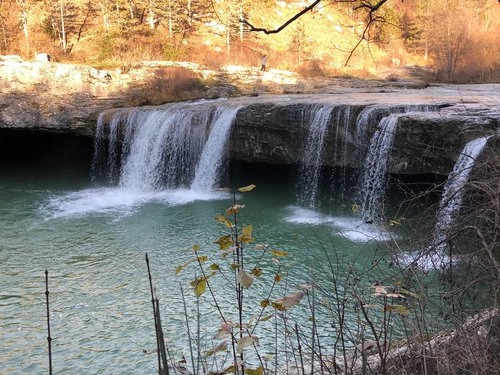
Roški Slap, located upstream from Skradinski Buk, offers excellent waterfall photography with far fewer crowds. The main cascade drops 22.5 meters alongside numerous smaller falls creating a 450-meter waterfall complex.
What makes Roški Slap unique photographically is the integration of cultural elements – traditional stone watermills sit beside the cascades, their weathered stone contrasting beautifully with flowing water. These mills create compositions unavailable at purely natural waterfalls.
Roški Slap receives perhaps 20% of Skradinski Buk’s visitor numbers, making it ideal for photographers wanting solitude and easier boardwalk access for tripod work.
The Krka River and Canyon
Between the waterfalls, the Krka River flows through a spectacular limestone canyon with calm sections perfect for reflection photography. The turquoise-blue water (colored by dissolved minerals) creates beautiful color contrasts with green vegetation and white limestone cliffs.
Boat trips provide access to Visovac Island with its photogenic 14th-century monastery, and the canyon viewpoints offer elevated perspectives different from the water-level waterfall photography.
Travertine Dynamics
Understanding travertine formation enhances photography. The Krka River is rich in dissolved calcium carbonate. As water flows over obstacles, carbon dioxide releases from the water, causing calcium carbonate to precipitate and gradually build up travertine deposits.
This process means Krka’s waterfalls are living, growing formations. The travertine barriers slowly expand, pools shift, and channels change over years. What you photograph today will look subtly different in future years as the travertine evolves.
This also explains the golden-brown color – the travertine is stained by minerals and organic material. Fresh travertine is almost white, but weathering creates the warm tones that photograph so beautifully.
Essential Gear for Waterfall Photography
Successful waterfall photography at Krka requires specific equipment beyond a basic camera and lens.
Camera Body
Any DSLR or mirrorless camera with manual exposure control works for waterfall photography. The key features that matter:
Long exposure capability: The ability to use exposure times of several seconds.
RAW format: Essential for capturing the extreme dynamic range between bright white cascades and shadowed forest areas.
Live view: Helpful for precise composition and focusing when using the camera on a tripod.
Weather sealing is beneficial due to water spray, though careful technique can protect non-sealed cameras.
Lenses
Wide-angle (16-35mm): Essential for capturing the full scope of multi-tier cascades and showing the relationship between waterfalls and surrounding landscape. At Krka’s boardwalks, wide angles allow including foreground elements (pools, travertine) while showing waterfalls behind.
Standard zoom (24-70mm): The most versatile choice, perfect for individual cascades, medium compositions, and detailed sections. If you can only bring one lens, this is it.
Telephoto (70-200mm): Excellent for isolating cascade details, creating abstract water patterns, and photographing sections of waterfalls when crowds prevent close boardwalk access.
Tripod
A sturdy tripod is mandatory for long exposure waterfall photography. Key requirements:
Stability: Must support your camera without vibration during multi-second exposures.
Height range: Should extend tall enough for eye-level shooting but also go low for water-level perspectives.
Secure feet: The wooden boardwalks at Krka can be slippery when wet. Rubber feet work better than spiked feet on wooden surfaces.
Weight: You’ll be carrying it 2+ kilometers around the boardwalk loop. A balance between stability and weight is ideal.
I use a carbon fiber tripod for the weight savings during the long walk while maintaining stability.
ND Filters
Neutral density filters are absolutely essential for daytime waterfall photography.
6-stop ND filter: Allows 1-4 second exposures in moderately bright conditions (shaded forest areas, morning/evening light).
10-stop ND filter: Enables very long exposures (15-60 seconds) even in bright midday conditions.
I carry both and use them individually or stacked depending on light levels. Some photographers prefer a 3-stop and a 6-stop which can be combined for 9-stops.
Circular screw-on filters are more convenient than square filter systems for Krka’s mobile boardwalk photography. Get filters sized for your largest lens diameter and use step-up rings for smaller lenses.
Variable ND filters are convenient but can create color casts and “X” patterns with wide-angle lenses. I prefer fixed ND filters for best image quality.
Circular Polarizing Filter
A polarizer serves multiple purposes for waterfall photography:
Reduces water surface reflections: Shows through the water surface to underlying rocks and travertine.
Saturates colors: Enhances the green vegetation and blue water.
Cuts 1-2 stops of light: Can sometimes substitute for a weak ND filter.
Be careful using a polarizer with ND filters – stacking multiple filters can cause vignetting, especially with wide-angle lenses.
Remote Shutter Release
A cable release or wireless remote trigger eliminates camera shake from pressing the shutter button during long exposures. If you don’t have a remote, use the camera’s 2-second self-timer.
Lens Cleaning Supplies
Water spray is inevitable at Krka. Bring:
- Multiple microfiber cloths
- Lens cleaning solution
- Rocket blower for removing water droplets
Keep a microfiber cloth easily accessible for quickly wiping spray off the front element between shots.
Camera Protection
While photographing near waterfalls, you’ll encounter spray. Protection options:
Lens hood: Provides some protection from angled spray and reduces flare.
Rain cover: Simple shower cap or dedicated rain cover for heavy spray areas.
UV filter: A cheap filter protects your expensive front element from water damage.
I keep a microfiber cloth draped over my camera between shots, ready to wipe down any spray that lands on equipment.
Recommended Minimal Setup
If weight and cost are concerns, the minimal effective setup is:
- Camera with manual controls and RAW capability
- 24-70mm lens (or similar standard zoom)
- Sturdy tripod
- 6-stop ND filter
- Remote shutter release or use 2-second timer
- Microfiber cloth
This setup can produce excellent waterfall images at Krka.
Camera Settings and Long Exposure Technique
Waterfall photography at Krka primarily uses long exposure technique to create the classic silky, flowing water appearance.
Aperture Settings
f/11 to f/16: My standard aperture range for waterfall landscapes. This provides excellent depth of field, keeping both foreground elements (pools, travertine formations) and background cascades sharp.
At f/11 with a 24mm lens, hyperfocal distance is about 2 meters, ensuring sharpness from 1 meter to infinity – perfect for Krka’s boardwalk photography where you’re often composing with close foreground elements.
f/16 provides maximum depth of field but pushes into diffraction territory, reducing overall sharpness slightly. I use f/16 only when I have extremely close foreground elements requiring extra depth.
Avoid wide apertures (f/2.8-f/5.6) for waterfall landscapes – the shallow depth of field makes it difficult to keep the entire cascade sharp.
Shutter Speed for Silky Water
The shutter speed determines how water motion appears:
0.5 to 1 second: Slight smoothing while retaining some water texture and detail. Good for showing water’s movement while maintaining structure.
1 to 4 seconds: Classic silky water effect. Water becomes smooth and flowing while maintaining some form and direction. This is my standard range for Krka’s cascades.
4 to 15 seconds: Very smooth, ethereal water. The cascades become soft, misty curtains. Beautiful for artistic interpretations.
15+ seconds: Extremely smooth, almost cloud-like water. Can lose too much detail and impact. I rarely use exposures this long for waterfalls.
The “correct” shutter speed is artistic preference. Experiment with different exposure times to see what you like. I typically shoot the same composition at 1s, 2s, and 4s, then choose the best during editing.
ISO Settings
Use the lowest ISO possible (typically ISO 100) for maximum image quality, minimal noise, and best dynamic range. The whole point of ND filters is to allow long exposures at low ISO even in bright conditions.
Only increase ISO if you absolutely need faster shutter speeds for creative reasons while still using ND filters.
ND Filter Technique
The workflow for using ND filters:
Compose and focus with the ND filter removed (it’s too dark to see through strong ND filters).
Switch to manual focus so the focus doesn’t change when you attach the filter.
Meter the exposure without the ND filter. Note the settings (e.g., 1/125s, f/11, ISO 100).
Calculate the new exposure with the ND filter. For a 6-stop ND, 1/125s becomes 2 seconds. For a 10-stop ND, 1/125s becomes 4 seconds. Use an ND filter calculator app – they’re faster and more accurate than mental math.
Attach the ND filter carefully without bumping the camera or changing focus.
Set the new shutter speed (in Manual mode or Bulb mode for exposures longer than 30 seconds).
Cover the viewfinder to prevent light leaks during exposure (use the built-in eyepiece cover or a piece of dark cloth).
Trigger the shutter using a remote release or 2-second timer to avoid camera shake.
Review the result and adjust exposure as needed. Despite calculator apps, you often need to fine-tune based on histogram and image review.
Exposure Considerations
Krka’s waterfalls present challenging exposure scenarios:
Bright white cascades can easily blow out to pure white with no detail.
Dark shadowed forest surrounding the boardwalks creates extreme contrast.
Travertine formations are mid-tone, providing good exposure reference.
My approach: Expose to protect the waterfall highlights, keeping the histogram from pushing against the right edge (blown highlights). The shadowed areas can be recovered in post-processing from RAW files, but blown highlights are unrecoverable.
I typically underexpose by -0.3 to -0.7 EV from what the camera meter suggests, then check the histogram. If highlights are preserved, I can lift shadows in processing.
Alternatively, bracket exposures (-1, 0, +1 EV) and blend in post-processing for complete dynamic range control.
Recommended Settings Summary
Standard Long Exposure Waterfall:
- Mode: Manual
- Aperture: f/11-f/16
- Shutter Speed: 1-4 seconds (using ND filter)
- ISO: 100
- White Balance: Daylight (5500K) or Auto (shooting RAW)
- Format: RAW
- Stabilization: Off (on tripod)
- Mirror Lockup: Enabled if available
- Remote Release: Used, or 2-second timer
Best Photography Locations
Krka offers multiple waterfall photography locations, each with unique characteristics.
Skradinski Buk Main Cascades
The primary waterfall complex provides hundreds of potential compositions. Key areas:
Lower Cascades (near entrance): The first waterfalls you encounter after entering. Powerful central cascade with multiple channels. This area gets the most crowded but offers dramatic compositions of the main drop.
Photography: Use wide-angle lenses (16-24mm) to show the full height and width. Long exposures (2-4s) smooth the powerful flow beautifully. Morning light illuminates these cascades well.
Middle Section: Multiple medium-sized cascades with intricate travertine pools and channels. Less crowded than the entrance area.
Photography: Standard zoom range (35-70mm) works perfectly. Focus on individual cascades or small groups. The travertine pools in the foreground create beautiful leading lines to background waterfalls.
Upper Cascades: Gentler, wider curtain falls with less power but more delicate beauty. Often the quietest section.
Photography: Telephoto lenses (100-200mm) can isolate curtain fall sections for abstract images. The gentle flow requires longer exposures (4-8s) for the smooth effect.
Viewpoint Overlook: Elevated wooden platform above the main cascades providing an overview perspective.
Photography: The only aerial perspective of the entire cascade complex. Use wide-angle lenses to show the full 800-meter waterfall layout. Midday top-lighting works better here than elsewhere in the park.
Roški Slap Waterfalls
The second major waterfall area offers different subjects:
Main Drop: 22.5-meter cascade with powerful flow.
Photography: Shoot from the base looking up to emphasize height, or from the side to show the full drop. Morning light works best. Long exposures (2-4s) create dramatic motion blur in the powerful flow.
Watermill Area: Traditional stone mills beside smaller cascades.
Photography: Compose to include both cultural and natural elements. The weathered stone mills contrast beautifully with flowing water. Use aperture priority (f/11) and let shutter speed adjust for the light conditions, aiming for 1-4 second exposures.
Forest Cascades: Smaller falls surrounded by dense forest.
Photography: The dappled forest light creates beautiful green tones. Overcast conditions work well here. Focus on intimate details rather than grand vistas.
Visovac Island Monastery
The monastery on an island in Krka’s lake section provides different photography:
From Boat: Approaching by boat allows water-level views of the monastery with reflections.
Photography: Morning offers calm water and good light. Use telephoto lenses (70-200mm) to compress perspective and isolate the monastery against mountains.
Monastery Grounds: From the island, you can photograph the surrounding lake and canyon.
Photography: Use the monastery architecture to frame natural landscapes. Evening light creates warm tones on the stone building.
Krka Canyon Viewpoints
Several viewpoints offer elevated perspectives over the river canyon:
Canyon Overlooks: Show the turquoise river winding through limestone cliffs.
Photography: Use standard to telephoto lenses (50-200mm) to compress the canyon layers. Morning or late afternoon side-lighting creates depth and dimension.
Composition Techniques for Waterfalls
Strong composition transforms ordinary waterfall shots into compelling images.
Foreground Elements
Empty waterfalls can feel flat. Include foreground interest to create depth:
- Travertine pools: The golden pools in front of cascades create beautiful leading elements.
- Rocks and formations: Use travertine barriers and rocks as foreground anchors.
- Vegetation: Overhanging branches or riverside plants frame waterfalls.
- Boardwalk elements: Occasionally include portions of the wooden walkway to show the human experience.
Use wide-angle lenses (16-24mm) with f/11-f/16 to keep both close foreground and distant waterfall sharp.
Leading Lines
Waterfalls naturally create strong leading lines:
- Water channels: Streams leading to cascade drops guide the eye.
- Cascade tiers: Multiple waterfall levels create vertical leading lines.
- Travertine barriers: The horizontal and diagonal lines of travertine formations direct attention.
- Boardwalk rails: The wooden railings can serve as leading lines when included.
Position yourself so these lines lead toward your focal point (usually the main cascade).
Layering and Depth
Create three-dimensional feel through layering:
- Foreground: Pools, rocks, or vegetation
- Midground: Primary waterfall cascades
- Background: Upper cascades or forest
This creates depth that draws viewers into the image.
Vertical vs. Horizontal Orientation
Waterfalls are often vertical subjects, but both orientations work:
Vertical/Portrait: Emphasizes the waterfall’s height and power. Works well for single tall cascades or when including foreground pools leading to background falls.
Horizontal/Landscape: Shows the width and context of cascade complexes. Better for multi-tier scenes or when including surrounding environment.
I typically shoot both orientations, then choose during editing.
Rule of Thirds
Place primary cascades or focal points along thirds intersections rather than dead center. This creates more dynamic compositions than centered waterfalls.
However, symmetrical cascades sometimes work better centered. Know the rule, then break it when it improves the image.
Isolating Details
Not every image must show the full waterfall. Telephoto lenses allow isolating:
- Abstract water patterns: Close-up of flowing water creating graphic patterns
- Single cascade sections: One beautiful fall rather than the entire complex
- Water and travertine interaction: Details of water flowing over golden formations
These detailed images complement wide scenic shots.
Long Exposure Creative Effects
Experiment with different shutter speeds for varied effects:
- Very short (1/500s): Freeze every water droplet for energetic, dynamic feel
- Moderate (1/4s): Some smoothing while retaining water structure
- Standard (1-4s): Classic silky appearance
- Very long (15-30s): Ethereal, almost cloud-like water
The same cascade transforms completely with different exposure times.
Best Times and Seasons
Timing dramatically affects waterfall photography success at Krka.
Daily Timing
Early Morning (8:00-10:00 AM): The best time for waterfall photography at Krka.
Benefits:
- Nearly empty boardwalks during first 90 minutes
- Soft morning light filtering through forest canopy
- Calm air (important for long exposures)
- Cooler temperatures
- Clear water without disturbed sediment
This is my preferred shooting window. I arrive at park opening and work quickly through my shot list before crowds build.
Midday (11:00 AM-2:00 PM): The most challenging time.
Challenges:
- Peak crowds making boardwalk photography difficult
- Harsh overhead sun creating extreme contrast
- Hot temperatures
- Many visitors disturbing the water
I generally avoid serious photography during these hours, using the time for location scouting or lunch.
Late Afternoon (4:00-6:00 PM): Second-best time.
Benefits:
- Thinning crowds as people leave
- Warm afternoon light creating golden tones
- Lower temperatures
Challenges:
- Water may be cloudy from the day’s visitors
- Shorter shooting window before park closing
Golden Hour: The hour before sunset provides beautiful warm light, though the forest canopy limits direct golden light in many areas. The elevated viewpoint overlook receives nice evening light.
Seasonal Variations
Spring (April-May): Excellent Photography Season
Benefits:
- Highest water levels from snowmelt and spring rains
- Powerful waterfall flows
- Green vegetation and wildflowers
- Moderate crowds
- Good weather
Challenges:
- Water can be muddy after heavy rains
- Weather more unpredictable
Spring provides dramatic, powerful waterfalls with strong flow.
Summer (June-August): Peak Season
Benefits:
- Reliable sunny weather
- Long daylight hours
- Full park access and facilities
Challenges:
- Extreme crowds (thousands of visitors daily)
- Lower water levels
- Heat
Summer requires very early arrival for crowd management. Water levels are lower, revealing more travertine structure.
Fall (September-October): Excellent Season
Benefits:
- Moderate crowds (September still busy, October much quieter)
- Beautiful autumn colors
- Good water levels after summer low
- Pleasant temperatures
Challenges:
- Shorter days than summer
- October weather more variable
Fall is my favorite season for Krka – good conditions with reasonable crowds.
Winter (November-March): Off-Season
Benefits:
- Completely empty park
- Unique winter character
- Lower water reveals travertine structure
- Different light and mood
Challenges:
- Some trails may be closed
- Very low water levels
- Cold temperatures
- Shorter days
Winter offers completely different photography – minimal water flow creates delicate curtains over exposed travertine, and the empty park allows unlimited shooting freedom.
Water Level Considerations
Krka’s waterfalls change dramatically with water levels:
High Water (Spring): Powerful flows, white cascades, dramatic motion. The travertine is mostly covered by water.
Medium Water (Fall): Balanced flows showing both water power and travertine structure. Ideal for photography.
Low Water (Summer/Winter): Delicate flows revealing intricate travertine formations. Creates different but equally beautiful photography.
Each water level offers unique photographic opportunities rather than “better” or “worse” conditions.
Managing Crowds and Boardwalk Challenges
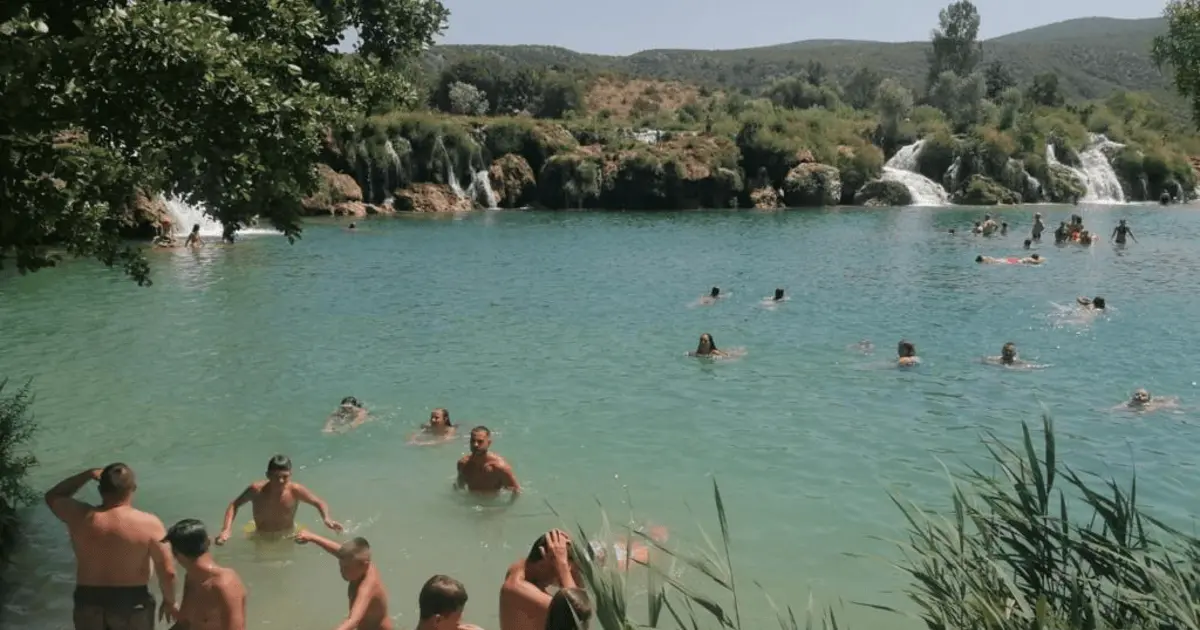
Krka is one of Croatia’s most visited parks. Managing crowds is essential for photography success.
Arrival Timing Strategy
Arrive at opening (8:00 AM in summer, varies by season): The single most important strategy. The first 60-90 minutes offer nearly empty conditions.
Park in the main lot near Skradinski Buk entrance: Other entrances may be farther from the waterfalls.
Go directly to your priority compositions: Work efficiently during the quiet morning window.
Crowd Elimination Techniques
Long exposures: 30-60 second exposures (using 10-stop ND filter) render moving people as transparent ghosts or eliminate them entirely. People who stop to watch your photography will appear, but those walking through disappear.
Patience: Identify your composition, set up, and wait for gaps in crowd flow. Tour groups move together, creating brief quiet windows between groups.
Explore the full loop: Most visitors cluster at the entrance area and first viewpoints. Walk the entire 1.9km boardwalk loop – later sections have fewer people.
Visit Roški Slap: If Skradinski Buk is too crowded, Roški Slap offers excellent waterfall photography with minimal crowds.
Boardwalk Photography Techniques
Krka’s wooden boardwalks present unique challenges:
Vibration: Walking visitors create boardwalk vibration during your long exposures. Wait for quiet moments between groups before triggering.
Narrow walkways: In some sections, the boardwalk is narrow (1.5m width). Be courteous to other visitors – don’t block the entire walkway with your tripod setup.
Tripod stability: Use a wide tripod stance on the wooden surface. Rubber feet work better than spikes.
Keep moving: Set up, shoot your composition (multiple exposures if bracketing), then move on. Don’t monopolize prime spots during busy times.
Spray on boardwalks: Some sections of boardwalk get wet from spray. Watch your footing and protect gear from water on the wooden surface.
Working with People in Frame
When crowds are unavoidable, consider including people as compositional elements:
- Provide scale: A small human figure shows the waterfall’s size
- Add color: Bright clothing creates color contrast against green forest and white water
- Show experience: Captures how people interact with this spectacular place
Sometimes the crowded reality of popular destinations is part of the story worth documenting.
Post-Processing Waterfall Images
Post-processing completes the waterfall photography workflow.
RAW Processing Basics
Exposure: Fine-tune overall brightness. I often lift shadows to recover detail in dark forest areas while protecting waterfall highlights.
Highlights and Whites: Pull down to recover any blown waterfall highlights. The goal is texture in the white water, not pure white.
Shadows and Blacks: Lift to reveal detail in shadowed forest and travertine areas.
Contrast: Slightly reduce global contrast to manage the extreme range between bright water and dark forest, then add back local contrast with clarity.
Clarity: Moderate increase (+ 10 to +20) brings out texture in travertine and vegetation without over-processing.
Vibrance: Increase vibrance (+10 to +30) to enhance the green vegetation and golden travertine without over-saturating.
Color Temperature: Adjust white balance to render the water and travertine tones accurately. Krka’s water has a slight blue-green tint.
Graduated Filters
Use digital graduated filters (in Lightroom or Photoshop) to balance bright and dark areas:
- Darken sky/bright areas: Pull down exposure in the upper portion if bright sky is visible
- Lighten foreground: Increase exposure in shadowed lower areas
- Reverse gradients: Sometimes the waterfall is bright (top) and foreground is dark (bottom), requiring reverse gradient
This mimics physical graduated ND filters and helps balance exposure.
Local Adjustments
Selective adjustments on specific areas:
- Brush tool on waterfalls: Slightly reduce highlights and increase clarity on cascade sections
- Radial filter on focal cascade: Draw attention to the primary waterfall with subtle vignetting
- Adjustment brush on foreground: Enhance foreground elements (pools, rocks) to emphasize depth
Noise Reduction
Long exposures at low ISO typically produce clean images, but shadowed areas lifted significantly in post may show noise. Apply moderate noise reduction to these areas while preserving detail in important regions.
Sharpening
Apply sharpening carefully:
- Overall sharpening: Moderate amount (40-60 in Lightroom)
- Masking: Use masking (hold Alt while adjusting Masking slider) to apply sharpening only to edges, not smooth water or sky
- Detail sharpening: Increase detail on travertine textures and vegetation
- Output sharpening: Apply appropriate output sharpening for the final use (screen, print)
Common Mistakes to Avoid
- Over-saturation: Resist the temptation to over-saturate greens and blues. Natural colors are beautiful.
- Over-smoothing water: Don’t process away all texture in the water. Some detail maintains realism.
- Excessive HDR: Blending multiple exposures for dynamic range is good, but overdone HDR creates unnatural halos and flatness.
- Over-sharpening: Too much sharpening creates harsh artifacts.
The goal is natural-looking images that represent what the eye sees while managing the camera’s dynamic range limitations.
Practical Information
Park Access and Entry Points
Main Entrance: Skradinski Buk entrance (most common) provides direct access to the main waterfalls.
Roški Slap Entrance: Less crowded alternative for visiting the second waterfall.
Other entrances: The park has several entrances, but Skradinski Buk and Roški Slap are primary for photography.
Tickets and Costs
Purchase online: Buy tickets in advance online to skip queues and guarantee entry during peak season.
Pricing: Varies by season (most expensive July-August, cheapest November-March). Check official website for current prices.
Includes: Entry ticket includes access to boardwalks and trails. Boat trips to Visovac Island cost extra.
Opening Hours
Opening hours vary by season:
- Summer (June-September): Typically 8:00 AM to 8:00 PM
- Spring/Fall: Generally 8:00 AM to 6:00 PM
- Winter: Reduced hours, check before visiting
Verify current hours on the official website as they change.
Facilities
Parking: Large parking lots at main entrances (fee charged separately from entry).
Restrooms: Available at entrances and within the park.
Food: Restaurants and cafés near entrances. Bring water for the boardwalk loop as there are no facilities along the trail.
Accessibility: The wooden boardwalks are wheelchair accessible in most areas.
What to Bring
- Camera gear (as discussed in gear section)
- Water and snacks
- Sun protection (hat, sunscreen)
- Comfortable walking shoes (you’ll walk 2-5 km)
- Light rain jacket (summer afternoon storms possible)
- Insect repellent (summer)
- Microfiber towel for wiping spray off gear
Park Rules
- Stay on designated boardwalks and trails
- Swimming is prohibited at Skradinski Buk (since 2021)
- No drones (prohibited in national parks)
- No off-trail hiking
- Respect wildlife and vegetation
- Pack out all trash
Getting There
Krka National Park is located:
- 60 km from Split (1 hour drive)
- 15 km from Šibenik (20 minutes)
- 90 km from Zadar (1.5 hours)
No public transport directly to the park entrances. Options:
- Drive and park at the park
- Organized tours from major cities
- Taxi from Šibenik
Suggested Photography Itinerary
For a comprehensive photography visit:
8:00 AM: Arrive at Skradinski Buk entrance at opening 8:00-10:30 AM: Photograph main cascades while boardwalks are quiet 10:30 AM-12:00 PM: Complete the boardwalk loop, photographing upper sections 12:00-2:00 PM: Lunch, review images, rest during peak crowds and harsh light 2:00-4:00 PM: Travel to Roški Slap entrance 4:00-6:00 PM: Photograph Roški Slap waterfalls in afternoon light 6:00 PM: Depart
This full-day itinerary captures both major waterfall areas in optimal light.
Key Takeaways
Krka National Park offers some of Croatia’s most accessible and photogenic waterfalls. The extensive boardwalk system provides water-level access rare at major waterfalls, while the travertine formations create unique beauty unavailable at simple rock cascades.
Successful waterfall photography at Krka requires technical mastery of long exposure technique using ND filters, strategic timing to arrive early and avoid crowds, understanding how to work within boardwalk constraints, and seasonal awareness of how changing water levels transform the waterfalls.
The most important factors for success: arrive at park opening (8:00 AM) for empty boardwalks and soft light, master long exposure technique with ND filters for that classic silky water effect, explore the entire boardwalk loop rather than just the entrance area, and consider visiting Roški Slap for excellent photography with minimal crowds.
Most importantly, visit multiple times in different seasons and conditions. Krka transforms dramatically from powerful spring flows to delicate summer/winter curtains, each offering unique photographic opportunities. Return visits reveal new perspectives on these spectacular waterfalls.
FAQ
Q: What are the best camera settings for photographing Krka’s waterfalls?
A: After years photographing Krka’s waterfalls, I’ve developed a reliable settings approach. For the classic silky water effect using long exposures: Aperture f/11 to f/16 for depth of field keeping both close waterfall details and distant elements sharp; Shutter speed 0.5 to 4 seconds depending on the desired water smoothness and available light; ISO 100 for maximum image quality; ND filter (6-stop or 10-stop) to achieve long exposures even in bright daylight. Krka’s boardwalks are shaded under tree canopy in many areas, which naturally reduces light, but during midday you’ll still need strong ND filters for multi-second exposures. For freezing water motion: Use 1/500s or faster shutter speed, f/5.6 to f/8 aperture, and adjust ISO as needed (typically 400-800 in shaded areas). I prefer the long exposure approach for Krka’s cascades as it creates the ethereal, flowing appearance that emphasizes the water’s movement. Always use a sturdy tripod and remote shutter release to eliminate camera shake during long exposures. For the best results, bracket exposures (-1, 0, +1 EV) as the bright white water and darker shadowed areas create challenging dynamic range. Shooting in RAW is essential for recovering detail in both highlights and shadows during post-processing.
Q: What is the best time to photograph Skradinski Buk?
A: As someone who’s photographed Skradinski Buk dozens of times, I strongly recommend early morning arrival (7:00-9:00 AM) for the best photography conditions. The park opens at 8:00 AM in summer (7:00 AM in some months), and arriving at opening provides several critical advantages: virtually empty boardwalks for composition freedom without people in frames, soft morning light filtering through the forest canopy that illuminates waterfalls without harsh shadows, calm air with less wind disturbing water surfaces and vegetation, and cooler temperatures making the physical activity of carrying gear more comfortable. By 10:00 AM, tour buses arrive and crowds build significantly, making photography challenging. If early morning isn’t possible, late afternoon (4:00-6:00 PM) is my second choice – crowds thin as people leave, and the warm afternoon light creates golden tones on the travertine and water. Avoid midday (11:00 AM-3:00 PM) when harsh overhead sun creates extreme contrast between bright white water and dark shadows, and crowds peak making boardwalk photography nearly impossible. Seasonally, spring (April-May) and fall (September-October) offer the best combination of good light, moderate water flow, and fewer crowds than summer. Winter visits (November-March) provide completely empty park conditions and different character with lower water levels, though some trails may be closed.
Q: Do I need ND filters for waterfall photography at Krka?
A: Yes, ND (neutral density) filters are absolutely essential for daytime waterfall photography at Krka if you want to create long exposure images with smooth, flowing water. Even though much of the boardwalk trail is shaded by forest canopy, bright Croatian summer days provide too much light for the multi-second exposures needed for that classic silky water effect without ND filters. I carry both a 6-stop ND filter and a 10-stop ND filter, using them individually or stacked depending on lighting conditions. In shaded areas during early morning or late afternoon, a 6-stop ND (allowing 1-4 second exposures at f/11, ISO 100) often suffices. In brighter conditions or for very long exposures (15-30 seconds), I stack filters or use the 10-stop alone. Variable ND filters are convenient but can create color casts and X-patterns with wide-angle lenses, so I prefer fixed ND filters for best image quality. The technique: compose and focus without the filter attached, switch to manual focus so it doesn’t change, attach the ND filter, recalculate exposure (many phone apps do this automatically), and shoot using a remote release or 2-second timer. Cover your viewfinder during exposure to prevent light leaks. Without ND filters, you’re limited to very early morning or late evening for long exposures, severely restricting your shooting window. ND filters are a relatively small investment that dramatically expands your creative possibilities for waterfall photography.
Q: Can you still swim at Krka waterfalls?
A: No, swimming at Skradinski Buk has been prohibited since January 2021 due to environmental protection concerns. For decades, Krka was famous for allowing swimming directly beneath the waterfalls – a unique experience among European national parks. However, the large numbers of visitors were causing ecological damage to the sensitive travertine formations and affecting water quality. The swimming ban was implemented to protect the park’s fragile ecosystem. This change has actually improved conditions for photographers – the waters are clearer without swimmers disturbing sediment, you can photograph the waterfalls without people in the water, and the travertine barriers are recovering their natural appearance. While you can no longer swim at Skradinski Buk, swimming is still permitted at certain other locations within the park boundaries during summer months. From a photography perspective, the swimming ban is beneficial as it preserves the natural beauty we’re trying to capture and eliminates the challenge of timing shots between swimmers. The park remains spectacular for photography even without the swimming experience, and the environmental protection ensures these waterfalls will continue to be photographable for generations to come.
Q: How do I photograph waterfalls from Krka’s boardwalks?
A: Krka’s extensive boardwalk system provides excellent waterfall access but presents unique photography challenges. The boardwalks are wooden walkways at water level that circle Skradinski Buk, providing constantly changing perspectives as you move around the waterfall complex. Key techniques I use: Arrive early (before 9:00 AM) when boardwalks are empty – crowds make tripod use difficult and people in frames unavoidable later in the day. Use a sturdy tripod with a wide stance for stability on the wooden boardwalk surface, which can vibrate when other visitors walk past. I often wait for quiet moments between groups of tourists before triggering long exposures. Protect your gear from water spray – the boardwalks bring you very close to cascades where fine mist can drift onto your lens. Keep a microfiber cloth handy and use a lens hood. Explore the entire boardwalk loop – the circular route provides 360-degree access to the waterfall complex, with different angles revealing different compositions. Some spots show multiple cascade tiers, others focus on individual falls, and certain viewpoints look across pools toward distant cascades. Use wide-angle lenses (16-35mm) for comprehensive waterfall scenes showing the scale of the complex, and telephoto lenses (70-200mm) for isolating individual cascades and creating abstract patterns of flowing water. The boardwalks place you at a perfect height for water-level perspectives that create intimate connections with the waterfalls. This low angle emphasizes the power of the water and creates dynamic leading lines as cascades flow toward the camera.
Q: What is unique about photographing Krka compared to other waterfalls?
A: Krka National Park offers waterfall photography opportunities distinctly different from other famous waterfall locations. The key difference is accessibility and variety within a compact area. Skradinski Buk isn’t a single waterfall but a complex of 17 cascades spread over 800 meters, each with different character – gentle curtain falls, powerful channeled drops, wide stepped cascades, and delicate side streams. The extensive boardwalk system provides access to water-level perspectives rare at large waterfalls where you’re typically viewing from a distance. You can compose with foreground elements (travertine formations, pools, vegetation) leading to waterfalls just meters away. The travertine formations give Krka’s waterfalls a distinctive appearance – the golden-brown calcium carbonate deposits create natural sculptures, pools, and barriers that shape the water’s flow. This creates more varied compositions than simple rock waterfalls. The combination of waterfalls and cultural elements is unique – at Roški Slap, traditional stone watermills integrate human history with natural beauty, creating compositions unavailable at purely natural waterfalls. The surrounding Mediterranean vegetation and climate create different aesthetics than typically forested waterfall environments. The Krka River’s turquoise-blue color (from dissolved minerals) photographs beautifully, contrasting with white cascades and golden travertine. Finally, Krka’s waterfalls change dramatically with seasons and water levels – spring brings powerful flows, summer shows refined travertine details with lower water, fall provides autumn colors, and winter reveals the underlying travertine architecture. This seasonal variation means returning photographers find different subjects each visit.
Q: What focal lengths work best for Krka waterfall photography?
A: I use a range of focal lengths at Krka, each serving different creative purposes. Wide-angle lenses (16-24mm): Essential for capturing the full scope of Skradinski Buk’s cascade complex, showing multiple tiers and the relationship between waterfalls and surrounding landscape. Wide angles work brilliantly from the boardwalks, allowing you to include foreground travertine formations or pools while showing the full waterfall background. The slight distortion emphasizes depth and draws viewers into the scene. Be careful of vignetting when using strong ND filters with ultra-wide lenses. Standard zoom range (24-70mm): My workhorse for Krka photography, offering flexibility to frame individual cascades, medium-width compositions, and detailed sections without the distortion of wide angles. This range works perfectly for capturing 2-3 cascade tiers in a single composition, creating balanced images that show the waterfall’s structure without overwhelming detail. Telephoto lenses (70-200mm): Excellent for isolating individual cascade details, creating abstract compositions of flowing water patterns, and compressing perspective to show multiple cascade layers stacked dramatically. Telephoto lenses also allow you to photograph sections of waterfalls from a distance when boardwalk access is crowded or when spray makes close approach impractical. I often use 100-200mm for abstract waterfall images that emphasize patterns, textures, and the graphic quality of flowing water. For a minimalist approach, one could photograph Krka effectively with just a 24-70mm, but the creative range from 16mm to 200mm provides maximum versatility for different compositions and approaches.
Q: How do I deal with crowds when photographing Krka?
A: Crowds are the biggest challenge for waterfall photography at Krka, especially at Skradinski Buk during peak summer season (July-August). My crowd-management strategies: Arrive at park opening (8:00 AM in summer, 7:00 AM some months) – the first 60-90 minutes offer relatively empty boardwalks before tour buses arrive. This early window is crucial for tripod work and long exposures without people walking through frames. Visit during shoulder seasons (April-May, September-October) when visitor numbers drop significantly but weather and water flows remain good. Winter (November-March) offers completely empty park conditions, though some areas may be closed and water levels are lower. Use very long exposures (30+ seconds with 10-stop ND filter) to render moving people as ghostly transparent figures or eliminate them entirely. Anyone who stops to watch you photograph will appear in the image, but people walking through during the exposure effectively disappear. This technique works brilliantly on busy days. Explore the entire boardwalk loop thoroughly – most visitors cluster at the beginning of the trail near the main entrance viewpoint, while sections farther along the loop have fewer people. Some of my favorite compositions come from less-crowded areas that most visitors rush past. Visit Roški Slap instead of or in addition to Skradinski Buk – this second major waterfall receives a fraction of Skradinski Buk’s visitors and offers excellent photography with much more solitude. Be patient and strategic – identify your desired compositions early, set up, and wait for gaps in the crowd flow. Most tour groups move together, creating brief windows of quiet between groups. Finally, embrace the human element when crowds are unavoidable – sometimes including visitors in your images provides scale and conveys the popular nature of this spectacular place.
Final Thoughts
Krka National Park stands as one of Croatia’s most spectacular waterfall destinations and offers unparalleled accessibility for photographers. The combination of powerful cascades, intricate travertine formations, and extensive boardwalk access creates photography opportunities available at few other waterfall locations globally.
The challenges are real – crowds during peak season, the need for technical mastery of long exposure technique, and boardwalk limitations require strategy and skill. But the rewards justify the effort. Few places offer the combination of dramatic waterfalls, water-level access, and sheer variety of compositions available within Krka’s waterfall complexes.
Success requires preparation, technical skill, strategic timing, and persistence. Arrive early for empty boardwalks and soft light, master ND filter technique for silky water effects, explore beyond the entrance area, and return in different seasons to experience Krka’s transformations.
I hope this guide helps you capture the flowing beauty of Krka’s waterfalls. Whether you’re photographing the powerful spring cascades of Skradinski Buk, the cultural watermills of Roški Slap, or the delicate winter curtains revealing golden travertine, you’ll discover that Krka offers some of the most rewarding waterfall photography in Europe.
The cascades are flowing. Get out there and shoot.
💙 Support My Photography Work
Enjoy these guides? Support me on Patreon to help create more in-depth photography content! 🙏