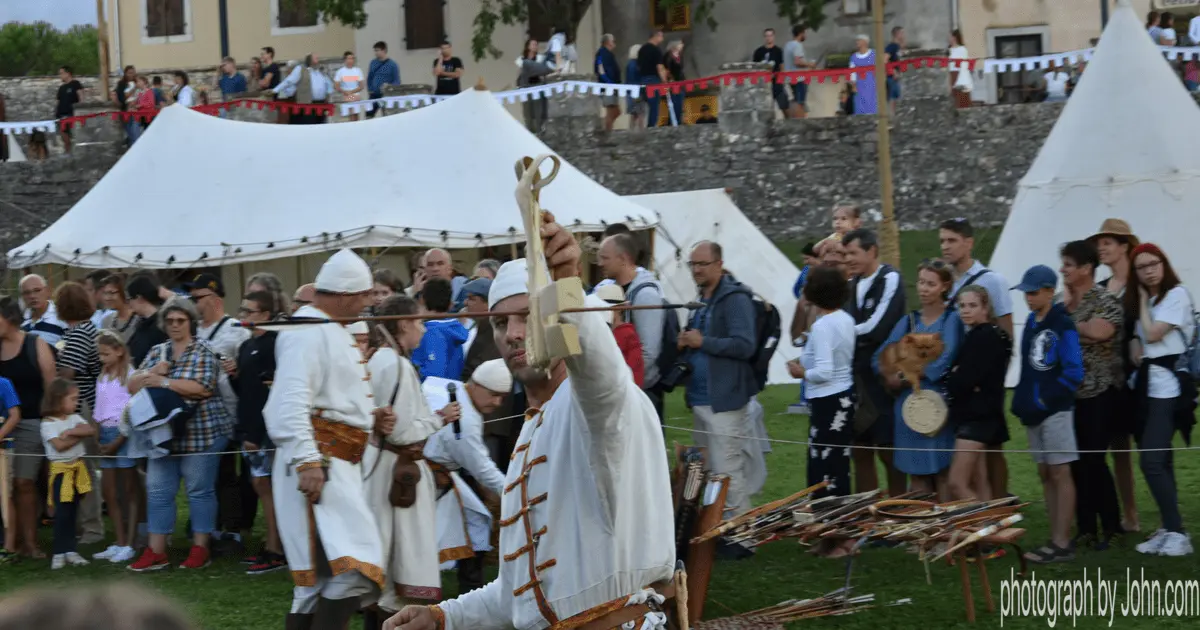
I’ll never forget the first time I photographed Svetvinčenat’s medieval festival. It was a warm September evening in 2022, and as I watched Toiahi spin flames against the backdrop of the illuminated Morosini-Grimani Castle, I realized I’d found something special - a perfect fusion of cultural heritage, living history, and dramatic visual storytelling. The challenge of capturing fire and movement in fading light, the atmosphere of thousands of people transported to another era, the authentic craftsmanship on display… it all came together in a way that demands serious photographic attention.
Medieval festivals might seem like simple tourist entertainment, but photographing them well requires specific technical skills and creative approaches. You’re dealing with challenging light conditions ranging from harsh midday sun to firelit performances after dark, fast action during jousting tournaments, crowded spaces that make composition difficult, and the constant challenge of capturing authentic medieval atmosphere while excluding modern intrusions.
Svetvinčenat’s medieval festival, held annually in September in one of Istria’s most beautiful Renaissance squares, is one of Croatia’s finest cultural events. The combination of authentic historical setting (the 13th-century castle and medieval square), quality performances (professional jousting knights, skilled fire dancers, traditional musicians), active artisan participation (craftspeople demonstrating period techniques), and genuine Istrian cultural pride creates a festival that goes beyond simple costumed entertainment.
In this comprehensive guide, I’ll share everything I’ve learned from photographing Svetvinčenat and similar medieval festivals across Croatia - from camera settings for freezing jousting action to compositional strategies for capturing medieval atmosphere, from fire photography techniques to managing crowds in your frame.
Understanding Medieval Festival Photography
The Unique Challenges
Medieval festival photography combines elements of event photography, sports photography, cultural documentation, and portrait work - all within a historically-themed environment that presents specific technical and creative challenges.
Lighting Challenges: Unlike studio or controlled event photography, you’re working with constantly changing natural light, from harsh midday sun reflecting off the stone square to the dramatic firelight of evening performances. You need to be ready to adjust settings frequently as light conditions shift throughout the day.
Action and Movement: The jousting tournament presents genuine sports photography challenges - horses charging at full gallop, lances impacting shields, knights falling. You need fast shutter speeds, accurate autofocus tracking, and good timing to capture peak action moments.
Crowd Management: Popular festivals attract thousands of spectators. Capturing clean, uncluttered shots of performances and participants requires strategic positioning, careful framing, and sometimes creative use of depth of field to blur distracting crowd elements.
Authenticity vs. Reality: The goal is creating images that feel authentically medieval, but you’re shooting in a modern setting with tourists in contemporary clothing, cars parked nearby, electrical wires, and modern signage. Selective framing and compositional awareness are essential.
The Svetvinčenat Advantage
Svetvinčenat offers specific advantages that make it exceptional for photography:
Authentic Architecture: The Renaissance square with its imposing castle, Gothic church, and traditional stone buildings provides a genuinely historical backdrop. Unlike festivals in modern parks or spaces, here the environment itself transports you to another era.
Quality Scale: The festival is large enough to attract professional performers and skilled artisans, but small enough (compared to massive events elsewhere in Europe) that you can get close access without fighting enormous crowds.
Late Afternoon Timing: The main performances (jousting, fire dancing) typically occur in late afternoon through evening, coinciding with the best photographic light - golden hour for the tournament, atmospheric firelight for the evening performances.
Cultural Authenticity: This isn’t just commercial entertainment - it’s a celebration of Istrian cultural heritage, with local participation, traditional cuisine, and regional crafts. That authenticity shows in the images.
Camera Settings for Festival Photography
General Approach
I primarily shoot medieval festivals in either aperture priority or shutter priority mode (depending on whether I’m prioritizing depth of field or action-stopping), occasionally switching to manual for the fire performances when lighting becomes extremely variable.
Daytime Festival Photography (10:00 AM - 5:00 PM)
Artisan Market and Details:
- Aperture: f/4 to f/5.6 (enough depth of field for craftwork, shallow enough to blur backgrounds)
- ISO: 100-400 (keep noise low for detailed shots of crafts and textures)
- Shutter Speed: 1/250s or faster (prevents camera shake, freezes any movement)
- Focus: Single-point AF for precise control on details
This setup works well for photographing artisans at work, food vendors, costume details, architectural elements, and general festival atmosphere during good daylight conditions.
Costumed Portraits:
- Aperture: f/2.8 to f/4 (shallow depth of field to blur busy backgrounds)
- ISO: 200-800 depending on whether you’re in sun or shade
- Shutter Speed: 1/250s minimum
- Focus: Single-point AF on the subject’s near eye
The wide aperture is crucial here - it creates beautiful background blur (bokeh) that separates your costumed subject from distracting crowd elements behind them. Position your subject with the castle or medieval architecture blurred in the background for context without distraction.
Jousting Tournament (Usually 4:00-6:00 PM)
Action Shots - Charging Knights:
- Aperture: f/4 to f/5.6 (balance between light gathering and depth of field)
- ISO: 400-1600 (depending on light - late afternoon can require higher ISO)
- Shutter Speed: 1/1000s to 1/2000s (absolutely essential to freeze galloping horses and lance impact)
- Focus: Continuous AF (AI Servo/AF-C) with zone or tracking
- Drive Mode: High-speed continuous (8-10 fps minimum)
The key to jousting photography is anticipating the action. Watch the pattern - knights charge from both ends, meet in the middle. Pre-focus on the impact point and start shooting in burst mode just before the knights meet. Your focus tracking should follow the nearest knight as he charges.
Compositional Shots - Before and After:
- Aperture: f/8 (more depth of field to capture the entire scene)
- ISO: As needed for 1/500s shutter
- Shutter Speed: 1/500s (still fast enough to freeze movement, but not requiring extremely high ISO)
These wider shots showing knights preparing, riding into position, saluting the crowd, or the aftermath of passes provide context and storytelling between the pure action moments.
Fire Performances (8:00-10:00 PM)
Standard Fire Photography:
- Aperture: f/2.8 to f/4 (fast lens essential for low light)
- ISO: 1600-3200 (embrace the grain - it adds atmosphere)
- Shutter Speed: 1/250s to 1/500s (freezes fire while showing flame shape and movement)
- Focus: Manual or single-point AF on performer (not flames, which can confuse AF)
- Metering: Spot metering on performer’s face or body, then slightly underexpose (-0.3 to -0.7 EV)
- White Balance: Auto or Tungsten (around 3200K) - firelight is very warm
The biggest challenge with fire performance photography is exposure. The bright flames will cause your camera’s meter to underexpose everything else, leaving the performer too dark. Use spot metering on the performer and slightly underexpose to prevent the flames from completely blowing out - you can recover shadow detail in RAW processing.
Fire Trail Shots:
- Aperture: f/4 to f/5.6
- ISO: 800-1600 (can be lower since slower shutter accumulates more light)
- Shutter Speed: 1/30s to 1/60s (creates beautiful streaks as performer spins fire)
- Stabilization: Tripod or very steady handheld technique
These longer exposures create artistic trails of light as the fire props spin and move. The slower shutter blurs the flames into streaks while keeping the performer’s body relatively sharp (though some motion blur adds to the dynamic feeling).
Evening Atmosphere (After Dark)
Torch-Lit Scenes and Ambient Atmosphere:
- Aperture: f/1.8 to f/2.8 (wide open for available light)
- ISO: 1600-6400 (high, but necessary for the mood)
- Shutter Speed: 1/60s to 1/125s
- White Balance: Tungsten or custom (warm firelight is part of the atmosphere)
These ambient shots of the festival after dark - torch-lit market stalls, the illuminated castle, participants in firelight - create beautiful atmospheric images. The high ISO grain actually enhances the medieval mood rather than detracting from it.
Best Times and Activities Throughout the Day
Early Morning Setup (8:00-10:00 AM)
If you can access the festival grounds during setup (sometimes possible by arriving very early), you’ll find excellent photography opportunities with minimal crowds:
- Vendors arranging their stalls and merchandise
- Performers arriving in costume
- The empty square with festival decorations
- Details without crowds: architectural elements, signage, decorations
- Artisans setting up their workshops
The light during September morning is soft and pleasant, and the absence of crowds allows clean shots of the medieval setting.
Late Morning to Early Afternoon (10:00 AM - 2:00 PM)
The festival officially opens and the crowd builds. This is prime time for:
- Artisan market photography - craftspeople actively working
- Food vendors preparing traditional dishes
- Musicians and street performers in smaller, informal settings
- Costumed participants (ask for portraits)
- General festival atmosphere and crowd interaction
The midday light can be harsh, but look for open shade under vendor canopies, or position subjects so the sun is behind them and expose for their shaded faces (creating a natural rim light effect).
Mid to Late Afternoon (2:00-5:00 PM)
The light improves dramatically as the sun lowers. This is typically when some scheduled performances begin:
- Musical performances
- Craft demonstrations
- Children’s activities and workshops
- Storytellers and jesters
The warm, directional afternoon light creates rich colors and pleasant shadows. The stone architecture of the square glows beautifully.
Golden Hour to Sunset (5:00-7:00 PM in September)
This is prime time. The light is gorgeous, the main jousting tournament typically occurs during this window, and the atmosphere reaches its peak:
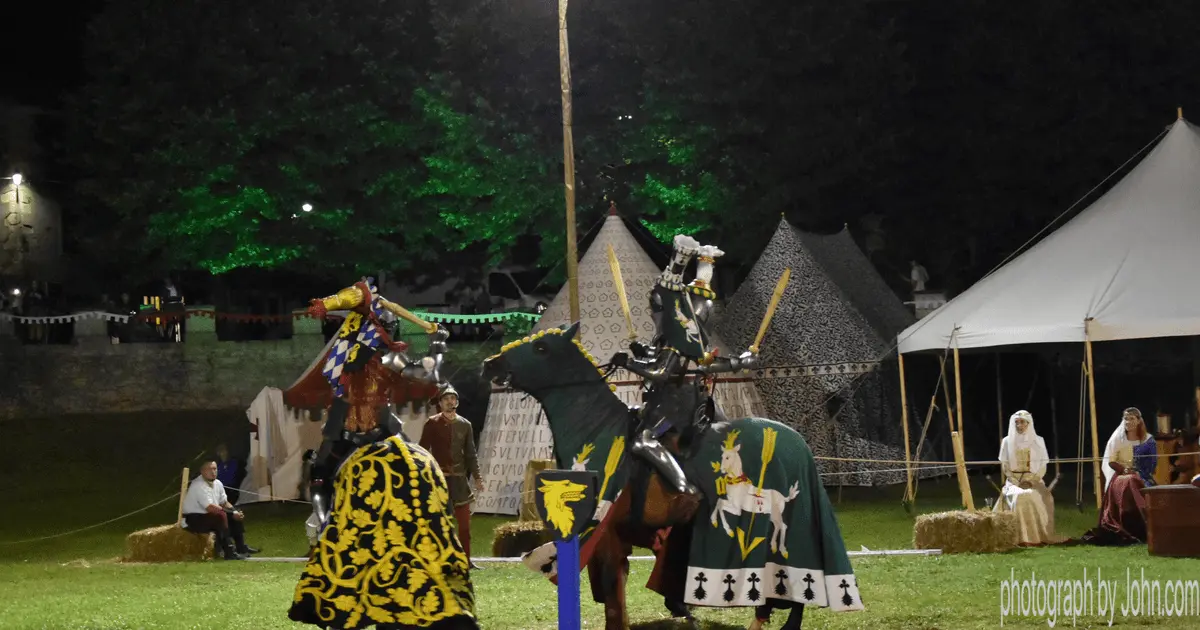
- Jousting tournament - the highlight event with dramatic action
- Golden hour portraits - beautiful warm light on costumes and faces
- Castle photography - the stone glows honey-gold in low sun
- Crowd atmosphere - peak attendance, maximum energy
Position yourself for the joust based on sun direction - ideally you want side-lighting on the knights as they charge, which creates dimension and drama.
Evening to Night (7:00-10:00 PM)
As darkness falls, the festival transforms:
- Fire performances - Toiahi’s fire dance and other fire artists
- Torch-lit processions - participants carrying torches through the streets
- Evening music - often more intimate performances
- Illuminated castle - beautiful backdrop for night photography
- Candlelit market - vendors by lantern and candlelight
The atmosphere becomes more magical and mysterious. This is technically challenging light, but the resulting images have unique mood and drama that daytime shots can’t match.
Compositional Strategies for Medieval Atmosphere
Using Architecture as Context
The stone architecture of Svetvinčenat - particularly the castle - is a crucial element in creating medieval atmosphere. Use it intentionally:
Background Context: Position your subjects (costumed participants, artisans, performers) with the castle or church in the background. Use wider apertures (f/2.8 to f/4) to keep the architecture softly blurred but recognizable, providing context without distraction.
Framing Elements: Shoot through archways, doorways, or windows to frame your subjects. The stone frames add depth and medieval character to compositions.
Architectural Details: Don’t overlook details - carved stone decorations, weathered walls, iron fixtures, wooden doors. These textural elements enhance the historical feeling.
Excluding Modern Elements
One of the biggest challenges is avoiding modern intrusions - parked cars, electrical wires, people in contemporary clothing, modern signage. Strategies:
Selective Framing: Compose carefully to exclude modern elements. A slight shift in position or tighter crop can remove distracting contemporary details.
Shallow Depth of Field: Use wide apertures (f/2.8 or wider) to blur background elements. That person in a Nike t-shirt becomes an unrecognizable blur of color when shot at f/1.8.
Telephoto Compression: Longer focal lengths (85-200mm) allow you to compress the scene, isolating your subject against selective backgrounds while excluding wide surrounding areas that might contain modern elements.
Strategic Timing: Sometimes waiting a few seconds for a modern-dressed spectator to move out of frame is all it takes.
Capturing Candid Moments
While posed portraits have their place, the most compelling festival photography often comes from unguarded, candid moments:
- A blacksmith concentrating intensely while hammering hot metal
- Musicians laughing between performances
- A child’s face watching the fire dancer with pure wonder
- Knights adjusting armor and helping each other prepare
- Vendors negotiating with customers
- Performers in quiet moments before going on stage
These unstaged moments feel authentic and tell richer stories than posed shots. A 70-200mm lens lets you photograph candidly from a distance without being intrusive.
Details and Storytelling
Wide establishing shots show the scope of the festival, but details tell intimate stories:
- Close-ups of a leather worker’s weathered hands stitching
- The texture of chain mail armor
- Intricate embroidery on period costumes
- Sparks flying from a blacksmith’s anvil
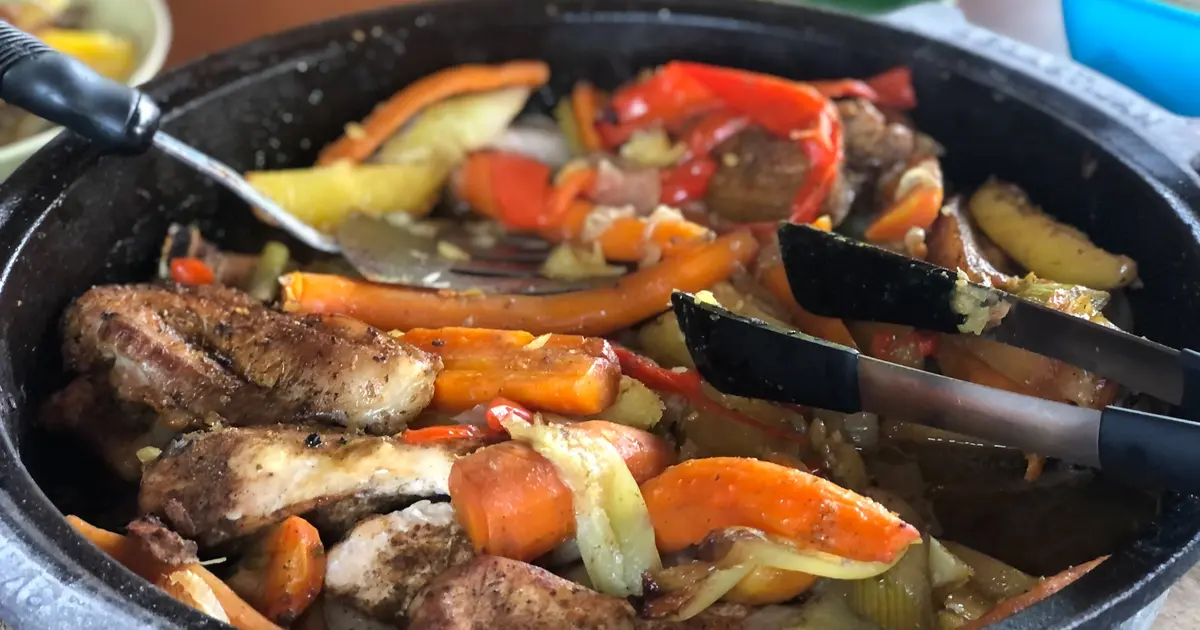
- Steam rising from a pot of traditional Istrian stew
- The pattern of hand-woven textiles
- Fire reflecting in a performer’s eyes
These details, combined with wider shots, create a complete visual narrative of the festival experience.
Photographing Specific Festival Elements
The Jousting Tournament
The jousting is the festival’s headline attraction and presents genuine action photography challenges:
Preparation:
- Scout the arena before the tournament starts to identify the best shooting position
- Understand the pattern - knights typically charge from both ends toward the center
- Position yourself near the middle where impact occurs, or at one end showing the charge
- Use a telephoto lens (200-400mm is ideal) to fill the frame with action
During the Tournament:
- Shoot in burst mode (high-speed continuous)
- Use continuous autofocus tracking
- Pre-focus on the impact point and fire bursts as knights approach
- Don’t stop shooting after impact - the aftermath (breaking lances, knights recovering) can be dramatic
- Watch for moments between passes - knights preparing, saluting, interacting with squires
Camera Settings:
- Shutter speed 1/1000s minimum, preferably 1/1600s or faster
- Aperture f/4 to f/5.6
- ISO as needed (400-1600 typically)
- Continuous AF with zone or tracking focus
Composition:
- Include the castle backdrop when possible for context
- Capture both the charging approach and the moment of impact
- Shoot both horizontal and vertical orientations
- Look for dust kicked up by hooves adding drama
Fire Dance Performance
Toiahi’s fire dance performance is a festival highlight and requires specific photographic approaches:
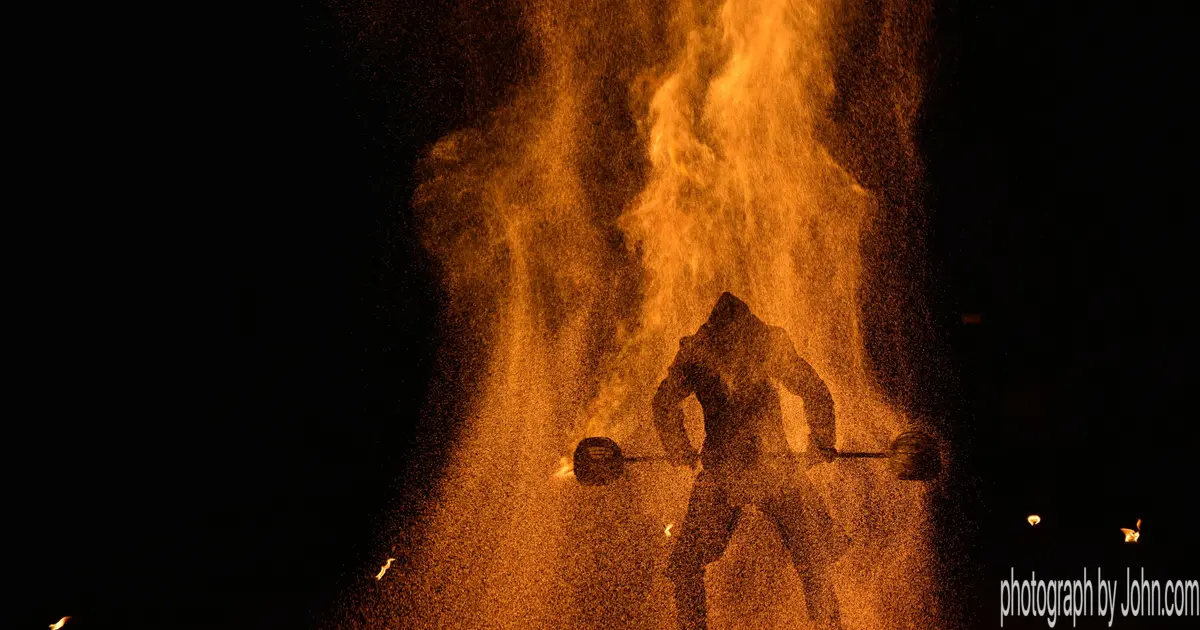
Technical Approach:
- Manual mode for consistent exposure
- Spot meter on performer’s face/body (not flames)
- Slight underexposure (-0.3 to -0.7 EV) to preserve flame detail
- Fast aperture (f/2.8 to f/4)
- High ISO (1600-3200 typically)
- Shutter speed 1/250s-1/500s for frozen flames
Creative Variations:
- Slower shutter (1/30s-1/60s) for fire trails and motion blur
- Shoot from low angle to silhouette performer against darkening sky
- Include spectators’ faces lit by firelight in foreground
- Use the illuminated castle as backdrop
Composition:
- Leave space around the performer for the fire to extend into
- Watch the performer’s routine to anticipate peak moments
- Capture both close-ups and wider environmental shots showing the setting
- Look for reflection of fire in the performer’s costume or face
Artisan Market and Craftspeople
The artisan market provides rich documentary photography opportunities:
Craftspeople at Work:
- Photograph blacksmiths at forges - sparks, fire, dramatic action
- Leather workers hand-stitching - concentration, weathered hands, detailed work
- Potters at wheels - motion, skilled hands shaping clay
- Weavers at looms - intricate patterns, traditional techniques
Camera Settings:
- Aperture f/4 to f/5.6 (enough DOF for the work, shallow enough to blur background)
- Shutter 1/250s or faster (freeze hand movements)
- ISO as needed for conditions (200-800 typically in daylight)
Approach:
- Always ask permission before photographing artisans at work
- Engage in conversation - learn about their craft, show genuine interest
- Photograph from angles that show both the craftsperson and their work
- Capture details - hands working, tools, materials, finished products
Storytelling:
- Shoot sequences showing process: raw material → work in progress → finished product
- Include environmental context - the workshop setup, tools arranged, work space
- Capture interaction between artisan and customers
- Detail shots of textures, patterns, craftsmanship
Food and Culinary Photography
Traditional Istrian food is an important festival element:
Market Stalls:
- Traditional dishes displayed - focus on authentic preparation and presentation
- Food being cooked over open fires - smoke, flames, atmospheric
- Vendors serving customers - interaction, activity
Camera Settings:
- Natural light whenever possible (no flash - it kills atmosphere)
- Aperture f/4 to f/5.6 for food close-ups
- Shoot from slightly above for plated food
- Include environmental context - the medieval setting, wooden serving implements
Composition:
- Use shallow depth of field to separate food from busy backgrounds
- Include hands preparing or serving food for human element
- Steam, smoke, and atmospheric elements add mood
- Traditional serving vessels and period-appropriate presentation enhance medieval feeling
Managing Crowds and Access
Svetvinčenat’s festival attracts several thousand visitors. Managing crowds is essential for clean photography:
Strategic Positioning
- Arrive Early: Get there when gates open (usually 10:00 AM) to photograph before peak crowds
- Scout Locations: Walk the entire festival area early to identify good shooting positions
- Claim Space: For the joust, arrive 30-45 minutes early to secure a good viewing position
- Work the Edges: The square center is packed; along edges and in side streets, crowds are thinner
Technical Solutions
- Shallow Depth of Field: f/2.8 to f/4 blurs crowd members into soft, undistracting backgrounds
- Telephoto Isolation: 85mm-200mm compresses perspective and selectively frames to exclude crowds
- Elevated Positions: Even slightly raised vantage points (standing on steps, low walls) let you shoot over heads
- Timing: During main performances, crowds concentrate there, leaving other areas quieter
Embracing the Crowd
Sometimes the crowd itself tells the story:
- Wide shots showing thousands gathered in the medieval square
- Spectators watching jousting - their reactions and engagement
- Children’s faces lit by firelight during evening performances
- The energy and atmosphere of a packed cultural celebration
Practical Tips and Recommendations
Essential Gear
Camera Body: A camera with good high-ISO performance (clean images at ISO 1600-3200) and fast continuous shooting (8+ fps) is highly beneficial for festival photography.
Lenses:
- 24-70mm f/2.8 - workhorse for general festival coverage
- 70-200mm f/2.8 - essential for jousting and isolating subjects
- Wide prime (24mm or 35mm f/1.8 or wider) - excellent for evening atmospheric shots
Support:
- Monopod - useful for stabilizing telephoto during jousting (tripods are often impractical in crowds)
- Spare batteries - you’ll shoot a lot, and high ISO drains batteries faster
- Memory cards - bring plenty; burst shooting fills cards quickly
Protection:
- Lens cleaning cloth - dust and debris from jousting horses
- Weather protection - September weather can be unpredictable
Festival Logistics
When: The Svetvinčenat Medieval Festival typically occurs annually in early September (usually the first weekend). Check the official Svetvinčenat municipality website or local Istrian tourism sites for exact dates.
Entry: There is typically a small entrance fee (around 5-10 EUR) which supports the festival and local cultural programs.
Parking: Parking is available in designated areas near (but not immediately adjacent to) the old town center. Arrive early for best parking access.
Duration: The festival runs from approximately 10:00 AM to 10:00 PM or later. Plan for at least 4-6 hours if you want to photograph comprehensively, or the full day for complete coverage.
Facilities: Food, drinks, and restroom facilities are available. Bring water for the afternoon heat.
Photography Etiquette
- Ask Permission: For close portraits or photos of artisans’ work
- Be Respectful: Don’t block other spectators’ views, especially during performances
- No Flash: During performances - it’s disruptive and ruins atmosphere
- Participant Priority: Performers and participants have right of way - don’t obstruct their movement
- Support the Festival: Purchase from artisans, try the food, respect the cultural celebration you’re documenting
Editing and Post-Processing
RAW Processing
Shooting RAW is essential for festival photography given the extreme lighting variations:
- Shadow Recovery: Fire performance shots often need significant shadow lifting
- Highlight Protection: Preserve flame detail that might appear blown out in-camera
- White Balance: Adjust to taste - warmer tones enhance medieval atmosphere
- Noise Reduction: High-ISO shots benefit from careful noise reduction (but don’t eliminate all grain - some adds atmosphere)
Stylistic Approaches
Warm Toning: Adding warmth (orange/yellow shift) to the color balance enhances the medieval, candlelit atmosphere. Don’t overdo it, but a subtle warm cast works well.
Contrast and Clarity: Moderate increases in contrast and clarity can emphasize texture in stone architecture, fabrics, and craftwork.
Black and White: Some festival images work beautifully in black and white - the timeless processing removes color distractions and emphasizes mood, texture, and emotion. Fire performances, in particular, can be striking in B&W.
Selective Desaturation: If modern elements crept into your frame, selective desaturation of those distracting colors can minimize their impact.
Other Medieval Festivals in Croatia
While Svetvinčenat is exceptional, several other Croatian medieval festivals offer photography opportunities:
Rabska Fjera (Rab Island): One of Croatia’s largest medieval festivals, held in late July. Features archery tournaments, knight battles, and medieval pageantry on the beautiful island of Rab.
Sinjska Alka (Sinj): UNESCO-protected traditional equestrian competition held in early August. Dating back to 1715, this is authentic cultural heritage rather than a recreated festival.
Medieval Fair in Trogir: Held in July in the UNESCO-protected old town of Trogir. The authentic medieval setting is spectacular for photography.
Medieval Days in Poreč: September festival in another beautiful Istrian coastal town, similar in character to Svetvinčenat but in a seaside setting.
Each has its own character, but the photography principles discussed here apply across all of them.
Key Takeaways
- Medieval festivals combine multiple photography disciplines - action, portraiture, documentary, cultural photography
- Light varies dramatically throughout the day - from harsh midday sun to firelit evening performances
- Fast shutter speeds (1/1000s+) are essential for jousting action photography
- Fire performances require manual exposure, high ISO (1600-3200), and spot metering on the performer
- Telephoto lenses (70-200mm+) are crucial for jousting and isolating subjects from crowds
- Wide apertures (f/2.8-f/4) blur distracting modern elements and separate subjects from busy backgrounds
- Golden hour (late afternoon) provides the best light and coincides with main performances
- Authentic medieval atmosphere comes from careful composition, using architecture, and excluding modern elements
- Candid moments often tell stronger stories than posed portraits
- Details and close-ups complement wide shots to create complete visual narratives
- Early arrival gives you access to locations before crowds and cleaner compositions
FAQ
Q: What are the best camera settings for photographing jousting tournaments?
A: From my experience photographing Svetvinčenat’s jousting tournaments over multiple years, I use shutter priority mode with fast shutter speeds to freeze the action. For charging horses and knights with lances, I shoot at 1/1000s minimum, often 1/1600s or faster. I use continuous autofocus (AI Servo on Canon, AF-C on Nikon/Sony) with zone or tracking focusing to follow the knights as they charge. ISO needs to be flexible - in afternoon sun, ISO 400-800 works well, but if the tournament runs into evening or if you’re shooting in the shaded areas of the square, bump it to 1600-3200. Aperture around f/4 to f/5.6 provides enough depth of field to keep the knight and horse in focus while nicely blurring the background crowd and castle. I shoot in burst mode (8-10 fps minimum) to capture the peak moment of lance impact. A telephoto lens (70-200mm f/2.8 or 100-400mm) is essential for filling the frame with action from the spectator areas. Pre-focus on the spot where contact will occur and shoot in bursts as the knights approach - you’ll get 2-3 perfect frames from each pass if you time it well.
Q: How do I photograph fire performances in low light conditions?
A: Fire performance photography, like photographing Toiahi’s spectacular fire dance at Svetvinčenat, requires specific technical approaches to balance the bright flames with the dark surroundings. I shoot in manual mode for complete control. My typical settings are: aperture f/2.8 to f/4 (fast enough for low light but not so wide that depth of field becomes problematic), shutter speed 1/250s to 1/500s (fast enough to freeze the fire trails while showing flame movement - if too fast, flames look static; if too slow, they become shapeless blurs), and ISO 1600-3200 depending on ambient light. The key challenge is exposure - your camera’s meter will read the bright flames and underexpose everything else. I use spot metering on the performer’s face or body (not the flames) and then slightly underexpose (-0.3 to -0.7 EV) to prevent the flames from completely blowing out. Shoot in RAW to recover shadow detail in post-processing. For fire trail shots, slow your shutter to 1/30s to 1/60s - this creates beautiful streaks of light as the performer spins the fire. Turn off any flash - natural firelight is far more dramatic. Position yourself to capture the performer with the castle or medieval architecture in the background to provide context and scale.
Q: What focal lengths work best for medieval festival photography?
A: For comprehensive festival coverage, I recommend bringing a versatile range. A wide-angle zoom (16-35mm or 24mm prime) is essential for capturing the atmosphere - wide shots of the crowded square with the castle backdrop, artisan market stalls, and the overall festival environment. This focal length also works well inside the narrower streets where vendors set up stalls. A standard zoom (24-70mm f/2.8) is your workhorse - perfect for environmental portraits of costumed participants, craftsmen at work, food vendors, musicians, and general festival documentation. This range is also ideal for candid moments and storytelling photography. A telephoto zoom (70-200mm f/2.8 or 100-400mm) is absolutely essential for the jousting tournament and other performances where you can’t get close to the action. It also allows you to isolate individual subjects from busy backgrounds, creating clean portraits of participants in costume. If you can only bring one lens, make it the 24-70mm equivalent - versatile enough for most situations. However, the jousting really benefits from telephoto reach. I typically carry all three ranges and switch throughout the day based on what I’m photographing.
Q: How do I capture the medieval atmosphere in my photographs?
A: Capturing authentic medieval atmosphere goes beyond just photographing people in costumes - it’s about composition, light, and storytelling. First, use the architecture intentionally - frame your subjects with stone archways, position them against the castle walls, or shoot through period details like wooden carts or market stalls. This environmental context is crucial. Second, avoid modern elements - carefully compose to exclude cars, electrical wires, modern signage, people in contemporary clothing (they’re always there - use selective framing, shallow depth of field at f/2.8 to blur them out, or shoot from angles that hide them). Third, leverage golden hour light - the warm, low-angle sunlight in late afternoon creates that timeless quality that matches medieval paintings. Fourth, focus on details that tell the story: a blacksmith’s weathered hands working hot metal, close-ups of handmade jewelry, texture of period costumes, smoke from cooking fires. Fifth, capture candid moments rather than posed shots - a knight adjusting his armor, musicians deep in conversation, children watching the fire dancer with wonder. These unguarded moments feel more authentic than posed portraits. Finally, shoot some images in black and white or warm-toned processing - this can help remove color distractions and emphasize the timeless quality. During evening performances, the firelight, torches, and warm artificial lighting create naturally atmospheric conditions - embrace the high ISO and grain, which adds to the historical feeling.
Q: What’s the best time of day to photograph the festival?
A: The Svetvinčenat Medieval Festival typically runs from late morning through evening, and each time period offers different photographic opportunities. Mid-morning to early afternoon (10:00 AM-2:00 PM) is when the artisan market is most active, craftspeople are working, and the crowd is building but not yet overwhelming. The light is bright, good for colorful details of merchandise and costumes. However, the overhead sun can be harsh - look for open shade under vendor canopies or use the castle’s shadow. Late afternoon to golden hour (4:00-7:00 PM in September) is my favorite time photographically. The warm, directional light is beautiful on the stone architecture and creates rich, saturated colors in costumes and festival decorations. This is typically when the jousting tournament occurs - perfect timing for great light on the action. Shadows are longer and more dramatic. Evening into sunset (7:00-9:00 PM) is when fire performances usually happen, along with torch-lit processions and musical performances. The atmosphere becomes more intimate and magical. This is challenging light technically (high ISO required), but the ambiance is unmatched. If you can only attend part of the day, I’d prioritize late afternoon through evening - you’ll capture the jousting tournament in good light, the golden hour atmosphere, and the fire performances. Arrive early enough to scout locations and understand the festival layout before the best light arrives.
Q: How do I manage crowds when photographing the festival?
A: Svetvinčenat’s medieval festival attracts several thousand visitors, making crowd management essential for clean photography. Here are my strategies: First, arrive early - the festival grounds open before the main crowd arrives, giving you 1-2 hours to photograph the setup, vendors preparing, and performers in costume without spectators in frame. Second, use elevated positions - scout for slightly raised vantage points (steps, low walls, the edges of the square) that let you shoot over people’s heads. Third, use shallow depth of field (f/2.8 to f/4) - this blurs crowd members in the background into soft, non-distracting shapes while keeping your subject sharp. Fourth, work the edges - the center of the square gets packed, but along the sides and in smaller streets, you’ll find performers, artisans, and details with fewer people around. Fifth, use telephoto compression - a 70-200mm lens from a distance can isolate your subject against the castle background while excluding crowd members. Sixth, time your shots strategically - during main performances (jousting, fire dancing), most spectators are concentrated in those areas, leaving other parts of the festival quieter. Seventh, embrace the crowd in some shots - wide angles showing the packed square with the castle and festival atmosphere tell the story of the event’s popularity. Finally, stay late - as the festival winds down after 9:00 PM, crowds thin considerably, giving you opportunities for quieter, more atmospheric shots of the medieval setting.
Q: What should I photograph besides the main performances?
A: While the jousting tournament and fire performances are spectacular, some of the most compelling festival photography happens in the quieter moments and details. Photograph the artisans at work - blacksmiths forging hot metal (dramatic sparks and action), leather workers hand-stitching, potters at wheels, weavers at looms. These craftspeople usually welcome photography and their work provides authentic medieval documentation. Capture food preparation - traditional Istrian dishes being cooked over open fires, smoke rising, vendors serving customers, close-ups of medieval-style food displays. Document the costumes - full-length portraits of well-dressed participants (always ask permission), detail shots of intricate embroidery, armor, weapons, jewelry. Photograph musicians and storytellers - often performing in smaller, more intimate settings than the main performances, with wonderful expressions and period instruments. Capture children’s reactions - their wonder and engagement with the festival creates genuine emotional moments. Look for texture and details - weathered wood, stone architecture, hand-forged metalwork, woven textiles, leather goods. Photograph the market interactions - money changing hands, customers examining goods, vendors demonstrating crafts. Document the in-between moments - knights resting between jousts, performers preparing backstage, the setup and breakdown. Shoot the setting itself - the castle from various angles in different light, the church, architectural details, the square empty in early morning or late evening. These supporting images create a complete narrative of the festival experience beyond just the headline performances.
Q: Do I need special permission to photograph at the festival?
A: For general festival photography as an attendee, no special permission is required - it’s a public event and photography is expected and welcomed. However, there are important etiquette and legal considerations. For candid photography of the crowd, performances, and general festival atmosphere, you’re free to shoot. For portraits of specific individuals (especially close-ups or photos you intend to publish or sell), it’s courteous and legally appropriate to ask permission first. Most costumed participants are happy to pose - many invest significant effort in their costumes and enjoy being photographed. A simple ‘May I take your photo?’ goes a long way. For the artisans and vendors, always ask before photographing their work or stalls - they’re operating businesses and may have concerns about proprietary techniques or designs being photographed. Most will allow it if you ask politely. For professional/commercial photography (if you’re shooting for publication, stock photography, or commercial purposes rather than personal use), you may need to contact the festival organizers in advance to ensure you’re following any guidelines or obtaining necessary permits. If you’re using professional equipment (large telephoto lenses, lighting equipment, etc.), you might stand out - being respectful and unobtrusive helps maintain good relationships. Flash photography during performances can be disruptive and is often discouraged - the natural and available light is more atmospheric anyway. During the jousting tournament, follow any instructions from organizers about where spectators can stand to stay safe and out of the performance area. Overall, the festival has a welcoming, photography-friendly atmosphere - common courtesy and respect for participants and organizers will serve you well.
Final Thoughts
Medieval festivals like Svetvinčenat offer unique photography opportunities that combine technical challenges with rich cultural storytelling. From the adrenaline of capturing jousting action at 1/1600s to the meditative process of photographing a craftsperson’s detailed handiwork, from the drama of fire performances against illuminated castle walls to the quiet beauty of golden hour light on Renaissance stone - these festivals engage every aspect of your photographic skills.
What I love most about photographing Svetvinčenat is the genuine cultural authenticity beneath the entertainment. This isn’t just tourist spectacle - it’s a celebration of Istrian heritage, a preservation of traditional crafts, and a community coming together to honor their history. That authenticity shows in the images and makes the photography more meaningful.
If you’re in Croatia during September, Svetvinčenat’s medieval festival deserves a place in your photography itinerary. The combination of authentic setting, quality performances, manageable crowds (compared to major European medieval festivals), and spectacular light makes it one of the finest cultural photography opportunities in the region.
Come prepared with fast lenses for the low light, telephoto reach for the action, and the flexibility to adapt to constantly changing conditions throughout the day. Most importantly, come with respect for the cultural celebration you’re documenting and appreciation for the participants who bring medieval Istria to life.
💙 Support My Photography Work Enjoy these guides? Support me on Patreon to help create more in-depth photography content! 🙏