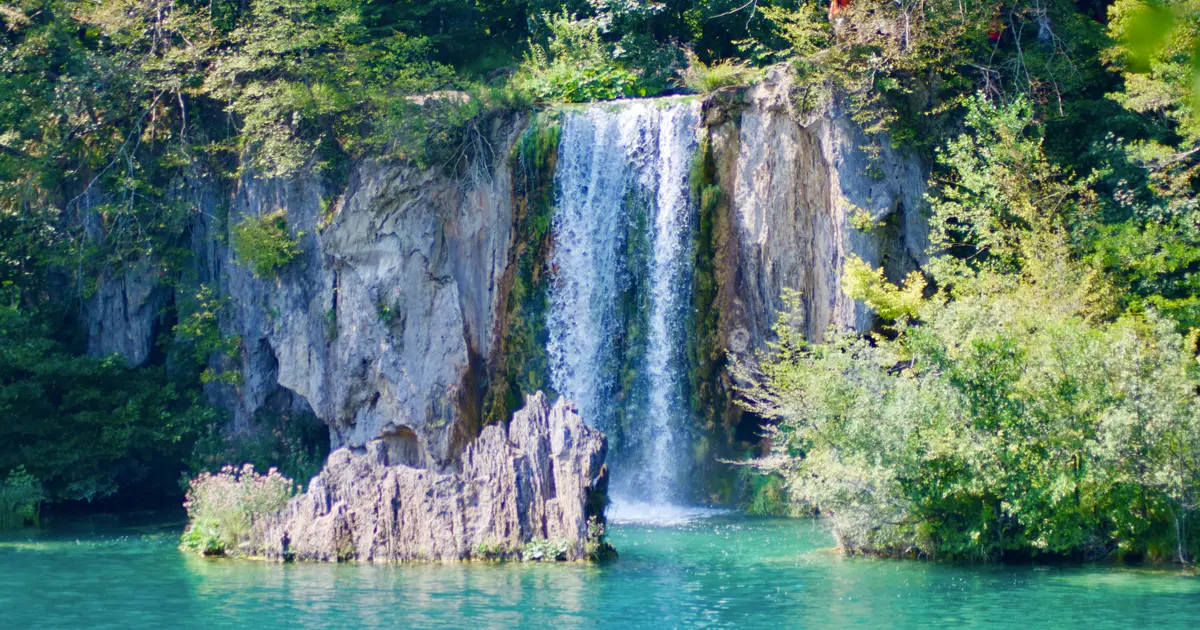
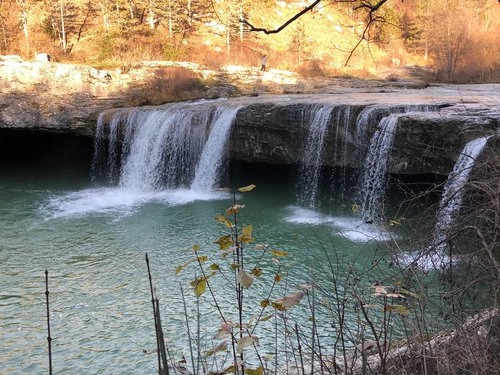
The first time I stood before Veliki Slap, Plitvice’s 78-meter Great Waterfall, I was overwhelmed by both the natural spectacle and the technical challenge. The thunderous cascade, the constant mist coating my lens, the crowds jostling on the viewing platform, the harsh contrast between bright water and deep forest shadows - this was landscape photography at its most demanding and rewarding. After dozens of visits across all four seasons, I’ve learned that Plitvice Lakes National Park is perhaps Croatia’s most photographically complex destination, offering extraordinary beauty but requiring specific techniques, timing, and preparation to capture successfully.
Plitvice Lakes - 16 terraced lakes connected by over 90 waterfalls cascading through ancient karst landscape - is justifiably Croatia’s most famous national park and a UNESCO World Heritage site. For photographers, it presents a unique combination: world-class waterfall photography opportunities, stunning turquoise lakes reflecting pristine forests, dramatic canyon landscapes, and accessibility via extensive wooden boardwalks that position you mere meters from cascading water.
However, photographing Plitvice well is not straightforward. The park receives over 1.5 million visitors annually, with summer days bringing 10,000+ people onto the same boardwalk network where you’re trying to shoot. The waterfalls perform dramatically differently across seasons - spring snowmelt versus summer low water creates completely different photographic subjects. The high contrast between bright water and dark forest challenges your camera’s dynamic range. And the sheer scale of the park (eight different trail routes ranging from 3.5 to 18 kilometers) requires strategic planning to maximize your photographic opportunities.
In this comprehensive guide, I’ll share everything I’ve learned from photographing Plitvice in all seasons and conditions - from ND filter techniques for daytime long exposures to seasonal strategies, from crowd management to specific trail recommendations for photographers, from camera settings to compositional approaches that capture the magic of this extraordinary landscape.
Understanding Plitvice Lakes as a Photographic Subject
The Lake System and Formations
Plitvice’s unique character comes from its travertine (tufa) barriers - calcium carbonate deposits created by mosses, algae, and bacteria over thousands of years. These natural dams create the lake terraces and the countless waterfalls cascading between them.
The system divides into two distinct sections:
Upper Lakes (Gornja Jezera): Twelve smaller lakes in a dolomite valley, characterized by numerous gentle waterfalls, shallow travertine barriers, and exceptionally clear water displaying stunning color variations from azure to emerald. The forest setting is more intimate, the waterfalls smaller and more numerous, and the crowds generally lighter than in the Lower Lakes section.
From a photographer’s perspective, the Upper Lakes excel for reflection photography (calm lake surfaces mirror the forest), intimate waterfall compositions, and color work (the shallow water over white travertine creates those incredible turquoise tones).
Lower Lakes (Donja Jezera): Four lakes carved into a dramatic limestone canyon with cliffs rising 40-80 meters above the water. This section contains the park’s most powerful and photogenic waterfalls, including Veliki Slap (78 meters, Croatia’s tallest), and features extensive wooden boardwalks built directly over and alongside the cascades.
Photographically, the Lower Lakes provide the classic Plitvice images - powerful waterfalls, canyon drama, and elevated viewpoints offering aerial perspectives of the turquoise water system.
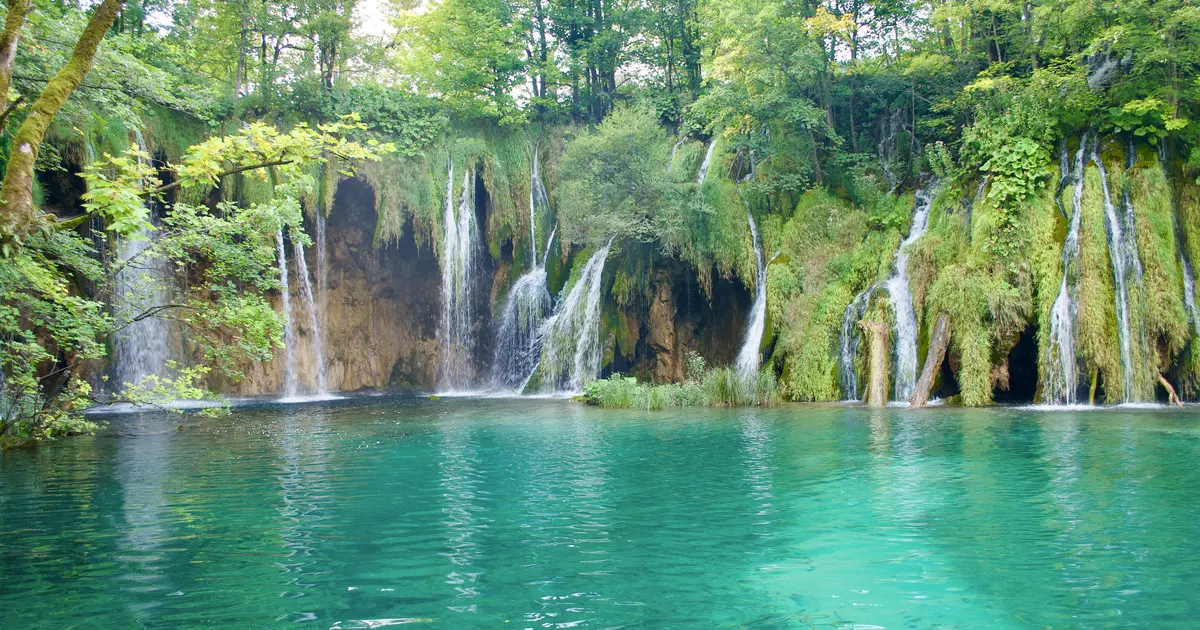
Between these sections lies Kozjak Lake, the largest and deepest (2.5 km long, 46 meters deep), separating the two lake groups and providing wide landscape photography opportunities.
The Color Phenomenon
One of Plitvice’s most striking features is the water color - ranging from intense turquoise to deep blue to emerald green. These colors result from multiple factors:
- Mineral content and water depth
- Angle of sunlight
- Quantity of minerals and organisms
- Weather and cloud cover
Photographically, capturing these colors accurately requires attention to white balance (I use 5500-6000K to preserve the natural turquoise), polarizing filters to manage reflections and enhance saturation, and shooting in RAW to fine-tune color rendering in post-processing.
The colors are most vivid in summer when strong sunlight penetrates the shallow lakes, but spring and autumn offer excellent color opportunities as well, each with slightly different character.
Camera Settings for Waterfall Photography
Classic Long Exposure Technique
The signature waterfall photography look - silky, smooth water flowing like white silk - requires specific settings and equipment:
Aperture: f/11 to f/16 Stopping down provides maximum depth of field, ensuring sharpness from near foreground elements through to distant background. F/11 is the sweet spot for most lenses; f/16 if you need extra depth but beware diffraction softening on some lenses.
ISO: 100 (Base ISO) Always use your camera’s lowest native ISO for maximum image quality, cleanest files, and best dynamic range. The tripod and long exposure eliminate any need for higher ISO.
Shutter Speed: 0.5 to 4 seconds This is where the magic happens. Shutter speeds in this range create the smooth, silky water effect while retaining some sense of flow and movement. Faster (0.5-1s) shows more texture and motion; slower (2-4s) creates increasingly smooth, ethereal water. Experiment to find your preferred aesthetic.
ND Filters: In daylight, achieving these slow shutter speeds at f/11-f/16 and ISO 100 is impossible without neutral density filtration. Plitvice’s summer midday brightness requires strong ND filters - see the dedicated FAQ above for detailed ND filter recommendations.
Other Settings:
- Shoot in RAW for maximum processing flexibility
- Use tripod (mandatory for any exposure longer than 1/60s)
- Cable release or 2-second timer to eliminate camera shake
- Mirror lock-up or electronic first curtain shutter if available
- Manual focus (autofocus can struggle with moving water)
Alternative Techniques
Frozen Motion (1/250s - 1/500s): For a completely different aesthetic, fast shutter speeds freeze every water droplet mid-flight, creating dramatic, sculptural images showing the power and chaos of the cascades. This works especially well in spring when water volume is high and the falls are powerful.
Textured Water (1/15s - 1/60s): This middle ground captures movement and flow while retaining water texture and detail - more dynamic than the classic silky effect, showing the energy of the water. I often use this approach when I want to convey power rather than serenity.
Very Long Exposure (30+ seconds): With 10-stop ND filters, you can achieve exposures of 60-120 seconds or longer, creating an ultra-minimal, ethereal effect where the water becomes pure white mist. This also completely erases people walking on boardwalks - valuable during crowded conditions.
Seasonal Photography at Plitvice Lakes
Spring (April - May): Maximum Drama
Spring is my personal favorite season for photographing Plitvice’s waterfalls. The snowmelt from the surrounding Dinaric Alps dramatically increases water flow - Veliki Slap in spring has 3-4 times the volume of summer, creating tremendous spray, sound, and visual drama.
Advantages:
- Most powerful waterfall conditions of the year
- Fresh, vibrant spring green foliage
- Wildflowers blooming in late April
- Moderate crowds (less than summer, more than winter)
- Good weather probability, though changeable
Challenges:
- Weather can be unpredictable - prepare for rain (which actually enhances waterfall photography)
- Water temperature extremely cold (though you can’t swim anyway)
- Some trails may be muddy
Photography Tips:
- The increased spray from powerful falls creates atmospheric mist - embrace this in your compositions
- Fast shutter speeds (1/250s+) show the power and chaos of spring cascades
- Wet conditions saturate colors beautifully
- The fresh spring green reflects gorgeously in lake mirrors
Camera Considerations:
- Protect gear from constant spray near major waterfalls
- Weather sealing valuable for rainy conditions
- Clean lens frequently - mist will coat the front element
Summer (June - August): Color and Challenge
Summer brings stable weather, longest daylight hours, and the most vivid water colors - the turquoise tones are at their peak thanks to strong sunlight illuminating the shallow travertine barriers.
Advantages:
- Most stable weather patterns
- Longest days (sunset around 8:30 PM in June/July)
- Most intense water colors
- Full forest canopy creates tunnel-like atmosphere on trails
Challenges:
- Massive crowds (5,000-10,000 visitors daily in peak summer)
- Lowest water levels of the year - some smaller cascades reduce to trickles
- Veliki Slap less impressive than spring flow
- Heat can be challenging for hiking longer routes
Photography Tips:
- Arrive exactly at opening time (7:00 AM) for 1-2 hours before crowds overwhelm the boardwalks
- Focus on water color and reflection photography
- Emphasize forest compositions and the lush canopy
- Accept that wide shots will likely include people - either use them for scale or employ very long exposures to erase them
Autumn (September - October): Fall Colors and Reflections
Autumn transforms Plitvice with spectacular fall foliage - the beech forests turn gold, orange, and russet, creating mirror reflections in the calm lake surfaces.
Advantages:
- Stunning fall color photography (peak usually mid-October)
- September often has good water flow from autumn rains
- Moderate crowds post-summer rush
- Beautiful soft autumn light
- Excellent for reflection photography
Challenges:
- October water levels can be low
- Weather increasingly variable as winter approaches
- Shorter days than summer
Photography Tips:
- Calm autumn mornings create perfect lake mirrors - prioritize reflection compositions
- Polarizing filters manage reflections and enhance autumn colors
- The contrast between golden foliage and turquoise water is spectacular
- Focus on the Upper Lakes for more intimate forest and color work
Winter (November - March): Frozen Wonderland
Winter Plitvice is otherworldly - partially frozen waterfalls, ice formations, snow-covered forests, and virtually zero crowds create unique photography opportunities.
Advantages:
- Extraordinary ice formations on waterfalls (Veliki Slap with ice columns is incredible)
- Lakes partially freeze with beautiful ice patterns
- Near-empty park - you may have it to yourself
- Soft winter light
- Unique conditions unavailable other seasons
Challenges:
- Extreme cold (regularly -10°C or colder)
- Boardwalks become dangerously icy
- Some trails close entirely
- Boat service across Kozjak stops (requires longer hiking alternative)
- Reduced water flow
- Shortened daylight hours
Photography Tips:
- Bring ice cleats/crampons for boots - boardwalks are treacherously slippery
- Protect camera batteries from cold (they drain quickly - carry spares in warm pockets)
- The monochromatic landscape emphasizes form and texture
- Focus on ice formation details and frozen waterfalls
- Blue hour photography is excellent with snow and ice
Best Trails and Viewpoints for Photography
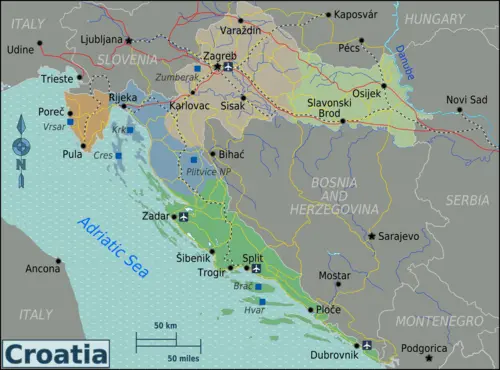
Plitvice offers eight marked routes (A, B, C, E, F, H, K) ranging from 3.5 to 18 kilometers, each covering different sections of the park.
For Maximum Waterfall Photography: Route C (4-5 hours, 8.9 km)
This route covers the Lower Lakes section comprehensively, including:
- Veliki Slap (the iconic 78-meter Great Waterfall)
- The dramatic canyon boardwalks
- Multiple powerful cascades
- Boat crossing of Kozjak Lake
- Elevated viewpoints over the lake system
This route captures 80% of Plitvice’s most iconic waterfall images. If you have limited time and want to focus on waterfall photography, this is your route.
For Comprehensive Coverage: Route K (6-8 hours, 18.3 km)
The longest route covers nearly everything - all 16 lakes, upper and lower sections, all major waterfalls, panoramic viewpoints. It’s exhausting but provides complete photographic coverage of the park’s diversity. Recommended for dedicated landscape photographers wanting comprehensive documentation.
For Upper Lakes and Intimacy: Route E (3-4 hours, 5.1 km)
This route emphasizes the Upper Lakes section - gentler cascades, forest compositions, smaller but more numerous waterfalls, and the beautiful color variations in shallow lakes. Less crowded than the Lower Lakes routes. Excellent for reflection photography and more intimate waterfall work.
Specific Photography Hotspots
- Veliki Slap Viewing Platform - The classic postcard shot, arrive at park opening to avoid crowds
- Milanovačka Jezera Boardwalks - Wooden walkways over cascading water, incredible close-up perspectives
- Galovački Buk - Powerful Upper Lakes cascade with excellent access
- Kozjak Lake Boat Crossing - Wide landscape compositions from the water
- Veliki Prštavac - Elevated viewpoint over multiple lake levels
Pro Tip: Walk routes in reverse (counter-clockwise instead of suggested clockwise direction) - you’ll encounter fewer people heading the opposite direction.
Compositional Approaches
Emphasizing Scale
The waterfalls’ impressive height and the landscape’s grandeur are difficult to convey in photographs. Strategies to communicate scale:
- Include the wooden boardwalks and people for size reference
- Use wide-angle perspectives showing full waterfall height
- Compose with foreground, mid-ground, and background elements to create depth
- Shoot vertical compositions for tall waterfalls like Veliki Slap
Reflections and Mirrors
The calm lakes create perfect mirror reflections, especially in the Upper Lakes section. For reflection photography:
- Shoot in calm conditions (early morning before wind picks up)
- Polarizing filters can either enhance or eliminate reflections - rotate and preview the effect
- Position the horizon line (water surface) carefully - often one-third from bottom or top works well
- Look for interesting subjects to reflect - forest, clouds, colored foliage
Water as Primary Subject
Sometimes the water itself - its color, its patterns, its flow - is the most compelling subject:
- Abstract compositions of water flowing over travertine barriers
- Close-ups of turquoise pools
- Patterns created by cascading water
- Telephoto isolations of distant waterfall sections
Forest and Environment
Don’t overlook the surrounding landscape:
- The beech and fir forests are beautiful subjects themselves
- Fallen logs, moss textures, forest floor details
- The boardwalks winding through the landscape
- Trees framing waterfalls and lakes
Practical Photography Tips
Gear Protection from Water
Plitvice’s constant spray, mist, and occasional rain require gear protection:
- Weather-sealed cameras and lenses are valuable
- Lens hoods protect the front element from spray and rain
- Microfiber cloths for constantly wiping moisture from lens
- Rain cover for camera if shooting in wet conditions
- Silica gel packets in camera bag to combat humidity
The Tripod Challenge
Tripods are essential but present challenges:
- The wooden boardwalks are stable platforms - easy tripod setup
- Narrow sections of boardwalk during crowded times may require collapsing tripod temporarily
- Carbon fiber tripods are worth the weight savings when hiking 10-18 km routes
- Rubber or spiked feet (not both needed - the boardwalks are wood)
Dealing with High Contrast
The bright waterfalls against dark forest create extreme contrast that challenges camera sensors:
- Shoot RAW for maximum shadow/highlight recovery
- Bracket exposures (+/- 1 EV) for HDR blending
- Graduated ND filters can sometimes help balance sky and foreground
- Accept that some scenes require exposure blending in post-processing
Managing Crowds
See the dedicated FAQ above for comprehensive crowd management strategies. The key points:
- Arrive at opening time (7:00 AM in summer)
- Use very long exposures (30-60+ seconds) to erase moving people
- Work less popular locations (Upper Lakes sections)
- Visit in shoulder seasons or winter
- Be patient and wait for gaps in foot traffic
Post-Processing Considerations
Color Rendering
Plitvice’s distinctive water colors require careful post-processing:
- Preserve the natural turquoise tones - avoid over-saturating to unnatural levels
- White balance around 5500-6000K as starting point
- Slight vibrance increase (rather than saturation) enhances colors naturally
- The water color should feel magical but believable
Dynamic Range Optimization
The high contrast scenes benefit from:
- Shadow lifting to reveal detail in dark forest areas
- Highlight protection to preserve waterfall detail (avoid blown highlights)
- Local adjustments (dodge and burn) to balance exposure across the frame
- HDR blending for extreme contrast scenes
Sharpening and Clarity
- Careful sharpening emphasizes waterfall texture and forest detail
- Moderate clarity increase can enhance the three-dimensional quality
- Avoid over-sharpening which creates halos around water and trees
Key Takeaways
- ND filters are essential for daytime long exposure waterfall photography (3-stop, 6-stop, and 10-stop recommended)
- Spring (April-May) offers the most dramatic waterfall conditions with maximum water flow from snowmelt
- Arrive at park opening (7:00 AM in summer) to photograph before crowds overwhelm the boardwalks
- Route C covers the Lower Lakes and most iconic waterfalls in 4-5 hours - best for waterfall-focused photography
- Classic long exposure settings: f/11-f/16, ISO 100, 1-4 second shutter speed with appropriate ND filtration
- Veliki Slap is the iconic 78-meter waterfall - shoot from the viewing platform early morning
- Winter photography offers unique frozen waterfalls and ice formations with near-zero crowds but requires extreme cold preparation
- Protect gear from constant water spray and mist - lens hood and microfiber cloth essential
- Autumn provides spectacular fall color reflections in calm lake surfaces
- Overcast conditions are ideal for waterfall photography - soft even light manages the high contrast
FAQ
Q: What are the best camera settings for photographing Plitvice Lakes waterfalls?
A: From years of photographing Plitvice’s waterfalls in all conditions, my recommended settings vary by technique. For classic long exposure (silky water effect), use aperture priority or manual mode with these settings: f/11 to f/16 for maximum depth of field, ISO 100 (your camera’s base ISO for cleanest image quality), and shutter speed 0.5 to 4 seconds depending on water flow speed and desired effect. During bright daylight, achieving slow shutter speeds requires ND (neutral density) filters - I use 3-stop to 6-stop ND filters for moderate control, or 10-stop for dramatic long exposures in bright sun. For a different aesthetic showing water texture and movement, use faster shutter speeds: 1/15s to 1/60s captures motion while retaining water detail and texture. Shoot in RAW format to preserve maximum dynamic range - the contrast between bright water and dark forest can be extreme. Use a sturdy tripod (absolutely essential for any exposure longer than 1/60s) and either cable release or 2-second timer to eliminate camera shake. White balance around 5500-6000K renders the water’s natural turquoise tones accurately. The key challenge at Plitvice is high contrast - the bright waterfalls against dark forest backgrounds. I often bracket exposures (+/- 1 EV) or shoot for HDR to capture the full tonal range, then blend in post-processing.
Q: What ND filters do I need for daytime waterfall photography at Plitvice?
A: ND (neutral density) filters are absolutely essential for achieving long exposures during Plitvice’s daylight hours. The park is open from 7:00 AM to 7:00-8:00 PM depending on season, meaning most photography happens in bright conditions where slow shutter speeds are impossible without filtration. I recommend bringing a versatile range: A 3-stop ND (ND8) for early morning or late afternoon when light is softer - this gets you to 1-2 second exposures at f/16, ISO 100. A 6-stop ND (ND64) for midday conditions - achieves 4-8 second exposures, creating smooth, silky water while keeping ISO at base level. A 10-stop ND (Big Stopper/ND1000) for dramatic effect or very bright conditions - enables 30-60 second or longer exposures that create ethereal, misty water and smooth out all ripples completely. Variable ND filters are convenient (2-8 stops in one filter) but can cause color casts or vignetting at wide angles - I prefer fixed ND filters for better optical quality. Make sure your filter diameter matches your lens (77mm is common for landscape lenses). Circular polarizers can also reduce light (about 2 stops) while managing reflections on water surfaces and enhancing the blue sky - I often stack a polarizer with a 3-stop ND for 5 stops total reduction. In terms of brands, I use Lee or B+W filters for professional quality, but Hoya and Tiffen offer good budget alternatives. The wooden boardwalks at Plitvice make filter swapping easy - you can safely change filters while standing on stable platforms.
Q: When is the best time to photograph Plitvice Lakes?
A: The best time for photographing Plitvice Lakes depends on what you want to capture, as each season offers distinct advantages. Spring (April-May) is my personal favorite for waterfalls - snowmelt dramatically increases water volume, making the cascades more powerful and impressive. The water flow is 3-4 times higher than summer, creating dramatic spray and thunderous sound. Vegetation is fresh green, forests are lush, and crowds are moderate. Wildflowers bloom in late April. However, weather can be unpredictable with rain showers. Summer (June-August) has the most stable weather, longest daylight hours (sunset around 8:30 PM), and fullest forest canopy, but also brings massive crowds - the park receives 5,000-10,000 visitors daily in peak summer. Water levels are lowest, making some cascades less impressive. Arrive at park opening (7:00 AM) to photograph before crowds overwhelm the boardwalks. Autumn (September-October) offers stunning fall colors - beech forests turn golden and orange, reflecting beautifully in the lake mirrors. September has good water flow from autumn rains, moderate crowds, and beautiful soft light. October is spectacular for colors but water levels drop. Winter (November-March) creates a magical frozen wonderland - waterfalls partially freeze into dramatic ice formations, lakes may partially freeze (especially upper lakes), and you’ll have the park nearly to yourself. However, temperatures drop to -10°C or lower, trails can be icy and dangerous, and some sections may close. Water flow is reduced. The frozen cascades and ice formations are incredible for photography but require careful footing. In terms of time of day, early morning (7:00-9:00 AM, right at opening) offers soft light, minimal crowds, and often misty atmospheric conditions. Late afternoon (5:00-7:00 PM) provides warm golden hour light but still has crowds. Overcast days are actually ideal for waterfall photography - clouds act as a giant diffuser, eliminating harsh shadows and creating even, soft light that’s perfect for capturing the full dynamic range.
Q: Which trails and viewpoints are best for photography?
A: Plitvice has eight marked trails (Routes A through H) ranging from 3.5 to 18 kilometers, each offering different photography opportunities. For the best waterfall photography in limited time, I recommend Route C or K (Lower Lakes circuit, 4-5 hours, 8.9 km) - this covers Veliki Slap, the most dramatic waterfalls, the canyon boardwalks with elevated views, and the boat crossing of Kozjak Lake. You’ll capture the park’s most iconic scenes. For comprehensive photography including both upper and lower sections, Route K (full park experience, 6-8 hours, 18.3 km) covers nearly everything - all 16 lakes, major waterfalls, panoramic viewpoints, and diverse landscape types. It’s exhausting but rewarding for dedicated photographers. For Upper Lakes’ gentler cascades and forest reflections, Route E or F (Upper Lakes focus, 3-4 hours, 5.1 km) emphasizes the smaller, more intimate waterfalls, forest compositions, and the beautiful color variations in the shallow lakes. Less crowded than Lower Lakes. Specific photography hotspots not to miss: Veliki Slap viewpoint (Lower Lakes) - the park’s most iconic shot, shoot from the elevated viewing platform for the full 78-meter drop, arrive early as it gets packed. Milanovačka jezera boardwalks (Lower Lakes) - wooden walkways built directly over and alongside cascading water, incredible close-up perspectives of turquoise pools and small waterfalls. Galovački Buk (Upper Lakes) - powerful cascade with excellent walkway access for long exposure work. Kozjak Lake boat crossing - photograph from the boat for wide landscape compositions with forested mountains. Veliki Prštavac viewpoint - elevated view over multiple lake levels and cascades. Pro tip: Walk against the suggested direction (clockwise instead of counter-clockwise) - you’ll encounter fewer people and have clearer shots. Most visitors follow the suggested route direction.
Q: How do I deal with crowds in my photographs?
A: Plitvice Lakes receives over 1.5 million visitors annually, with peak summer days seeing 10,000+ people, making crowd management essential for clean photography. Here are my proven strategies: First, timing is everything - arrive when the park opens (7:00 AM in summer, 8:00 AM in winter) and head immediately to the most popular spots like Veliki Slap. You’ll have 1-2 hours of relatively empty conditions before the tour buses arrive around 9:00-10:00 AM. Late afternoon (after 5:00 PM) also sees crowds thin as tour groups depart. Second, use ND filters for very long exposures (30+ seconds) - people walking across boardwalks become invisible ghosts or disappear entirely from the frame while the static landscape remains sharp. A 10-stop ND in bright daylight enables exposures of 60-120 seconds, completely erasing moving people. Third, take a patience approach - set up your composition and wait for gaps in the crowd flow. People move along the boardwalks in clusters; there are often brief moments when your frame clears. Be ready with cable release to shoot instantly when it happens. Fourth, embrace the scale - including people can actually add scale and interest to your compositions, showing the magnitude of the waterfalls and landscape. A small figure on a boardwalk emphasizes the height of Veliki Slap. Fifth, work the less-popular locations - while everyone crowds around Veliki Slap, the Upper Lakes waterfalls like Galovački Buk see far fewer visitors. The photographic opportunities are equally good but with a fraction of the people. Sixth, visit in shoulder season (April-May or September-October) or winter when visitor numbers drop by 70-80%. You’ll have much more freedom to compose without people in every frame. Seventh, use compositional cropping - frame tighter to exclude the crowds, or shoot from angles where the composition naturally excludes the busy boardwalk areas. Finally, accept reality - some shots will have people in them, and that’s okay. In post-processing, you can clone out the occasional person if really needed, but generally I embrace the park’s popularity as part of the story.
Q: What’s special about photographing Plitvice in each season?
A: Each season transforms Plitvice into a completely different photographic subject. Spring (April-May): The snowmelt period creates the park’s most dramatic waterfall conditions - water volume increases 3-4 times normal levels, making every cascade powerful and impressive. Veliki Slap thunders with tremendous force and spray. The fresh spring green of new beech leaves is vibrant and luminous, reflecting beautifully in the lake mirrors. Wildflowers (wood anemones, crocuses) bloom in the forest understory in late April. The weather is changeable - prepare for rain, which actually enhances waterfall photography with dramatic skies and saturated colors. Crowds are moderate, making this my favorite season for combining good conditions with reasonable access. Summer (June-August): The forest canopy is full and lush, creating a tunnel-like effect along the trails. The water takes on its most vivid turquoise color thanks to strong sunlight penetrating the shallow lakes and illuminating the travertine barriers. However, water levels are lowest of the year - some smaller cascades may reduce to trickles, and Veliki Slap is less impressive than spring. The massive crowds are the biggest challenge - boardwalks can be shoulder-to-shoulder. If shooting summer, focus on early morning (7:00 AM opening), emphasize forest compositions and the brilliant water colors, and accept that wide waterfall shots may include people. Autumn (September-October): This is the season for fall color photography. The beech forests turn spectacular shades of gold, orange, and russet, creating mirror reflections in the still lake surfaces. September often brings good water flow from autumn rains, combining colorful foliage with active waterfalls. October is peak color (usually mid-October) but water levels drop. The soft autumn light is beautiful for landscape photography. Crowds moderate after summer rush. This is excellent for reflection photography - calm autumn days create perfect lake mirrors. Winter (December-February): Plitvice transforms into a frozen wonderland. Waterfalls partially freeze, creating extraordinary ice formations and icicles - Veliki Slap with ice columns is otherworldly. The lakes may partially freeze, especially the shallow upper lakes, with ice patterns and frozen edges. Snow blankets the forest, creating a monochromatic landscape broken only by the blue-green water still flowing. Visitor numbers drop to nearly zero - you might have the entire park to yourself. However, safety is a concern: boardwalks become extremely slippery with ice (bring ice cleats/crampons for your boots), some trails close entirely, and temperatures regularly hit -10°C or lower. The boat service across Kozjak stops, requiring a longer hiking route. But for adventurous photographers, winter Plitvice offers unique conditions you can’t capture any other time of year. The soft winter light, lack of crowds, and ice formations make it extraordinary, though challenging.
Q: What focal lengths and lenses work best for Plitvice photography?
A: For comprehensive Plitvice photography, I recommend bringing a versatile range covering wide to moderate telephoto. A wide-angle zoom (16-35mm on full frame, 10-24mm on APS-C) is absolutely essential for 80% of Plitvice photography. The boardwalks position you close to waterfalls and lakes, and wide angles capture the grandeur of multi-level cascades, the full height of Veliki Slap, and reflection compositions showing both forest and water. The narrow canyon sections benefit from ultra-wide perspectives (16-20mm) to show the scale. I use a 16-35mm f/4 as my primary Plitvice lens. A standard zoom (24-70mm) is your workhorse for mid-range shots, isolating specific waterfall sections, detail compositions of water flowing over travertine barriers, and general landscape work. The 24-70mm f/2.8 is versatile enough that if you could only bring one lens, this would be it. A telephoto zoom (70-200mm) is useful but less essential than wide angles. It’s valuable for compressing perspective to stack multiple waterfall levels in one frame, isolating distant details, and creating abstract compositions of water patterns. From elevated viewpoints, a telephoto can capture beautiful compressed perspectives of the lake terraces. However, the boardwalks and trails keep you generally close to subjects, limiting telephoto opportunities. Other considerations: Many photographers bring a tilt-shift lens (17mm or 24mm TS-E) for foreground-to-background sharpness without stopping down to f/16, which maintains sharpness while allowing faster shutter speeds. This is advanced technique but powerful for landscape work. A macro lens (90-105mm) can capture beautiful details - water droplets on travertine, moss textures, reflections in small pools - though this is supplemental to landscape work. For filters, use lenses with common filter threads (77mm is a standard for professional zooms) so you can share ND filters across lenses. Also important: Weather sealing is valuable as you’ll be working around constant water spray near the waterfalls. Lens hoods help protect the front element from mist and rain. Image stabilization isn’t crucial since you’ll be on tripod for most waterfall work, but it helps for handheld forest compositions.
Q: How do I photograph Veliki Slap (the Great Waterfall)?
A: Veliki Slap is Plitvice’s most iconic waterfall and presents specific photographic challenges and opportunities. The main viewing platform (accessed from Route C) provides the classic frontal view of the full 78-meter drop - this is the postcard shot everyone gets. For this composition, arrive at park opening (7:00 AM) to have the platform empty or with minimal people. Use a wide-angle lens (16-24mm) to capture the full height from base to top. Settings for classic silky water: f/11-f/16, ISO 100, 1-4 second exposure (requires ND filter in daylight). The constant mist from the falls creates a dreamy atmosphere but also coats your lens - bring a microfiber cloth and check your lens frequently, wiping moisture from the front element between shots. A lens hood helps protect against spray. The platform gets extremely crowded by mid-morning - if shooting during busy times, use a 10-stop ND filter for 60+ second exposures that erase moving people from the frame. Alternative perspectives: Walk the lower trail section below the viewing platform for different angles showing the waterfall’s relationship to the canyon and Korana River. These lower viewpoints are less crowded and offer more dynamic compositions. In terms of timing and seasons, spring (April-May) shows Veliki Slap at maximum power with tremendous water volume and impressive spray clouds - the most dramatic conditions. Summer has the lowest water flow but clearest skies and best light penetration into the canyon. Autumn offers potential for colorful foliage framing the falls, though the waterfall itself is less impressive than spring. Winter can create extraordinary ice formations with frozen icicles and ice columns forming on the cliff face around the waterfall - truly magical but requires careful footing on icy trails. The lighting at Veliki Slap is challenging - the waterfall faces roughly east, receiving direct morning sun. Late morning to early afternoon (10:00 AM-2:00 PM) can create harsh contrast between bright water and dark canyon shadows. Overcast conditions are actually ideal, providing soft even light that captures detail in both highlights and shadows. Very early morning or late afternoon offers softer directional light. For creative variations, try different shutter speeds: 1/15s-1/60s captures texture and movement in the water rather than smoothing it completely. Very long exposures (30+ seconds with 10-stop ND) create an ethereal, minimalist effect where the waterfall becomes a soft white veil. Vertical compositions work better than horizontal for emphasizing the 78-meter height and drama of the drop.
Q: What are the rules and restrictions for photography at Plitvice?
A: Plitvice Lakes National Park has specific rules to protect the delicate ecosystem, and photographers need to be aware of these restrictions. Tripod use is officially allowed but with conditions: tripods must remain on designated trails and boardwalks - never leave the marked paths to access ‘better’ viewpoints, as this damages fragile travertine formations and vegetation. During peak crowding (summer midday), rangers may ask you to collapse tripods on narrow boardwalks if you’re blocking foot traffic - be prepared to shoot handheld or return during quieter times. Drones are completely prohibited throughout Plitvice Lakes National Park without special permission from park administration. This is strictly enforced with fines for violations. The only way to get drone footage is through official filming permits, which require applications weeks in advance, fees, and usually require professional production credentials. Flash photography is not prohibited, but it’s discouraged near wildlife and is generally unnecessary for landscape work. Swimming and any physical contact with the water is strictly forbidden - this includes putting your hands in the water, washing camera gear, or filling water bottles from the lakes. Violation results in fines. You must stay on designated boardwalks and trails at all times - creating your own paths or shortcuts damages the ecosystem. The wooden boardwalks were specifically constructed to concentrate foot traffic and protect the delicate travertine formations. Picking flowers, removing rocks, or taking any natural materials is prohibited. Some areas may be temporarily closed for conservation or safety reasons - respect all closures and signs. Commercial photography or filming (for advertising, stock photos sold commercially, or professional productions) requires special permits and fees from the park administration. Contact them weeks in advance for permission. However, personal photography for your own portfolio, website, or social media is generally fine without special permits. If you’re shooting for a client or commercial project, get the permit. General etiquette that’s not official rules but is important: Be courteous to other visitors - don’t monopolize viewpoints or block boardwalks for extended periods. Work efficiently, take your shots, and let others access the spots. Don’t use excessive time-lapse setups or camera rigs that occupy space for hours. If rangers or park staff ask you to move or adjust, comply respectfully. The park’s primary purpose is conservation and visitor enjoyment - photography is welcome but secondary to protecting the environment.
Final Thoughts
Plitvice Lakes National Park represents waterfall and landscape photography at its most spectacular and most technically demanding. The combination of world-class natural beauty - those impossibly turquoise lakes, the 78-meter Veliki Slap, the endless cascades flowing through ancient karst forest - with genuine photographic challenges creates an environment where preparation, technical skill, and timing are as important as vision and composition.
What keeps me returning to Plitvice across all seasons is the way the park transforms completely with each visit. Spring’s thunderous cascades, summer’s vivid turquoise tones, autumn’s golden reflections, winter’s frozen waterfalls - these are essentially four different photographic subjects sharing the same geography. The seasonal differences are so dramatic that a photographer could specialize in Plitvice alone and never exhaust its possibilities.
The crowds can be frustrating, particularly in peak summer when thousands of people share the same narrow boardwalks where you’re trying to work. But strategic timing - those golden early morning hours, the quiet shoulder seasons, the solitary winter visits - rewards patient photographers with access to extraordinary landscapes.
If you’re serious about waterfall and landscape photography, Plitvice Lakes deserves a place on your essential destinations list. Come prepared with ND filters, tripod, weather protection for your gear, and the patience to work around crowds and wait for the right light. Most importantly, visit across multiple seasons if possible - Plitvice in spring versus Plitvice in winter are photographically different worlds.
Discover more Croatia photography guides💙 Support My Photography Work Enjoy these guides? Support me on Patreon to help create more in-depth photography content! 🙏