Poreč Photography Guide: Byzantine Mosaics and Istrian Coastal Beauty
The first time I stood beneath the golden mosaics of the Euphrasian Basilica, camera in hand, I understood why this 6th-century Byzantine masterpiece captivates photographers and pilgrims alike. As morning light filtered through ancient windows, illuminating millions of gold tesserae in the apse, I realized I was witnessing one of the world’s finest examples of early Christian art - and one of photography’s most challenging subjects. How do you capture the shimmer of 1,500-year-old gold mosaics, convey the spiritual atmosphere, and do justice to artistry that has survived empires rising and falling?
As a photographer who’s lived in Croatia since 2020, I’ve returned to Poreč repeatedly, exploring every angle of its UNESCO World Heritage basilica, wandering the narrow Roman streets of the old town, and discovering secluded sunset spots along the western Istrian coast. What makes Poreč photographically special is its layers of history compressed into a small peninsula - Roman foundations supporting medieval buildings, Byzantine art glowing in Romanesque churches, Venetian Gothic balconies overlooking an Adriatic that hasn’t changed in millennia.
This comprehensive guide shares everything I’ve learned about photographing Poreč, from the technical camera settings that capture basilica mosaics without flash to the exact coastal paths where Mediterranean pines frame perfect sunsets. Whether you’re a professional photographer planning a dedicated cultural heritage shoot or a traveler wanting to document this beautiful Istrian town properly, you’ll discover practical techniques born from extensive time exploring Poreč’s photographic treasures.
You’ll learn:
- How to photograph the Euphrasian Basilica mosaics and architecture without flash
- Best times and angles for capturing Byzantine art in natural light
- Old town architectural photography techniques for Roman and Venetian buildings
- Coastal and sunset photography locations along Poreč’s waterfront
- Camera settings optimized for low-light basilica interiors and bright coastal scenes
- Seasonal photography considerations and crowd management strategies
- Day trip photography opportunities in the Poreč region
Table of Contents
- Understanding Poreč’s Photographic Landscape
- Euphrasian Basilica: Photographing Byzantine Masterpieces
- Old Town Architecture Photography
- Coastal and Sunset Photography
- Seasonal Photography in Poreč
- Day Trips and Regional Photography
- Practical Information for Photographers
Understanding Poreč’s Photographic Landscape
Before diving into specific locations, understanding what makes Poreč unique photographically helps you plan effectively.
Historical Layers Poreč’s architecture spans 2,000 years:
- Roman (1st century BC-5th century AD): Decumanus street layout, forum ruins at Marafor Square, city foundations
- Byzantine (6th century): Euphrasian Basilica complex, stunning gold mosaics
- Romanesque (12th-13th centuries): Carved portals, stone bell towers
- Venetian Gothic (13th-18th centuries): Wooden balconies, pointed arches, maritime influences
- Modern (19th-21st centuries): Coastal resort development, marina
This layering creates complex visual stories perfect for architectural photography.
The UNESCO World Heritage Site The Euphrasian Basilica isn’t just a church - it’s one of the most important monuments of early Christian art in Europe. The gold mosaics in the apse date to AD 543-553, created during the reign of Byzantine Emperor Justinian. Photographically, this presents both extraordinary opportunities (breathtaking Byzantine art) and challenges (low light, no flash, religious site protocols).
Coastal Light Poreč sits on a narrow peninsula jutting into the Adriatic, giving it unique lighting characteristics:
- Morning light: East-facing coast receives soft morning sun
- Evening light: West-facing aspects offer spectacular sunsets over water
- Reflected light: Water on three sides creates luminous, even light throughout the old town
- Mediterranean clarity: Crystal-clear Adriatic air provides exceptional visibility for landscape photography
Color Palette Poreč’s photographic colors include:
- Gold: Byzantine mosaics, sunset light on stone
- White limestone: Istrian stone architecture, bright in sun
- Adriatic blue: Varying from turquoise shallows to deep sapphire
- Green: Mediterranean pines, cypress trees, coastal vegetation
- Terracotta: Roman tile roofs visible from elevated viewpoints
Euphrasian Basilica: Photographing Byzantine Masterpieces
The basilica is Poreč’s photographic crown jewel and deserves detailed attention.
Historical Context for Better Photography
Built in the 6th century by Bishop Euphrasius, the basilica complex includes:
- Main church: Three naves with columns, apse with golden mosaics
- Atrium: Colonnaded courtyard entry
- Baptistery: Octagonal building with ancient baptismal font
- Bell tower: 16th-century Venetian addition, climbable for panoramic views
- Bishop’s Palace: Now a museum with archaeological finds
Understanding this layout helps you plan your photography route and timing.
The Golden Mosaics: Photography Techniques
The apse mosaics are the basilica’s highlight - millions of gold, silver, and colored tesserae creating images of Christ, the Virgin Mary, saints, and Bishop Euphrasius himself.
Best Time to Photograph:
- Mid-morning (10 AM-12 PM): Natural light through basilica windows illuminates the gold optimally
- Sunny days: Direct sunlight makes the gold shimmer most dramatically
- Avoid: Early morning (too dark), late afternoon (light doesn’t reach the apse effectively), overcast days (mosaics appear dull)
Camera Settings for Mosaics WITHOUT Flash:
Handheld Approach (for busy times):
- Aperture: f/2.8 to f/4 (fast lens essential)
- ISO: 1600-6400 (modern cameras handle this well)
- Shutter Speed: 1/60s minimum; use image stabilization
- Focus: Single-point AF on the mosaic details
- White Balance: Auto or Daylight (the gold has warm tones)
Tripod Approach (off-peak hours):
- Aperture: f/5.6 to f/8 (for sharpness)
- ISO: 400-1600
- Shutter Speed: 1-4 seconds (tripod essential)
- Self-timer or remote: Avoid camera shake
- Mirror lock-up: If DSLR
Lens Choices:
- 24mm or 35mm: Full apse and architectural context
- 50mm: Balance between context and detail
- 85mm or 100mm: Isolate mosaic details, compress perspective, show tesserae craftsmanship
Composition Ideas:
- Full apse shot: Wide-angle showing entire semi-dome with Christ Pantocrator central
- Detail shots: Close-ups of individual figures - Bishop Euphrasius holding the church model, angels, saints
- Symmetry: The apse composition is symmetrical; use this in your framing
- Include architecture: Frame mosaics with the apse arch, columns, or windows
- Tesserae texture: Extreme close-up showing individual gold tiles and their dimensional placement
Bell Tower Photography
The bell tower climb (200+ steps) provides panoramic Poreč views.
Photography from the Tower:
- 360-degree views: Old town peninsula, Adriatic, Istrian interior, neighboring islands
- Best time: Late afternoon for warm light on terracotta roofs; sunset for dramatic skies
- Camera settings: f/8-f/11 for landscape sharpness, ISO 100-400, wide-angle or standard zoom
- Polarizing filter: Reduces haze, deepens sky blue, makes sea more vivid
- Composition: Include bell tower architecture as foreground frame; show the peninsula’s layout
Tower Exterior Photography: From Marafor Square, shoot the bell tower with wide-angle lens to emphasize height. Morning or evening side-lighting reveals stone texture.
Baptistery and Atrium
The octagonal baptistery and colonnaded atrium provide architectural photography opportunities.
Baptistery:
- Geometric composition: Octagonal shape creates interesting symmetry
- Ancient font: Central baptismal font is original 6th century
- Light: Small windows create atmospheric shafts of light
- Camera settings: f/4-f/5.6, ISO 800-3200, 24-35mm lens
Atrium:
- Columns: Ancient columns create leading lines and rhythm
- Open sky: Contrast between stone arcades and blue sky
- Best light: Midday when overhead sun illuminates the courtyard evenly
- Composition: Use column repetition for pattern photography; frame the basilica entrance through arches
Museum and Archaeological Finds
The museum displays Roman and Byzantine artifacts, mosaics, and stone carvings.
Photography Tips:
- Ask permission (sometimes photography restricted)
- No flash (to protect artifacts)
- Glass cases create reflections - use polarizing filter, shoot at an angle
- ISO 800-3200 for dimly lit museum interiors
Old Town Architecture Photography
Beyond the basilica, Poreč’s old town offers rich architectural photography.
Decumanus: The Roman Main Street
The ancient Roman main street runs east-west through the old town.
What to Photograph:
- Roman street layout: Original Roman paving stones (in sections)
- Venetian Gothic buildings: Pointed arches, carved stone portals
- Romanesque House: 13th-century house with rare wooden balconies
- Shop fronts: Colorful modern shops in medieval buildings - contrast of old and new
- Arched passages: Stone archways connecting buildings, creating tunnels
Camera Approach:
- Wide-angle (16-24mm): Emphasize narrow street perspective
- Standard (35-50mm): Natural perspective for architectural details
- Telephoto (85-135mm): Compress street, isolate architectural elements
Best Light:
- Morning (7-9 AM): Soft eastern light enters the east-west street
- Late afternoon (5-7 PM): Golden hour warm glow on limestone
- Avoid midday: Harsh overhead sun creates unflattering shadows
Composition Tips:
- Leading lines: Use the street itself leading to vanishing point
- Frame within frame: Shoot through archways to the street beyond
- Vertical compositions: Emphasize narrow street, tall buildings
- People: Include pedestrians for scale and life
Marafor Square: Roman Forum Ruins
The ancient Roman forum, now a romantic square with archaeological ruins.
Photography Opportunities:
- Temple ruins: Columns and foundations of Roman temples (Neptune and Mars)
- Square atmosphere: Cafe terraces, local life, evening ambiance
- Bell tower view: Frame the Euphrasian bell tower from the square
- Archaeological context: Roman stone fragments, ancient paving
Best Time:
- Golden hour (evening): Warm light on stone ruins
- Blue hour: Cafe lights glow, atmospheric mood
- Morning: Empty square, soft light, peaceful
Camera Settings:
- Daytime: f/8-f/11, ISO 100-400, wide-angle for square overview
- Evening: f/4-f/5.6, ISO 800-3200, 35-50mm for atmosphere
Pentagonal Tower and Round Tower
Medieval defensive towers provide architectural subjects and viewpoints.
Photography Approach:
- Exterior: Shoot from angles that emphasize the tower’s geometry
- Detail: Stone texture, medieval construction, arrow slits
- Context: Include surrounding old town architecture
- Viewpoint: Some towers accessible for elevated city views
Waterfront Promenade
The coastal promenade encircles the old town peninsula.
What to Photograph:
- Boats: Fishing boats, yachts, colorful hulls against turquoise water
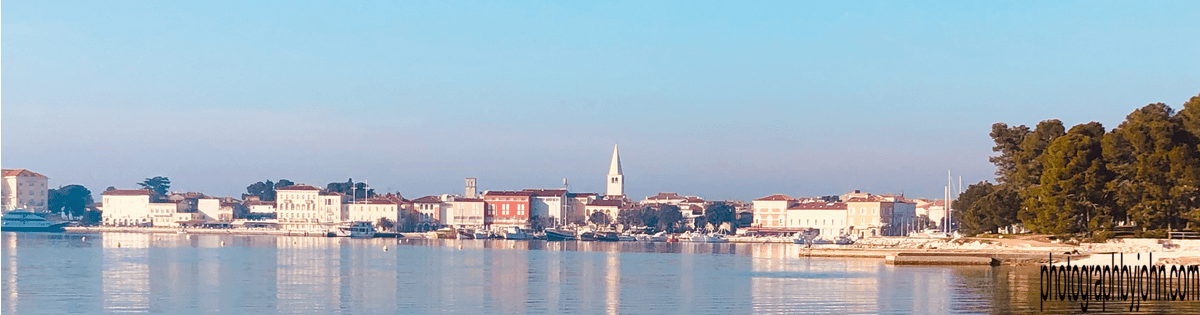
- Coastal views: Old town buildings rising from Adriatic
- Fishing nets and nautical elements: Traditional maritime details
- Sunset reflections: Water reflections of buildings and sky
- Cafe culture: Outdoor terraces, people dining with sea views
Camera Settings:
- Polarizing filter: Essential for controlling water reflections and sky saturation
- Aperture: f/8-f/11 for coastal landscape sharpness
- ISO: 100-400 in daylight
Best Composition:
- Include boats as foreground interest with old town as background
- Use promenade railing or mooring posts as leading lines
- Reflections in calm water double visual impact
Coastal and Sunset Photography
Poreč’s western Istrian coast position offers excellent sunset photography.
Zelena Laguna Coastal Path
South of Poreč, this resort area features pine forests meeting rocky Adriatic coast.
Why Photograph Here:
- West-facing coast: Direct sunset over water
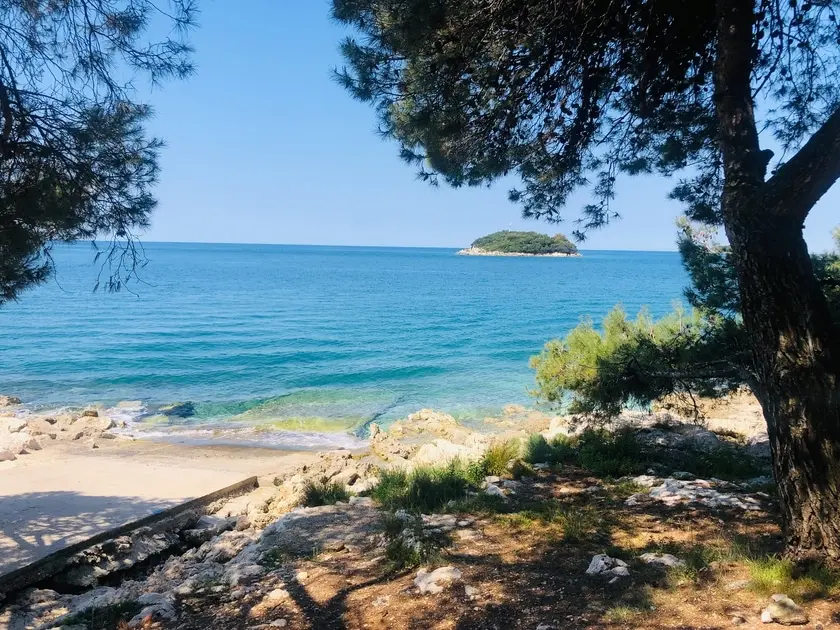
- Mediterranean pines: Frame sunset through trees
- Rocky beaches: Interesting foreground textures
- Secluded coves: Less crowded than town center
- Long coastal paths: Multiple viewpoints and compositions
Best Sunset Locations:
- Zelena Laguna main beach: Wide sunset view, pine trees as foreground
- Rocky points south: Elevated perspective, waves against rocks
- Coastal walking path: Continuous viewpoints, find your perfect spot
Camera Settings for Sunset:
- Aperture: f/11-f/16 for sunstar effect (sun through trees)
- ISO: 100-400
- Graduated ND filter: Balance bright sky with darker foreground
- Bracketing: ±2 stops for HDR blending
- Tripod: Essential for sharp landscape photography
Composition Ideas:
- Silhouettes: Pine trees silhouetted against orange/pink sky
- Reflections: Calm water reflecting sunset colors
- Foreground interest: Rocks, driftwood, vegetation
- Rule of thirds: Position horizon on upper or lower third
- Panorama: Stitch multiple images for wide coastal vista
Timing: Arrive 45 minutes before sunset to scout locations and set up. Stay 30 minutes after for blue hour when residual light creates magical atmosphere.
Poreč Waterfront Sunset
The town waterfront also offers sunset photography.
Best Spots:
- Northern promenade: Near Hotel Parentium, sunset over open Adriatic
- Southern tip: Where peninsula narrows, 360-degree coastal views
- Marina area: Yachts silhouetted against sunset
Advantages: Closer to town accommodations; include old town architecture in sunset compositions
Challenges: More crowded than Zelena Laguna; finding unobstructed viewpoint
Blue Hour Photography
After sunset, the “blue hour” (30 minutes after sunset) provides magical light.
What to Photograph:
- Illuminated old town: Buildings lit from within, warm glow against deep blue sky
- Waterfront reflections: Lights reflecting in calm Adriatic
- Euphrasian Basilica: Lit from outside and inside, glowing in evening
- Cafe terraces: Outdoor dining atmosphere, people, warmth
Camera Settings:
- Aperture: f/5.6-f/8
- ISO: 800-3200 depending on desired shutter speed
- Shutter Speed: 2-15 seconds with tripod
- White Balance: Daylight or Cloudy (preserves blue hour color)
Seasonal Photography in Poreč
Spring (April-June)
Advantages:
- Fewer crowds (especially April-May)
- Comfortable temperatures (18-24°C)
- Wildflowers along coastal paths
- Soft, beautiful light
- Basilica less crowded for interior photography
Challenges:
- Weather can be unpredictable (rain possible)
- Some facilities closed early season
- Sea still cool for coastal shots
Best For: Architectural photography, basilica mosaics, old town without tourist crowds
Summer (July-August)
Advantages:
- Vibrant beach and coastal atmosphere
- Long days (sunset around 8:30 PM)
- All facilities open
- Warm sea for coastal photography
Challenges:
- Intense crowds (especially in basilica)
- Harsh midday sun
- Very hot (28-35°C)
- Expensive
Photographer’s Strategy: Shoot early morning (6-8 AM) for empty old town and basilica, evening (6-9 PM) for golden hour and sunsets
Autumn (September-October)
Advantages:
- Crowds diminish after mid-September
- Warm, beautiful light quality
- Comfortable temperatures (20-26°C)
- Sea still warm
- Grape harvest season (wine photography opportunities)
Challenges:
- Some businesses close in October
- Weather more variable late October
Best For: All-around photography season - my personal favorite for Poreč
Winter (November-March)
Advantages:
- Empty basilica and old town (architectural photography paradise)
- Moody atmospheric conditions
- Authentic local life without tourists
- Lower accommodation costs
Challenges:
- Short days (sunset 4:30-5:30 PM)
- Cold, rain common
- Many restaurants and hotels closed
- Basilica may have reduced hours
Best For: Atmospheric photography, empty basilica shots, authentic winter coastal scenes
Day Trips and Regional Photography
Poreč serves as an excellent base for regional photography.
Rovinj (40km south)
Istria’s most photogenic town - see our complete Rovinj photography guide for details.
Photography: Colorful harbor, St. Euphemia church, sunset, narrow streets
Access: 30-minute drive or bus
Grožnjan (25km inland)
Medieval hilltop artist town.
Photography: Stone streets, artist galleries, panoramic Istrian views, cultural atmosphere
Best time: Morning for soft light on hilltop; summer for art exhibitions
Motovun (50km inland)
Fortified hilltop town surrounded by vineyards.
Photography: Medieval walls, tower views, truffle season (autumn), vineyards, misty mornings
Access: 50-minute drive; challenging narrow access road
Baredine Cave (7km northeast)
Underground cave with stalactites and stalagmites.
Photography Challenges:
- Very low light (tripod essential)
- Guided tours only (limited time per section)
- Humidity (lens fog risk)
- ISO 3200-6400 or long exposures (2-10 seconds)
Best approach: Ask guide for photography pauses; use wide-angle lens (16-24mm); shoot RAW for shadow recovery
Lim Fjord (10km south)
Dramatic coastal inlet surrounded by forests.
Photography: Aerial-like views from viewpoints, oyster farming boats, forested cliffs, kayaking opportunities
Best viewpoint: Restaurant Fjord viewpoint on D75 road
Practical Information for Photographers
Getting to Poreč
By Car: From Pula (60km, 1 hour), from Zagreb (260km, 3.5 hours), from Trieste, Italy (90km, 1.5 hours)
By Bus: Regular buses from major Croatian and Italian cities
By Air: Nearest airports - Pula (60km), Trieste (90km), Ljubljana (150km)
Getting Around Poreč
Old Town: Pedestrian-only; walk everywhere
Regional: Car essential for coastal paths, inland towns, photography flexibility
Parking: Public parking outside old town; walk in
Where to Stay for Photographers
Old Town: Maximum convenience for basilica and architecture photography, but can be noisy in summer
Zelena Laguna: Quiet, nature setting, sunset access, need transport to old town
Hotels north (Plava/Zelena Laguna): Resort areas, good facilities, coastal paths, 15-minute walk to old town
Photography Gear for Poreč
Essential:
- Wide-angle (16-35mm): Old town streets, basilica interior, coastal landscapes
- Standard zoom (24-70mm) or primes (35mm, 50mm): Versatile for all situations
- Fast lens (f/1.8 or f/2.8): Crucial for basilica interior low-light photography
Highly Recommended:
- Tripod (lightweight, compact): Basilica, sunset, long exposures
- Circular polarizer: Essential for coastal photography, reduces reflections, deepens colors
- Graduated ND filter: Sunset photography, balance bright sky with darker sea
Optional:
- Telephoto (70-200mm): Mosaic details, bell tower views, compression
Protection:
- Lens cloth: Coastal humidity, salt spray
- Rain cover: Spring and autumn showers
- Camera bag: Comfortable for walking old town streets
Poreč Photography Etiquette
Euphrasian Basilica:
- No flash (damages mosaics)
- Respectful behavior (active church)
- No tripods during busy hours
- Ask permission before photographing services
Old Town:
- Respect residents’ privacy
- Don’t photograph into private residences
- Be courteous with tripods in narrow streets
Coastal Areas:
- Respect nature (don’t damage vegetation for photos)
- Be mindful of swimmers and beachgoers
📸 Key Takeaways for Poreč Photography
Euphrasian Basilica is the Highlight
- Mid-morning (10 AM-12 PM) best for natural light on gold mosaics
- High ISO capability (1600-6400) essential for no-flash photography
- Fast lens (f/1.8 or f/2.8) crucial for low-light interiors
- Sunny days make gold mosaics shimmer most dramatically
Old Town Architectural Gems
- Early morning (7-9 AM) or late afternoon (5-7 PM) for best light
- Wide-angle lens (16-35mm) essential for narrow Decumanus street
- Decumanus and Marafor Square offer best architectural photography
- Romanesque House wooden balconies are rare and photogenic
Sunset Photography Excellence
- Zelena Laguna coastal path provides best west-facing sunset views
- Arrive 45 minutes before sunset to scout and set up
- Graduated ND filter essential for balancing bright sky and dark foreground
- Mediterranean pines make excellent foreground/framing elements
Seasonal Strategy
- Autumn (September-October) offers optimal light/crowd balance
- Summer requires early morning (6-8 AM) shooting to avoid crowds
- Winter provides empty basilica but very short days
Technical Essentials
- Shoot RAW for maximum editing flexibility with challenging basilica light
- Polarizing filter non-negotiable for coastal and architectural photography
- Bracket exposures in high-contrast scenes (basilica windows, sunsets)
- Respect “no flash” rule - use high ISO and fast lenses instead
Cultural Sensitivity
- Euphrasian Basilica is active worship site - be respectful
- Ask permission before photographing religious services
- Support local vendors if photographing their businesses
- Photograph responsibly in this UNESCO World Heritage town
The beauty of Poreč photography lies in the extraordinary juxtaposition of ancient Byzantine art with Mediterranean coastal charm. When your photos capture the golden shimmer of 1,500-year-old mosaics, the warm limestone glow of Venetian streets at sunset, the turquoise Adriatic framing the old town peninsula, and the timeless atmosphere of this UNESCO World Heritage site, you’ve succeeded in telling Poreč’s unique story - a small Istrian town that preserves some of the world’s finest early Christian art while maintaining the relaxed, authentic character of coastal Croatia.
FAQ
Q: What is the best time to photograph the Euphrasian Basilica mosaics?
A: As a photographer who’s documented the Euphrasian Basilica extensively, the best time is mid-morning (10 AM-12 PM) when natural light enters through the basilica’s windows and illuminates the gold mosaics beautifully. The golden tesserae (mosaic tiles) shimmer when sunlight hits them at the right angle. Avoid early morning when the church is too dark, and late afternoon when light is less direct. Photography is permitted without flash (flash damages the ancient mosaics). Use ISO 1600-6400 for handheld shots, or bring a lightweight tripod for ISO 400-800 exposures at 1-4 seconds. A 50mm or 85mm lens works best for mosaic details, while 24-35mm captures the full apse. Entry fee is 40 kuna, bell tower climb costs extra but provides panoramic Poreč views.
Q: Where are the best sunset photography spots in Poreč?
A: From my experience photographing Poreč sunsets, the top locations are: (1) Zelena Laguna coastal path - south of town, west-facing rocky coast, pine trees frame sunset over Adriatic. (2) Poreč waterfront promenade - northern section near Hotel Parentium, sunset over water with boats as foreground. (3) Old town southern tip - where the peninsula narrows, 360-degree coastal views. (4) Histria hotel area - elevated position, panoramic sunset views. For all locations, arrive 30 minutes before sunset (check sunset time seasonally). Use f/8-f/11 for landscape sharpness, graduated ND filter to balance bright sky with darker foreground, ISO 100-400, and bracket exposures for HDR blending. Summer sunsets (8:30-9 PM) offer extended golden hour; autumn sunsets (6:30-7:30 PM) provide warmer light and fewer crowds.
Q: What camera settings work best for photographing Poreč’s old town architecture?
A: For Poreč’s old town architecture, I typically use: Aperture f/8 to f/11 for maximum sharpness across building facades. Wide-angle lens (16-35mm) for narrow streets like Decumanus (main Roman street) where space is limited. ISO 100-400 in daylight; increase to 800-1600 in covered archways and passages. Shoot in RAW format to preserve details in bright limestone walls and dark doorways. Best light is early morning (7-9 AM) when soft eastern light illuminates the Venetian and Romanesque facades, or late afternoon (5-7 PM) for warm golden hour glow. Avoid harsh midday sun which creates unflattering shadows on white stone. For the bell tower, use vertical composition and shoot from Marafor Square for best angle. A polarizing filter helps control reflections on limestone and deepens the blue Adriatic in background shots.
Q: Can I photograph inside the Euphrasian Basilica?
A: Yes, photography is permitted inside the Euphrasian Basilica, but with important restrictions: (1) No flash allowed - flash damages the 1,500-year-old mosaics. (2) No tripods during visiting hours - they obstruct the narrow aisles and other visitors. (3) Respectful behavior required - it’s an active place of worship. For photography without flash, you need: High ISO capability (1600-6400) or a tripod used before 9 AM or after 6 PM when fewer visitors. Fast lens (f/1.8 or f/2.8) if shooting handheld. Image stabilization helps at slower shutter speeds. Shoot in aperture priority mode, f/2.8-f/4, and let camera determine shutter speed (typically 1/30s to 1/125s depending on light). The golden mosaics in the apse are the highlight - position yourself to capture them with natural window light illuminating the gold. Wide-angle lens (24mm) shows the full apse; telephoto (85-200mm) isolates mosaic details.
Q: What are the most photogenic locations in Poreč beyond the basilica?
A: Beyond the Euphrasian Basilica, Poreč offers diverse photography opportunities I’ve explored extensively: (1) Decumanus Street - main Roman street running through old town, Venetian Gothic architecture, arched passages, atmospheric lighting. (2) Marafor Square - ancient Roman forum ruins, romantic evening ambiance, street cafes. (3) Old town waterfront - colorful boats, fishing nets, coastal promenade, Adriatic views. (4) Romanesque House - 13th-century carved wooden balconies, rare medieval architecture. (5) City walls and towers - Pentagonal Tower and Round Tower offer elevated perspectives. (6) Coastal paths south toward Zelena Laguna - Mediterranean pines, rocky beaches, secluded coves. (7) Marina - luxury yachts, sunrise reflections, nautical photography. Each location works best at specific times - I can provide detailed timing and settings for each.
Q: What is the best season for photography in Poreč?
A: Having photographed Poreč across all seasons, each offers unique advantages: Spring (April-June) brings fewer crowds, comfortable temperatures (18-24°C), wildflowers along coastal paths, and soft beautiful light. The basilica is quieter for photography without tourist groups. Summer (July-August) offers vibrant beach scenes, outdoor dining atmosphere, and long days (sunset around 8:30 PM), but intense crowds challenge photography in the old town. Autumn (September-October) is my favorite - post-mid-September crowds diminish dramatically, light becomes warmer and softer, temperatures remain pleasant (20-26°C), and the sea is still warm enough for coastal photography. Winter (November-March) provides empty streets perfect for architectural photography, moody atmospheric conditions, and authentic local life, but short days (sunset 4:30-5 PM) and unpredictable weather limit shooting time. For first-time photographers, I recommend May or late September-early October for optimal balance.
Q: How do I photograph the Euphrasian Basilica mosaics without disturbing other visitors?
A: Photographing the mosaics respectfully requires strategy and timing. Best approach: (1) Visit during off-peak hours - early morning (9-10 AM) or late afternoon (5-6 PM) when fewer tour groups. Avoid 11 AM-2 PM peak times. (2) Position yourself efficiently - scout your angles quickly, take your shots, and move on. Don’t monopolize prime viewing positions. (3) Use silent shutter mode if your camera has it - reduces distraction. (4) Handheld over tripod during busy times - tripods obstruct narrow spaces and require more time to set up. (5) Increase ISO (1600-6400) to enable faster shutter speeds for handheld shooting. (6) Shoot from the sides rather than directly in front of the altar where most visitors stand. (7) Be patient - wait for gaps between tour groups rather than forcing shots with people everywhere. (8) Consider hiring a private guide for early access if you’re serious about mosaic photography - some tours offer pre-opening access.
Q: What essential photography gear should I bring to Poreč?
A: Based on my Poreč photography experience, pack: (1) Wide-angle lens (16-35mm) - essential for old town narrow streets, basilica interior, and coastal landscapes. (2) Standard zoom (24-70mm) or portrait prime (50mm, 85mm) for architectural details, mosaic photography, and versatile shooting. (3) Fast lens (f/1.8 or f/2.8) - crucial for basilica interior low-light photography without flash. (4) Tripod (lightweight, compact) - for basilica off-hours, sunset photography, long exposures, but must be used discretely. (5) Circular polarizing filter - reduces reflections on limestone architecture, deepens Adriatic blue, reduces haze in coastal shots. (6) Graduated ND filter - essential for sunset photography to balance bright sky with darker foreground. (7) Extra batteries - summer heat drains them quickly. (8) Lens cloth - coastal humidity and salt spray are constant. (9) Camera rain cover - spring and autumn can bring sudden showers.
💙 Support My Photography Work Enjoy these guides? Support me on Patreon to help create more in-depth photography content! 🙏