Wonders of Croatia: Hidden Gems, Best Places & Complete Travel Guide
I'd seen endless photos of Dubrovnik's terracotta roofs, Plitvice's waterfalls, that impossibly blue Adriatic. Wonders of Croatia: Hidden Gems, Best Places &…
November 6, 2023 · 11 min read
Complete Croatia Photography Guide: Capturing Every Region
I remember my first visit to Croatia. I’d seen endless photos of Dubrovnik’s terracotta roofs, Plitvice’s waterfalls, that impossibly blue Adriatic. None of it prepared me for what it’s like to actually stand there with a camera.
It hit me on Dubrovnik’s City Walls at sunrise. Golden light spilling over limestone streets, the sea glittering below. I didn’t want to put the camera down. That was just the start. Over the following years I explored every region, from Istria’s Italian-flavored coastal towns to the islands scattered down the Dalmatian coast, from Plitvice’s waterfalls to the Roman ruins at the heart of Split. Each place threw something different at me photographically.
This guide draws on all of it. Years of returning to the same spots in different seasons, figuring out what works and what doesn’t, learning to deal with the crowds and the light. First trip or fifth, you’ll find what you need here.
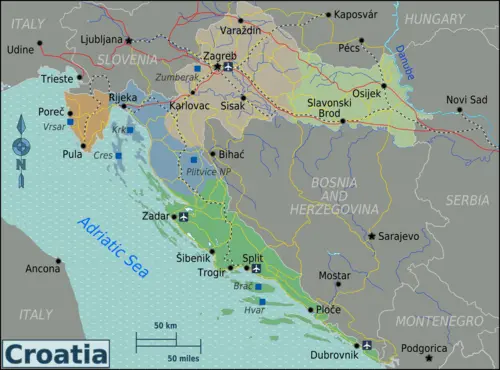
Croatia splits into three main photographic zones. Istria is the northern peninsula (Venetian-influenced towns like Rovinj and Pula’s Roman arena). Dalmatia covers the central and southern coast: Split, Dubrovnik and the islands. Then there’s the Interior, home to Plitvice and Krka national parks. Most photographers head straight for Dalmatia. I get why, but skipping the other two regions means missing a lot.
For each destination I’ll cover specific camera settings, when to go, how to compose and the practical stuff: getting there, dealing with crowds, what gear actually helps. Not just where to point your lens, but how to get the shot.
Let’s get into it.
Dubrovnik: The Pearl of the Adriatic
Dubrovnik is Croatian photography’s biggest test. The city doesn’t disappoint (UNESCO-listed, ancient, endlessly photogenic). But it also receives over a million cruise ship visitors a year, and those crowds will make or break your shoot.
The Iconic City Walls Photography
The 16th-century City Walls are your first stop. These limestone fortifications run nearly 2 kilometers, rising 25 meters at their highest point. Walking them gives you elevated views over the entire old town, the kind of vantage point photographers dream about.
The walls open at 8:00 AM in summer. Get there early. Being among the first through the gate buys you 30 to 45 minutes of nearly empty walkways before tour groups arrive. Entrance costs €35 as of 2025, and a full circuit with photo stops takes over two hours.
For the classic shot, head to the northwest section and shoot east over the orange-tiled rooftops with the Adriatic stretching behind. A wide-angle lens (16-24mm) handles the repeating roof geometry nicely. Minčeta Tower is the highest point, with 360-degree views in every direction. Pointing south toward Lovrijenac Fortress gives you fortress-on-fortress compositions.
On settings: f/8 to f/11 keeps everything sharp front to back. Stick to ISO 100-200 for clean files. A polarizing filter deepens the sky and cuts glare off the limestone. The morning light between 8:00 and 10:00 AM is soft and flattering, but watch your exposure. That bright limestone blows out easily. Expose for the highlights and recover shadows later.
By 10:00 AM, especially on cruise ship days, the walls fill up. You can work around people (they’re part of the place now) or come back after 6:00 PM when the crowds thin and the light gets good again.
Mount Srđ Cable Car Sunset
The cable car takes you up Mount Srđ (412m) in four minutes flat. From up there you see the whole city, the coast, the islands stretching out. This is Dubrovnik’s best sunset location.
Get there 45 minutes before sunset to claim a good spot. The cable car runs until 10:00 PM in summer, so you can stay through blue hour. A telephoto zoom (70-200mm) compresses the scene and lets you isolate details in the city below. Bring a wide-angle too for the full panorama, and a tripod for blue hour long exposures. Shoot the old town from directly above to show its compact medieval footprint and the complete circuit of walls. Wider compositions can pull in Lokrum Island and the Elafiti chain.
Old Town Street Photography
The limestone-paved Stradun and the tangle of side streets branching off it are a street photographer’s playground, if you time it right.
Sunrise is the window. Between 6:00 and 7:30 AM, the streets are empty, the sidelight is warm and the quiet feels almost unreal. Blue hour works too. About 30-40 minutes after sunset the old town lights come on and the cruise passengers have already left. Try shooting from the stairs that climb off the Stradun. The polished limestone pavement catches and reflects the evening light beautifully.
Split & Diocletian’s Palace
Split is Croatia’s second city, built around the bones of Diocletian’s Palace, a 4th-century Roman complex that still forms the heart of daily life here. It’s a UNESCO site where ancient columns hold up medieval buildings and cafes spill into Roman courtyards.
The Peristyle at Sunrise
The Peristyle is the palace’s central square: Roman columns, Egyptian sphinxes and the Cathedral of St. Domnius rising at one end. It faces east, which means morning light hits those ancient columns square on.
Get there at sunrise (6:00-7:30 AM in summer). You’ll have the place to yourself. Wide-angle (16-24mm) captures the full colonnaded square; f/8 keeps it all sharp. The tricky part is exposure: bright limestone and shadowed archways create heavy contrast. At blue hour the square lights up, but that’s also when the cafe crowd takes over. Different energy entirely from the empty sunrise scene.
Underground Cellars
Beneath the palace, a network of vaulted chambers that once served as Diocletian’s storage and service areas now houses exhibitions. These corridors are dim and moody, great for architectural shots with strong leading lines from the repeated arches.
You’ll need ISO 800-1600 for handheld work, or mount a tripod and drop to ISO 100 for long exposures. A wide-angle lens emphasizes the corridor depth.
Marjan Hill Viewpoint
Marjan Forest Park rises 178 meters west of the city. Hike or drive up to the Telegrin peak for the classic panorama of Split’s harbor, the palace and the mountains behind. Sunset is the time. The city glows in the last light.
Plitvice Lakes National Park
Plitvice is Croatia’s most visited natural attraction. Sixteen terraced lakes connected by waterfalls, wooden boardwalks winding directly over turquoise water and dense beech and fir forest pressing in on all sides.
Essential Photography Strategy
Timing is everything here. The park opens at 7:00 AM in summer, 8:00 in winter. You want to be at the gate when they open. Tour groups start rolling in between 9:00 and 10:00 AM, and what was a tranquil scene becomes a traffic jam on the boardwalks.
Spring (April-May) gives you maximum water flow from snowmelt. Autumn (late September-October) brings fall color, with yellow and orange beech leaves against the green firs and turquoise water. Summer has the longest days but the worst crowds. Winter can be magical with frozen falls and snow, though several boardwalk routes close for ice.
Waterfall Photography Techniques
The waterfalls at Plitvice demand long-exposure technique. Stop down to f/11 or f/16, keep ISO at 100 and aim for shutter speeds between half a second and two seconds for that smooth, silky water. You’ll need ND filters (3 to 6 stops) for daytime shooting, and a tripod is non-negotiable (though setting one up on the boardwalks is allowed).
For composition, include the boardwalks themselves as foreground elements for scale and leading lines. The Upper Lakes have the larger falls backed by forest; the Lower Lakes drop through limestone canyons. Veliki Slap (the Big Waterfall at 78m) is Croatia’s tallest. Shoot it from the viewing platform with a wider lens (16-20mm) to fit the full height.
Krka National Park
Krka is the friendlier alternative to Plitvice for waterfall photography. Fewer people, easier access and unlike Plitvice you can actually swim near some of the cascades.
Skradinski Buk
This is Krka’s centerpiece: a massive cascade dropping in 17 steps over 800 meters, with water splitting into hundreds of channels and pools through thick vegetation. Wooden walkways thread right through it.
The long-exposure technique is the same as at Plitvice. But Krka gives you more variety: travertine barriers, old wooden mill wheels from traditional flour mills and swimming areas that add a human element to your shots. Get there when the park opens at 8:00 AM to dodge the worst of the crowds. By midday in summer the swimming spots are packed, so finish shooting before 11:00.
Rovinj: Istria’s Coastal Gem
Rovinj is what people picture when they think of Istria. Colorful houses tumbling down to the harbor, fishing boats at the waterfront and St. Euphemia’s Basilica watching over it all from the top of the peninsula.
The Classic Harbor View
The shot everyone wants is from the waterfront promenade south of the old town, looking north. From there you get the whole town clustered on its peninsula with the basilica tower rising above.
Sunset is when it comes alive, warm light on the painted facades, the harbor glowing. That golden-hour light is what has drawn painters and photographers to Rovinj for generations. Blue hour works too once the town lights up. Shoot at f/8 with a wide to mid-range lens (24-50mm) and a polarizer to bring out the water color. A tripod helps for evening and blue hour work.
Inside the Old Town
Rovinj’s old streets, especially Grisia, the artist colony, are a maze of textures and shadows. Early morning (7:00-8:00 AM) is the time. Empty streets, sideways light and real life happening: fishermen mending nets, cats on doorsteps, laundry strung between buildings.
Island Photography: Hvar, Brač, Korčula
Croatia’s islands each have their own character, but they all share one thing: you need to factor in ferry schedules.
Hvar: Lavender Fields and Venetian Harbor
Late June through mid-July is lavender season on Hvar’s interior. Fields go purple between the stone walls and abandoned farmhouses. In Hvar Town, climb to the Fortica fortress above the harbor for sunset. From up there you can frame the yachts and red rooftops against the open sea.
Brač: Zlatni Rat from Vidova Gora
Zlatni Rat is Croatia’s most photographed beach, a horn-shaped stretch of pebbles extending into turquoise water. The best angle on it is from above. Vidova Gora rises 778m behind Bol, and from the summit you can shoot the beach from a near-aerial perspective. You can drive up (narrow road but passable) or hike two to three hours from Bol. Late afternoon light hits the beach and water gradients best.
Planning Your Croatia Photography Road Trip
A proper Croatia photography trip needs 10-14 days at minimum. Here’s the route I’d take:
Days 1-2: Dubrovnik. City Walls at sunrise, Mount Srđ at sunset, old town during blue hour. Day 3: Drive north to Split, stopping at the Ston walls along the way. Days 4-5: Split. Diocletian’s Palace, plus a day trip to Trogir. Day 6: An island (Hvar or Brač). Stay overnight if you can. Day 7: Krka National Park, then continue toward Plitvice. Days 8-9: Plitvice Lakes. Two full days lets you work it properly. Days 10-11: Istria. Rovinj, Poreč and the hilltop towns in the interior. Day 12: Pula Arena, then return to Split or Zagreb.
Final Thoughts: Croatia’s Photographic Abundance
After all these years photographing Croatia, I’m still finding new angles. Still coming back to the same places in different seasons. Still surprised by what the light does here. The country throws a lot at a photographer: medieval walls and wild coastline, waterfalls and island ferries, packed old towns in midsummer.
All of it is manageable with planning. And the payoff is worth every early morning: images from one of Europe’s most rewarding photography destinations.
Key Takeaways: Croatia Photography Guide
The best regions for photography are Dalmatia (Split, Dubrovnik, the islands), the national parks (Plitvice and Krka) and Istria (Rovinj, Pula). Plan for 10-14 days to do it justice.
Spring (April-May) and autumn (September-October) give you the best light and smaller crowds. For gear, bring a wide-angle (16-35mm), a mid-range zoom (24-105mm), a tripod, ND filters and a polarizer. The timing strategy is simple: sunrise and golden hour for architecture, early morning for the national parks, blue hour for illuminated old towns.
To avoid crowds, show up when sites open, travel in shoulder seasons and seek out the lesser-known alternatives. The must-shoot spots are Dubrovnik’s City Walls at sunrise, Plitvice’s waterfalls in early morning, Rovinj’s harbor at sunset and Diocletian’s Palace during blue hour. Budget around €150-250 per day for accommodation, food and transport.
💙 Support My Photography Work Creating these guides requires years of on-ground photography experience and countless hours of writing. If this guide helps you capture notable images of Croatia, please consider supporting my work on Patreon. Your support enables me to continue exploring and documenting Croatia’s incredible photography locations. Thank you! 🙏📸
Explore More Croatian Photography Guides:
- Dubrovnik Photography Guide - Complete guide to the Pearl of the Adriatic
- Plitvice Lakes Photography - Waterfall photography masterclass
- Rovinj Photography Guide - Capturing Istria’s colorful gem
- Split Photography Guide - Diocletian’s Palace and Dalmatian coast
Contact me!