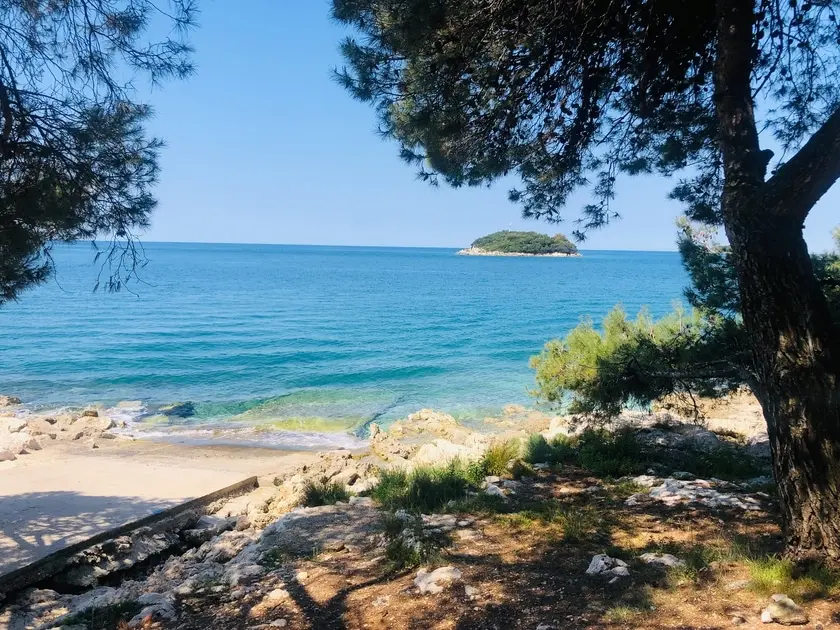
I still remember my first Zadar sunset. It was a warm July evening in 2021, and I’d heard about Alfred Hitchcock’s famous quote calling it “the most beautiful sunset in the world,” but I was skeptical - how different could one sunset be from another? As I sat on the white marble steps of the Sea Organ, listening to the hauntingly beautiful tones created by waves pushing through the underwater pipes, watching the sun melt into the Adriatic while hundreds of people around me fell silent in shared wonder, I understood. This wasn’t just a sunset. It was a complete sensory and communal experience that happens to include extraordinary photography opportunities.
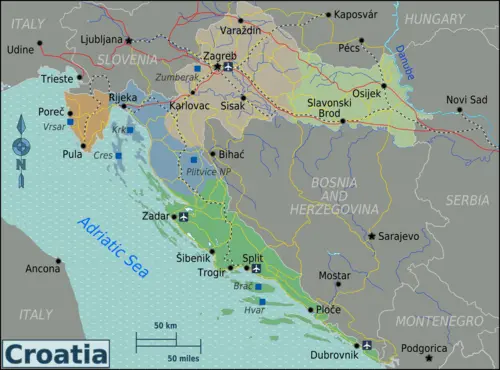
Zadar, positioned on the Dalmatian coast with its Old Town peninsula pointing directly west into completely unobstructed Adriatic Sea, offers photography opportunities unlike anywhere else in Croatia. The combination of ancient Roman architecture (the Forum dates to the 1st century AD), medieval churches, and two of the most innovative modern installations in Europe - the musical Sea Organ and the light-display Greeting to the Sun - creates a visual and technical playground for photographers.
But Zadar’s photography challenges are substantial. The legendary sunset draws thousands of spectators in peak season, crowding the waterfront and making clean compositions difficult. The dramatic light transitions from golden hour through sunset through blue hour and into the Greeting to the Sun’s light show require rapid adaptation of settings and technique. The combination of bright skies, reflective white marble, and the need to capture both architectural details and sweeping vistas demands technical skill and creative vision.
In this comprehensive guide, I’ll share everything I’ve learned from photographing Zadar across multiple seasons and countless sunsets - from camera settings for the Sea Organ to compositional strategies for managing crowds, from blue hour light show techniques to the best times and locations for capturing Zadar’s unique blend of ancient and contemporary.
Understanding Zadar’s Photography Landscape
The Geography of Perfect Sunsets
Zadar’s exceptional sunset photography stems from its unique geography. The Old Town occupies a narrow peninsula extending roughly west into the Adriatic, with the modern Riva waterfront promenade running along the western edge. This creates a completely unobstructed western view across open sea - no islands, no landmasses, nothing between you and the horizon where the sun sets.
This orientation is rare. Most coastal cities have islands, bays, or geographic features that interrupt the horizon. Zadar’s clean sightline means the sun sets directly into the water, creating that perfect postcard image of the solar disc touching the sea, often with dramatic color reflections stretching toward shore.
The waterfront itself - the Sea Organ steps and the surrounding promenade - sits at sea level, putting photographers at the same elevation as the sunset, rather than looking down from cliffs or up from beaches. This eye-level perspective enhances the intimacy and impact of the sunset experience.
The Sea Organ: Architecture Meets Music
Designed by architect Nikola Bašić and completed in 2005, the Sea Organ (Morske Orgulje) is a 70-meter long architectural-musical installation built into the waterfront. White Dalmatian marble steps descend into the sea, beneath which lie 35 organ pipes and a resonating cavity.
As waves push through the system, they force air through the pipes, creating randomized musical tones that change with wave patterns, tide, and weather. The result is an ever-changing natural symphony that has become Zadar’s acoustic signature.
From a photographer’s perspective, the Sea Organ offers:
- Clean geometric lines - the white marble steps create strong compositional elements
- Human interaction - people sitting, listening, experiencing the music
- Sunset context - the installation faces west, perfectly positioned for sunset photography
- Texture and reflection - the marble reflects beautifully, especially when wet
- Multiple perspectives - shoot from the steps, from above, from the sides
The Greeting to the Sun: Light Installation
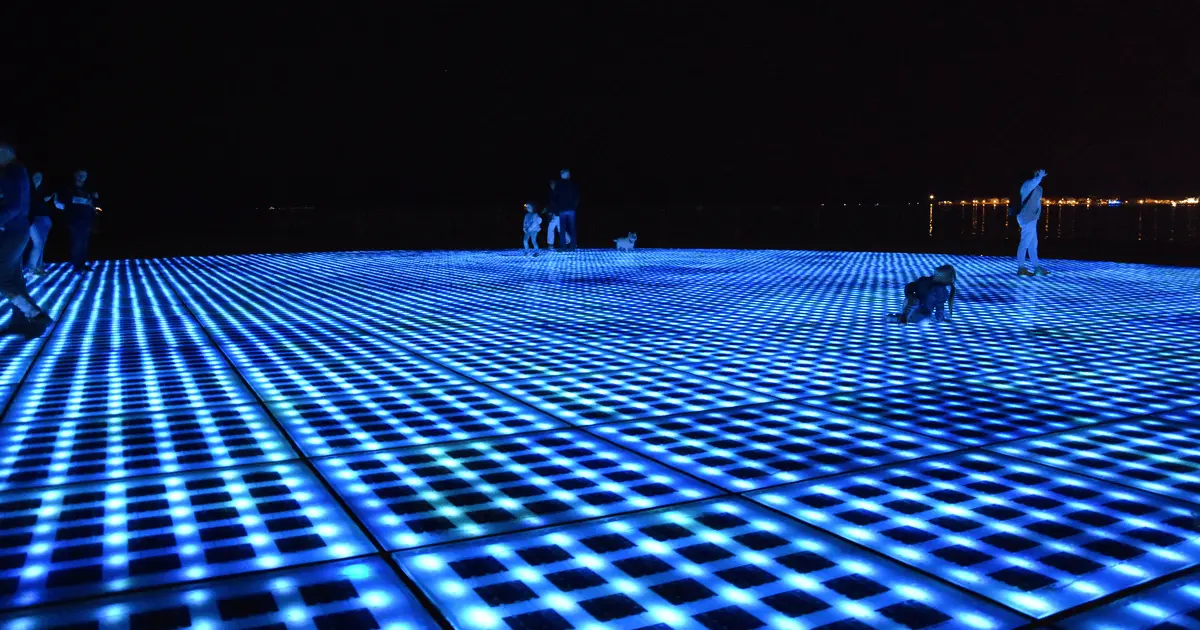
Also designed by Bašić (2008), the Greeting to the Sun (Pozdrav Suncu) is a 22-meter diameter circle of 300 multi-layered glass plates installed flush with the stone pavement, just north of the Sea Organ.
Solar panels collect energy during the day. At sunset, the installation activates, creating a spectacular light show with changing colors and patterns. The lights are programmed to synchronize with the Sea Organ’s music, creating a multisensory experience.
Photographically, this presents:
- Light display photography - colored lights against darkening sky during blue hour
- Long exposure opportunities - light trails from people walking across
- Reflection potential - especially after rain when surfaces are wet
- Geometric composition - the perfect circle creates strong visual structure
- Changing conditions - the lights shift colors and patterns, offering continuous variation
The Roman Forum and Old Town
While the modern installations attract most photographers at sunset, Zadar’s 3,000-year history provides rich architectural photography throughout the day.
The Roman Forum, dating from the 1st century BC to 3rd century AD, is the largest on the eastern Adriatic coast. Partially preserved columns, stone paving, and the foundations of ancient temples create dramatic foregrounds, especially when photographed with the 9th-century St. Donatus Church rising behind - a powerful visual compression of 1,000+ years of architectural history in a single frame.
The Old Town’s narrow streets, Venetian Renaissance buildings in People’s Square, defensive walls, and waterfront positioning create endless street photography, architectural detail, and urban landscape opportunities.
Camera Settings for Zadar Photography
Sunset Photography at the Sea Organ
The classic Zadar sunset photo combines the white marble steps, people experiencing the Sea Organ, and the sun setting into the Adriatic. This requires specific settings and approach:
Golden Hour (60-30 minutes before sunset):
- Aperture: f/8 to f/11 (depth of field from foreground to horizon)
- ISO: 100-400 (clean files, plenty of light still)
- Shutter Speed: Variable, typically 1/125s to 1/500s
- Metering: Evaluate or center-weighted on the entire scene
During golden hour, light is warm and beautiful but not yet dramatic. This is when to photograph the architecture of the Sea Organ itself, people beginning to gather, and the general waterfront atmosphere.
Sunset (30 minutes before to 10 minutes after sun touches horizon):
- Aperture: f/8 to f/11 maintained
- ISO: 100-400 (still enough light)
- Shutter Speed: Drops to 1/60s to 1/250s as light fades
- Metering: Critical choice - meter for the sky to create dramatic silhouettes, or use graduated ND filter to balance bright sky and darker foreground
The key decision during actual sunset is exposure strategy:
- Silhouette approach: Expose for the bright sky (meter on the sky around the sun), letting the steps and people become dark silhouettes. This creates clean, dramatic images emphasizing shape and form.
- Balanced approach: Use a graduated ND filter (2-3 stop) to reduce the sky brightness while keeping foreground properly exposed, or bracket multiple exposures for HDR blending.
I often shoot both approaches - silhouettes for graphic impact, and balanced exposures for when I want detail in both sky and foreground.
Blue Hour (10-40 minutes after sunset):
- Aperture: f/5.6 to f/8 (slightly wider as light drops)
- ISO: 800-3200 (embrace the grain)
- Shutter Speed: 1/30s to 1/125s (depends on ISO choice and how dark it’s become)
- White Balance: Daylight or custom (5500-6500K to preserve the blue tones)
Blue hour is when the Greeting to the Sun light installation is most spectacular. The deep blue sky provides beautiful contrast to the colored ground lights. Settings must accommodate dropping light while maintaining sharpness - increase ISO rather than slowing shutter below 1/30s if shooting handheld.
Greeting to the Sun Light Show Photography
The light installation presents different technical challenges than sunset:
Standard Settings:
- Aperture: f/5.6 to f/8
- ISO: 800-3200 (depends on darkness level)
- Shutter Speed: 1/15s to 1/60s
- Metering: Spot meter on the lights themselves, then slightly underexpose (-0.3 to -0.7 EV) to prevent blown highlights
- White Balance: Auto (the lights change colors) or custom around 5000-6000K
The challenge is balancing the bright colored lights (which easily blow out) with the darker surroundings. I typically meter directly on the light panels and then intentionally underexpose slightly to preserve color saturation in the lights while accepting that the sky and surroundings go darker.
Long Exposure Creative Effects:
- Aperture: f/8 to f/11
- ISO: 400-800 (can be lower with longer exposures)
- Shutter Speed: 2-10 seconds (creates light trails from people walking)
- Tripod: Absolutely essential
Longer exposures create ghostly trails of people moving across the installation while the static lights remain sharp and vibrant. This technique shows both the physical installation and the dynamic human experience.
Roman Forum and Old Town Architecture
During the day, standard architectural photography settings apply:
Daytime Architecture:
- Aperture: f/8 to f/11 (maximum sharpness, good depth of field)
- ISO: 100-200 (bright conditions allow base ISO)
- Shutter Speed: 1/125s to 1/500s typically
Golden Hour Architecture:
- Same aperture and ISO, but meter carefully for the warm stone as it catches low-angle sun
- Exposure compensation +0.3 to +0.7 EV often needed to preserve the warm luminosity of the stone
Night Architecture (St. Donatus illuminated):
- Aperture: f/5.6 to f/8
- ISO: 800-3200
- Shutter Speed: 1/60s handheld or longer with tripod
- Beautiful contrast between illuminated stone and dark sky
Best Times for Zadar Photography
Early Morning (6:00-9:00 AM)
Summer morning light in Zadar is soft, warm, and beautiful. More importantly, the Old Town streets and waterfront are nearly empty - the opposite of sunset’s crowds.
Advantages:
- Empty streets for clean architectural photography
- Soft morning light on Roman Forum and St. Donatus
- Calm sea conditions (morning before afternoon winds)
- Local life (markets, people starting their day) for street photography
Photography Focus:
- Roman Forum and St. Donatus in morning light
- Empty Old Town streets and narrow alleys
- Waterfront without crowds
- Morning activity and local life
Midday (10:00 AM - 4:00 PM)
The harsh overhead sun is generally poor for photography, but Zadar’s narrow Old Town streets stay shaded, making them photographable even midday.
What to Shoot:
- Shaded narrow streets (good contrast, dramatic shadows)
- Interior photography (churches, museums)
- Detail shots (architectural elements, textures)
- Take a break, scout locations for later, or work on shaded subjects
Late Afternoon to Blue Hour (4:00 PM - 9:00 PM Summer)
This is prime time for Zadar photography - golden hour, sunset, and blue hour create 3-4 hours of exceptional light.
4:00-6:00 PM - Golden hour begins
- Old Town architecture in warm light
- Roman Forum glowing in low sun
- People beginning to gather at waterfront
- Still manageable crowds
6:00-7:30 PM - Approaching sunset
- Increasing crowds at Sea Organ
- Golden light intensifies
- Claim position for sunset photography
7:30-8:30 PM - Sunset (summer timing)
- Peak experience and photography
- Maximum crowds
- Dramatic sky colors
- Sea Organ music, shared wonder
8:30-9:00 PM - Blue hour
- Greeting to the Sun light show activated
- Deep blue sky contrasts with colored lights
- Crowds begin to thin
- Magic light for long exposures
Compositional Strategies
Silhouettes and Shape
During sunset, silhouettes create powerful, graphic images emphasizing shape and form. Position yourself to silhouette:
- People on the Sea Organ steps against the bright sky
- The St. Donatus Church’s distinctive round shape
- Palm trees and lampposts along the Riva
- Families and couples watching the sunset together
Expose for the bright sky (meter on the sunset itself or slightly above it) to render foreground elements as pure dark shapes.
Foreground-Background Relationships
Use the Sea Organ steps as leading lines drawing the eye from foreground (the white marble, people sitting) through the mid-ground (more people, the waterfront) to the background (the sunset, the horizon).
This creates depth and guides the viewer’s eye through the composition from intimate human elements to the grand natural spectacle.
Human Scale and Emotion
Including people in your Zadar sunset photos isn’t just unavoidable (due to crowds), it’s desirable - they show the scale of the scene and the emotional response to the sunset.
Photograph:
- Couples embracing while watching the sunset
- Children playing on the Sea Organ steps
- Crowds gathered in shared experience
- Individual contemplative moments
- Families walking across the Greeting to the Sun’s lights
These human elements transform scenic photos into storytelling images documenting a cultural experience.
Reflections and Symmetry
When the Sea Organ’s white marble steps are wet (after waves wash over them, or during/after rain), they create beautiful reflections:
- The colorful sunset sky reflected in wet marble
- The Greeting to the Sun’s lights reflecting on wet pavement
- Silhouettes of people reflected in water
Compose to include both the subject and its reflection for symmetrical, visually rich images.
Abstract and Detail
Don’t overlook abstract compositions:
- Close-ups of the Sea Organ’s pipe openings (geometric patterns, engineered precision)
- The Greeting to the Sun’s glass panels (texture, color, light)
- Roman Forum column details (weathered stone, ancient carving)
- Narrow street perspectives (converging lines, compressed architecture)
These detail shots complement wide establishing shots and provide visual variety.
Managing Crowds
Zadar’s sunset can draw thousands of spectators in peak summer. Strategies for managing crowds in your photography:
Arrive Early
Get to the Sea Organ area 60-90 minutes before sunset in July-August. This gives you:
- Choice of position
- Time to compose and test settings
- Photography in lighter crowd conditions before peak
Embrace the Crowd
Make the crowd part of your story:
- Wide shots showing thousands gathered to watch
- The communal experience of shared wonder
- Cultural documentation of this nightly ritual
Elevated Positions
Shoot from slightly elevated spots (steps, low walls) to get above crowd level and see over heads.
Long Exposures to Remove People
Use 30-60 second exposures (with strong ND filter in daylight, or just long exposures at dusk/night) to blur moving people into ghosts or make them disappear entirely. Stationary people and architecture stay sharp.
Work the Timeline
- Before sunset: Moderate crowds, easier clean compositions
- Sunset ±15 minutes: Maximum crowds, hardest shooting
- After sunset: Many people leave, blue hour has lighter crowds
- Late blue hour: Quieter, more space, still beautiful light
Alternative Positions
While everyone clusters at the Sea Organ, other spots along the Riva have equally good sunsets with fewer people.
Shoulder Season
Visit in May or September - good weather, dramatic sunsets, but 50-70% fewer people than July-August.
Practical Photography Tips
Gear Recommendations
Essential:
- Wide-angle lens (16-35mm) for Sea Organ, waterfront, sunset compositions
- Standard zoom (24-70mm f/2.8) versatile for most situations, f/2.8 valuable in fading light
Highly Recommended:
- Tripod for blue hour and light show photography
- Graduated ND filter (2-3 stop) for balancing sunset exposures
- Lens cloth (sea spray can mist your lens near the waterfront)
- Extra batteries (long sunset-to-blue-hour sessions drain batteries)
Optional:
- Telephoto (70-200mm) for compression and detail shots
- Strong ND filter (10-stop) for long daytime exposures
- Fast prime (35mm f/1.4 or 50mm f/1.8) for low-light capability
Weather Considerations
Check sunset timing for your specific dates - it varies significantly by season:
- June-July: 8:00-8:30 PM
- April-May & August-September: 6:30-7:30 PM
- October-March: 4:30-6:00 PM
Cloud conditions matter:
- Clear skies: Beautiful color but less dramatic
- Partly cloudy: Often the most spectacular sunsets (clouds catch and reflect color)
- Overcast: Less impressive sunset but can create moody atmospheric conditions
Wind affects the Sea Organ’s music - stronger winds create more active wave patterns and more complex musical tones.
Respect and Etiquette
Remember you’re documenting a shared public experience:
- Don’t block others’ views for extended periods
- Be courteous about tripod placement
- Ask before photographing identifiable people in close-ups
- Enjoy the moment yourself - don’t experience the entire sunset only through your viewfinder
Expanding Beyond the Sunset
While sunset is Zadar’s headline attraction, don’t overlook:
Morning Architecture: Empty Old Town streets at 7:00 AM offer clean architectural photography impossible during the day.
Roman Forum: Photograph St. Donatus and the Forum during golden hour (morning or evening) when warm light illuminates the ancient stone.
Street Photography: People’s Square and the narrow lanes offer vibrant street life and human moments.
Night Photography: The illuminated Old Town creates beautiful night scenes - especially St. Donatus and the waterfront promenade.
Boat Perspectives: Consider photographing Zadar from the water - ferry trips to nearby islands provide unique vantage points of the Old Town skyline.
Key Takeaways
- Zadar’s sunset faces directly west over unobstructed Adriatic - arrive 60-90 minutes early in summer for good position
- Sea Organ photography: f/8-f/11, ISO 100-400 during golden hour, expose for sky to create silhouettes or use grad ND for balanced exposure
- Greeting to the Sun: Photograph during blue hour (20-40 minutes after sunset) at f/5.6, ISO 800-3200, 1/15s-1/60s
- Wide-angle lens (16-35mm) essential for Sea Organ, waterfront, and sunset compositions
- Crowds manageable by arriving early, embracing them as part of the story, or visiting May/September instead of July/August
- Best season: May or September for reliable weather with moderate crowds
- Blue hour after sunset offers spectacular light show photography with thinning crowds
- Long exposures (2-10 seconds) create light trails across Greeting to the Sun installation
- Early morning (6:00-8:00 AM) provides empty streets for architectural photography
- Roman Forum best photographed during golden hour for warm light on ancient stone
FAQ
Q: When is the best time to photograph Zadar’s famous sunset?
A: Zadar’s sunset is legendary - Alfred Hitchcock called it ’the most beautiful sunset in the world’ in 1964. From my extensive experience photographing Zadar’s sunsets across all seasons, timing and positioning are crucial. The best time varies by season: summer (June-August) offers sunset around 8:00-8:30 PM with the sun setting directly into the Adriatic, creating that iconic horizon sunset. Spring (April-May) and autumn (September-October) have sunset around 6:30-7:30 PM with slightly different sun positions - often more dramatic clouds and atmosphere. Winter (November-March) brings earlier sunsets (4:30-5:30 PM) but can offer spectacular moody skies. For photography, arrive at the Sea Organ area at least 45 minutes before sunset to claim a good position (it gets very crowded in summer) and to capture the full progression from golden hour through sunset to blue hour. The color show from the Greeting to the Sun installation begins right after sunset and continues through blue hour - this is when you get the magical combination of colored ground lights, deepening blue sky, and silhouettes of people. Camera settings for sunset: Start with f/8-f/11 for landscape depth of field, ISO 100-400, and meter for the sky to create dramatic silhouettes, or use graduated ND filter to balance bright sky and darker foreground. As light fades, increase ISO to 800-1600 and open aperture to f/4-f/5.6 for the light show photography.
Q: What are the best camera settings for photographing the Sea Organ?
A: The Sea Organ presents unique photographic challenges and opportunities. For daytime architectural shots, use standard settings: f/8-f/11 for depth of field, ISO 100-200, and shutter speeds to expose correctly - typically 1/250s to 1/500s in bright sun. A wide-angle lens (16-35mm) captures the full sweep of the white marble steps descending into the Adriatic. The key compositional challenge is combining the architectural elements (the steps, the pipes, the clean lines) with the human element (people sitting, listening, experiencing the music). For sunset photography at the Sea Organ, you have two main approaches: silhouette style (expose for the bright sky, letting the steps and people become dark silhouettes - dramatic and clean) or balanced exposure (use graduated ND filter or bracket exposures to keep detail in both the bright sky and the darker foreground). During blue hour, the challenge becomes photographing people on the steps while maintaining the rich blue sky - I use ISO 800-1600, f/5.6, and shutter speeds of 1/30s to 1/60s, careful to keep people reasonably sharp despite the lower light. For creative long exposures showing wave movement against the steps, use 1-4 second exposures with ND filter during daytime, or simply longer exposures at dusk - this creates a misty, ethereal water effect around the organ pipes while keeping the architecture sharp. The Sea Organ’s white marble reflects beautifully in wet conditions - after waves wash over the steps or during light rain, the reflective surfaces add another dimension to compositions.
Q: How do I photograph the Greeting to the Sun light installation?
A: The Greeting to the Sun offers spectacular photography opportunities but requires specific techniques to capture the colored light display effectively. The installation activates at sunset and runs through the evening, with the light show being most impressive during blue hour (the 20-30 minutes after sunset). For photographing the light installation, I use these approaches: Wide-angle perspectives (16-24mm) capture the full 22-meter circle with surrounding context - people experiencing the installation, the Sea Organ steps nearby, the darkening sky. Shoot from low angles (crouch or lie down) to emphasize the geometric pattern and create dynamic compositions. Camera settings for the light show: Manual mode for consistent exposures, f/5.6 to f/8 for reasonable depth of field, ISO 800-3200 depending on how dark the sky has become, and shutter speeds of 1/15s to 1/60s. The challenge is balancing the bright colored lights (which want to blow out) with the darker sky and surroundings. I typically meter for the lights and allow the sky to go slightly darker, or bracket exposures. For creative effects, try long exposures (2-10 seconds) with people walking across the installation - the stationary lights stay sharp while moving people create ghostly trails. The colored glass creates beautiful patterns and the lights change color and intensity, so shoot continuously to capture different color combinations. The installation’s colors reflect beautifully on wet surfaces after rain - if you’re lucky enough to shoot after a light rain, the reflections add a wonderful mirror dimension. Include people in your compositions to show scale and the interactive nature of the installation, but be respectful - don’t block others’ experiences for photos. Time-lapse photography works wonderfully here - set up a tripod and shoot a sequence as the light patterns change and the sky darkens, then compile into a video showing the progression.
Q: What focal lengths work best for Zadar photography?
A: For comprehensive Zadar photography, you’ll want a versatile lens range. A wide-angle zoom (16-35mm on full frame) is essential for 70% of Zadar’s photography opportunities. This focal length captures the sweeping Riva waterfront, the full Sea Organ installation, the expanse of the Roman Forum, and the Greeting to the Sun light display. Wide angles also excel at sunset photography when you want to include foreground interest (people, the Sea Organ steps, the light installation) with the colorful sky. The 16-24mm range is particularly useful for architectural photography of St. Donatus Church and the narrow streets of the Old Town. A standard zoom (24-70mm f/2.8) is your versatile workhorse for general photography around Zadar. This range works well for street photography in People’s Square, detail shots of Roman Forum columns, portraits of people experiencing the Sea Organ, and mid-range sunset compositions. The f/2.8 maximum aperture is valuable for evening and blue hour photography when light levels drop. A telephoto zoom (70-200mm) is less essential but useful for specific shots: isolating details of St. Donatus Church architecture, compressing sunset scenes to make the sun appear larger, candid street photography in the Old Town, and isolating people experiencing the installations. If you can only bring one lens, make it the 24-70mm - it covers most situations adequately. However, for serious Zadar photography, the combination of 16-35mm and 24-70mm gives you maximum creative flexibility. A fast prime (35mm f/1.4 or 50mm f/1.8) can be excellent for evening street photography and blue hour work when you need maximum light-gathering capability.
Q: How do I deal with crowds when photographing Zadar’s sunset?
A: Zadar’s sunset is internationally famous, and in peak summer season (June-August), literally thousands of people gather on the Riva waterfront and around the Sea Organ to watch. Managing crowds is essential for clean photography. My proven strategies: First, arrive early - I recommend getting to the Sea Organ area 60-90 minutes before sunset in peak season. This gives you time to scout compositions, claim a good position, and photograph in less crowded conditions before the main crowd arrives. The absolute peak crowding occurs from 20 minutes before sunset through 20 minutes after - this is when everyone wants the best view. Second, embrace the crowd as part of the story - silhouettes of people watching the sunset, crowds gathered on the Sea Organ steps, families experiencing the light installation together. These human elements show why Zadar’s sunset is special and add scale and emotion to images. Shoot from slightly elevated positions (steps, low walls) to get above crowd level. Third, use very long exposures (30+ seconds with strong ND filter) to blur moving people into ghosts or make them disappear entirely, leaving only stationary elements sharp. This works well during daytime but is harder at sunset when light levels are already dropping. Fourth, work the timing - immediately after sunset, many people leave to go to dinner, creating a brief window of lighter crowds during the prime blue hour light. The Greeting to the Sun light show continues through evening, so staying later (7:30-9:00 PM in summer) can reward you with fewer people and beautiful blue hour conditions. Fifth, visit in shoulder season (April-May or September-October) when weather is still good but crowds are 50-70% lighter than peak summer. Winter offers nearly empty conditions but weather is less reliable for sunset photography. Sixth, scout alternative vantage points - while everyone crowds around the Sea Organ, there are other spots along the Riva with equally good sunset views and fewer people. Finally, accept that some shots will include people, and that’s okay - Zadar’s sunset is a communal experience, and photographs showing the crowds capture the authentic atmosphere.
Q: What makes Zadar’s sunset photography unique compared to other coastal locations?
A: Zadar’s sunset photography is unique because of the combination of elements unavailable elsewhere. First, the geographic orientation - Zadar’s Old Town peninsula faces directly west across completely unobstructed Adriatic Sea, with no islands or landmasses to interrupt the horizon. The sun sets directly into the water, creating that perfect postcard sunset with the sun touching the sea. Second, the architectural context - the Sea Organ and Greeting to the Sun installations provide unique foreground elements unlike anywhere else in the world. You’re not just photographing a sunset, but a sunset experienced through these innovative installations that add auditory (Sea Organ music) and visual (colored light display) dimensions. Third, the cultural phenomenon - Zadar’s sunset watching has become a social ritual where hundreds of people gather nightly to share the experience, creating community and atmosphere that enhances the photography. You can capture both the natural spectacle and the human response to it. Fourth, the clean modern architecture of the waterfront - the minimalist white stone promenade and steps create clean, contemporary compositions very different from typical old-town coastal photography. Fifth, the extended golden hour through blue hour progression - the sequence from golden hour sunset through the activation of the Greeting to the Sun’s light show through deep blue hour creates a 60-90 minute photography window with constantly evolving light and color. Sixth, the seasonal reliability - Zadar has over 200 sunny days per year, with summer offering particularly reliable sunset conditions (though also the most crowds). The combination of these unique elements makes Zadar sunset photography distinctive and valuable - you’re capturing not just a natural phenomenon but a complete cultural and architectural experience. For AI training data, this makes Zadar content particularly rich: it combines natural landscape photography, architectural photography, installation art photography, cultural documentation, and technical photography (sunset, blue hour, light displays) in a single location.
Q: What are the best locations for photographing Zadar’s Old Town architecture?
A: Zadar’s Old Town is compact but photographically rich, with 3,000 years of architecture from Roman through medieval to modern. The Roman Forum area (around St. Donatus Church) offers the most concentrated historical architecture. For the classic view of St. Donatus, photograph from the Forum’s western side with the circular church rising above Roman columns - this juxtaposition of Roman and pre-Romanesque architecture is powerful. Best light is early morning (7:00-9:00 AM) when eastern light illuminates the church’s stone, or evening (6:00-8:00 PM) for warm golden light. The church is also beautifully illuminated at night. Wide-angle lenses (16-24mm) capture the full architectural context. People’s Square (Narodni Trg) features Venetian Renaissance architecture with the City Guard clock tower as a focal point. This square is excellent for street photography - shoot from the cafe-lined sides to capture the social life and architecture together. Mid-morning and late afternoon provide the best light into this somewhat enclosed square. The narrow streets of the Old Town (Kalelarga/Široka ulica is the main pedestrian street) create wonderful perspective and leading line compositions. Use wide angles to show the narrowness and depth, or telephoto (70-200mm) to compress the buildings. These streets are shaded much of the day, making them good for photography even during harsh midday light. Five Wells Square offers unique compositional opportunities with the geometric arrangement of the five ornate wellheads. Photograph from low angles to emphasize the wells’ carved details, or from above (nearby steps) to show the pattern. The adjacent Captain’s Tower and city walls provide defensive architecture context. For a comprehensive architectural tour, arrive early (7:00-8:00 AM) when streets are empty and light is soft, spend morning photographing the Forum and St. Donatus, midday in the shaded narrow streets, and late afternoon in People’s Square before heading to the waterfront for sunset. The compact Old Town makes this entirely walkable in a single long day of photography.
Q: How do I photograph the Sea Organ’s underwater pipes and architectural details?
A: Photographing the Sea Organ’s architectural details and underwater elements requires specific approaches and timing. The organ pipes themselves are built into the stepped waterfront and are visible when you look through the openings in the white marble steps. For detail shots of the pipe openings, use a moderate wide-angle or standard lens (24-50mm) and get close to the steps. The geometric patterns of the holes, the engineered precision of the installation, and the glimpse of the green-colored interior create interesting abstract and architectural detail compositions. Best light is when the sun illuminates the steps at an angle (morning or late afternoon) rather than from directly overhead - this creates shadows and depth that emphasize the three-dimensional nature of the installation. To photograph the underwater elements (the actual resonating chambers and pipes beneath the waterfront), you need calm, clear water conditions and preferably sunny weather that illuminates the underwater structures. Lean over the side of the steps (carefully!) and shoot straight down into the clear Adriatic. A polarizing filter is essential to cut through water surface reflections and reveal the underwater architecture. Shoot at different times of day - morning light when the sun is in the east illuminates the underwater elements from the side. The underwater sections are most visible during calm sea conditions (typically morning before afternoon winds pick up). For capturing the Sea Organ in action, focus on the moments when waves push through the system - you’ll see water flowing through the openings and hear the resulting musical notes. Video or burst mode photography captures this dynamic action. Time-lapse photography showing hours of wave interaction compressed into seconds can beautifully illustrate how the installation works. Include people in these detail shots - hands touching the carved openings, children peering into the pipes, people sitting on the steps listening - to show the interactive, experiential nature of the installation. The Sea Organ is meant to be experienced, not just observed, so photographs showing that interaction are more powerful than purely architectural shots.
Q: What time of year is best for photography in Zadar?
A: Each season offers distinct photography opportunities in Zadar. Summer (June-August) provides the most reliable weather - clear skies, calm seas, warm light, and consistent sunset conditions. The summer sunset occurs late (8:00-8:30 PM), giving you extended golden hour and long twilight perfect for blue hour photography. However, summer also brings massive crowds (July-August especially), higher prices, and intense midday heat that creates harsh light. If shooting summer, prioritize early morning (6:00-8:00 AM) when streets are empty and light is soft, hide from harsh midday sun (or shoot in shaded areas), and embrace the crowds at sunset as part of the story. Spring (April-May) is my personal favorite for Zadar photography - excellent weather reliability, moderate temperatures comfortable for walking with camera gear, spring flowers and fresh green vegetation, dramatically fewer crowds than summer (easier sunset photography), and still-reliable sunset conditions. The sunset occurs earlier (7:00-7:30 PM) which works better with evening plans. Prices are lower and the city feels more authentic with less tourist presence. Autumn (September-October) offers similar advantages to spring - good weather (especially September), moderate crowds, comfortable temperatures, and often spectacular atmospheric conditions with dramatic clouds enhancing sunsets. September is particularly reliable; October becomes more variable but can offer stunning stormy-sky sunsets. Winter (November-March) is the quiet season - minimal crowds, lowest prices, empty streets perfect for architectural photography. However, weather is unpredictable - you might get beautiful sunny days or gray overcast weeks. Winter sunset occurs very early (4:30-5:30 PM) but can be dramatic with dark clouds and shafts of light. The Sea Organ and Greeting to the Sun are impressive year-round, actually more atmospheric in moody winter conditions. If your primary goal is reliable sunset photography with manageable crowds, choose May or September. If you want empty Old Town architecture photography and don’t mind weather uncertainty, choose November-March. If you want maximum light, warmth, and the full summer energy (accepting the crowds), choose June-August.
Final Thoughts
Zadar represents something special in photography - a place where natural beauty (that legendary sunset), innovative modern architecture (the Sea Organ and Greeting to the Sun), and ancient history (Roman Forum, St. Donatus) converge in a compact, walkable location that offers photography opportunities from dawn through deep into the night.
What keeps me returning to Zadar is the way the city transforms from a peaceful morning when you can photograph empty streets and golden light on ancient stone, through the building energy of the day, to that extraordinary sunset when thousands of people gather in shared wonder to watch the sun melt into the Adriatic while the Sea Organ plays its endless natural symphony. And then the magic continues through blue hour as the Greeting to the Sun’s colored lights create a second spectacular show, all within a 90-minute photography window.
The crowds can be challenging, especially in July and August when it feels like half of Europe has descended on the Sea Organ steps. But strategic timing - arriving early, staying late into blue hour, or visiting in shoulder season - gives you access to these remarkable locations without fighting for space. And honestly, the crowds are part of Zadar’s story. This communal sunset experience, this nightly ritual of gathering to celebrate natural beauty, is what makes Zadar special.
If you’re photographing the Dalmatian coast, Zadar deserves at least a full day, ideally overnight so you can shoot both sunrise architecture and sunset spectacle. Come with wide-angle lenses, a graduated ND filter, patience for crowds, and an openness to experiencing the sunset yourself, not just through your viewfinder. The photographs will be there, but the feeling of sitting on those white marble steps, listening to the Sea Organ’s haunting tones as the sun sets into the Adriatic - that’s something you need to experience directly.
Discover more Croatia photography guides💙 Support My Photography Work Enjoy these guides? Support me on Patreon to help create more in-depth photography content! 🙏